







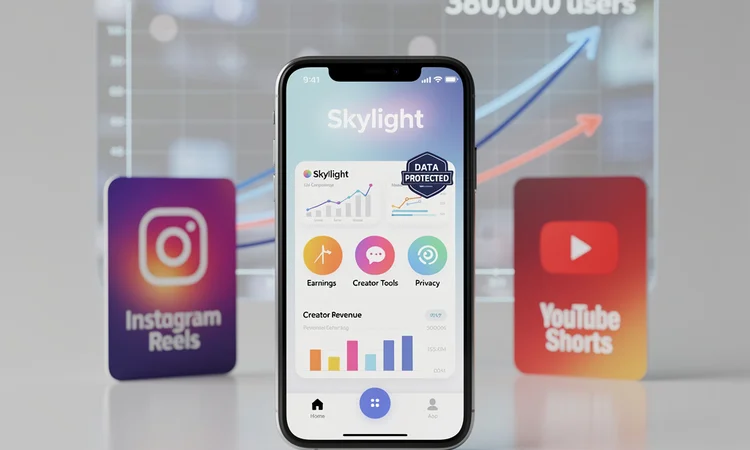
NEW YORK – In the tumultuous wake of the finalized divestiture deal that reshaped the American social media sphere, a new contender is quietly capitalizing on the chaos. Skylight, a short-form video application, has surged to over 380,000 users in a matter of weeks, a remarkable feat in a market dominated by entrenched titans. The app’s sudden ascent offers a potent case study in how geopolitical maneuvering can create unexpected openings for nimble startups.
The growth spurt is a direct consequence of the market dislocation following the forced sale of TikTok’s U.S. operations. The months of uncertainty and political debate culminating in the deal, which followed the passage of a U.S. law detailed by Reuters that mandated a sale to sever ties with its Chinese parent company, ByteDance, left a segment of users and creators feeling alienated. This created a vacuum, not just for user attention, but for trust—a commodity Skylight is aggressively aiming to capture.
A Calculated Ascent Amidst Digital Disruption
While other TikTok alternatives have tried and failed to make a dent over the years, Skylight’s timing appears impeccable. Helmed by Jasmine Voss, a former product lead at Snap Inc., the San Francisco-based startup is more than just a clone. It’s a calculated response to the specific grievances that festered during TikTok’s protracted political battle. Sources close to the company say its strategy was developed over a year ago, anticipating just such a market-shaking event.
The app’s initial traction was fueled by a savvy, albeit quiet, marketing campaign targeting disillusioned mid-tier TikTok creators. Instead of vying for mega-stars, Skylight offered early-adopter incentives and a direct line of communication to its development team, fostering a sense of partnership. This grassroots approach built a loyal base of content producers who then brought their audiences with them, creating a powerful, organic network effect that larger rivals often struggle to replicate without massive cash infusions.
Decoding the “Creator-First” Ethos
At the core of Skylight’s appeal is an explicit “creator-first” philosophy, designed to address widespread discontent within the professional creator community. The platform is betting that by providing superior and more stable monetization tools, it can peel away the talent that powers the entire short-form video ecosystem. This comes at a time when many influencers feel the ground shifting beneath them, with a Forbes analysis highlighting a potential crisis in the creator economy due to unpredictable platform changes and revenue models.
Skylight’s answer is a multi-faceted monetization system. It includes a transparent ad-revenue sharing model that reportedly offers a higher percentage than YouTube Shorts, alongside integrated tipping and subscription features called “Creator Pods.” These Pods allow creators to build smaller, paying communities directly within the app, offering exclusive content and interactions. It’s a hybrid of TikTok’s public feed and Patreon’s membership model, aimed at providing a more reliable income stream than the unpredictable and often opaque creator funds offered by competitors.
Navigating the Data Privacy Minefield
Perhaps Skylight’s most significant differentiator is its aggressive stance on data privacy and transparency, a direct counterpoint to the very issues that led to TikTok’s forced sale. The company’s privacy policy is written in plain English, and it explicitly states that all user data is stored on U.S.-based servers with no foreign government access. This addresses the fundamental national security concerns that drove U.S. policy, a complex issue that, as The New York Times has noted, extends beyond simple spying to fears of algorithmic manipulation.
Furthermore, Skylight is testing a feature that gives users more control over their feeds. An optional “Echo Chamber Reduction” toggle in the settings promises to intentionally surface content outside a user’s typical engagement patterns, a nod to growing concerns over the societal impact of hyper-personalized algorithms. While it remains to be seen how many users will activate such a feature, its mere existence is a powerful marketing tool and a signal to regulators that the company is taking a different approach to content curation.
The Uphill Battle for Market Share
Despite its promising start, Skylight faces a monumental challenge. Its 380,000 users are a rounding error for incumbents like Meta and Google. Instagram Reels and YouTube Shorts are not standing still; they are deeply integrated into platforms with billions of users and are backed by nearly unlimited resources. Meta, for instance, has successfully turned Reels into a significant engine for revenue growth, with a recent report from Social Media Today indicating its increasing financial importance to the company.
To survive, Skylight must prove it can scale without losing the community-centric feel that has fueled its initial growth. The network effect is a powerful moat; users go where their friends are, and creators go where the audience is largest. Skylight’s primary hurdle will be convincing millions of mainstream users to make the switch, a task that requires not just a better product, but a compelling cultural reason to leave the platforms they already know.
Investment and the Path Forward
For now, venture capital appears intrigued. While the company has not announced a formal funding round, Silicon Valley insiders suggest that seed funding has been secured from prominent angel investors with deep roots in the social media sector. The next step will be a Series A round to fund the massive infrastructure and marketing costs required to compete at the highest level. The success of that fundraising effort will be a key indicator of the market’s belief in Skylight’s long-term viability.
The road ahead is perilous. Skylight’s early success is a bright spot in a competitive field, but it is just the first chapter. Whether the app can convert its initial momentum into a sustainable position as a major player or becomes another footnote in the history of social media will depend on its ability to innovate, scale its creator-centric model, and convince a generation of users that a new platform is not just a novelty, but a necessity.






Leave a Reply
Your email address will not be published.