
IT Management
IT Management focuses on governance, security, infrastructure, and operations—helping teams run reliable systems, reduce risk, and align technology with business goals.
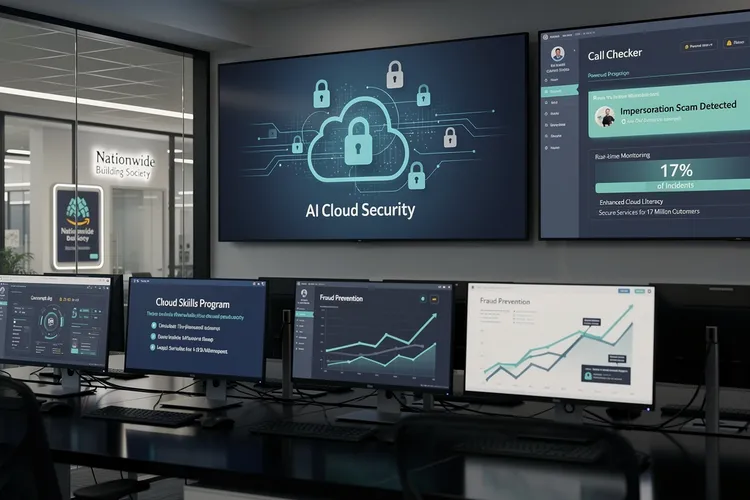
Nationwide’s AI Fortress: AWS Bolsters Fraud Defenses for 17 Million Clients
Nationwide Building Society expands its AWS partnership to deploy AI-driven cloud security and fraud prevention, powering tools like Call Checker against impersonation scams affecting 17% of incidents. Workforce training boosts cloud literacy for enhanced service to 17 million customers.
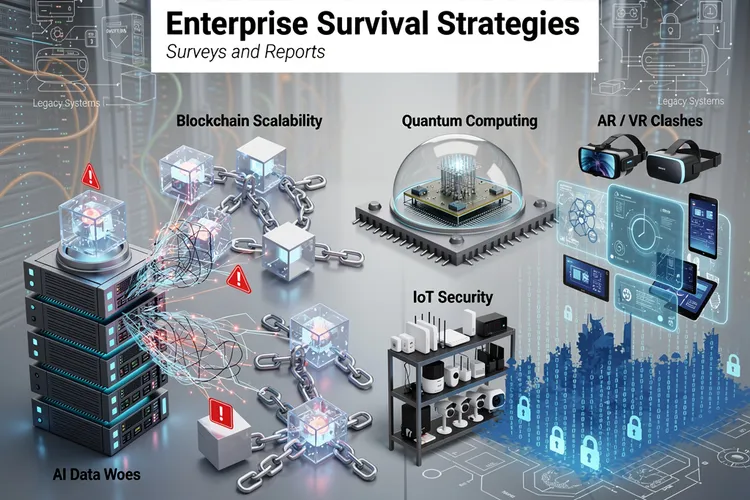
Tech Titans’ Integration Nightmares: Why AI and Quantum Stymie CTOs
CTOs battle AI data woes, blockchain scalability snags, quantum talent voids, IoT security floods, and AR/VR compatibility clashes amid legacy binds. Surveys and reports reveal strategies for enterprise survival.

Inside NC State’s AI Revolution: How Marc Hoit Is Rewriting the Playbook for University Technology Leadership
North Carolina State University CIO Marc Hoit is pioneering AI democratization in higher education through collaborative stakeholder engagement rather than top-down mandates. His approach prioritizes widespread access to AI tools across campus while building governance frameworks that enable innovation without sacrificing institutional protections.

Apple’s Safari Technology Preview 236 Signals Strategic Shift in Browser Development Amid Growing Competition
Apple's Safari Technology Preview 236 introduces significant WebKit improvements and privacy features amid intense browser competition. The release highlights Apple's strategic priorities as regulatory pressures and market dynamics reshape the browser ecosystem.

The Battle Against Cookie Consent Fatigue: How Browser Extensions Are Reshaping Digital Privacy Compliance
Cookie consent banners have become the web's most frustrating feature, spawning browser extensions that automate privacy choices. This deep dive examines the technical, legal, and business implications of automated consent management and its role in reshaping digital privacy compliance.

China’s Mandate to End Tesla’s Flush Door Handles Signals Broader Safety Reckoning for Electric Vehicle Design
China mandates traditional door handles on all vehicles by 2027, targeting Tesla's signature flush design over emergency safety concerns. The regulation forces manufacturers to abandon electronically-activated systems in the world's largest automotive market, with implications for global EV design standards.

America’s Cybersecurity Deficit: Why Strategic Vision Without Operational Execution Leaves Critical Infrastructure Vulnerable
The United States possesses comprehensive cybersecurity strategy documents but lacks operational roadmaps to implement them effectively. This gap between policy and practice leaves critical infrastructure vulnerable to sophisticated threats, requiring detailed frameworks for coordination, resource allocation, and accountability across government and private sectors.

AMD’s AI Ambitions Meet Wall Street’s Reality Check: Why Strong Growth Wasn’t Enough
AMD's 34% revenue growth to $10.3 billion and surging data center sales failed to satisfy investors seeking bigger AI gains. The chipmaker's stock dropped 8% after forecasting Q1 revenue below $10 billion, highlighting the intense pressure facing semiconductor companies in the AI era.
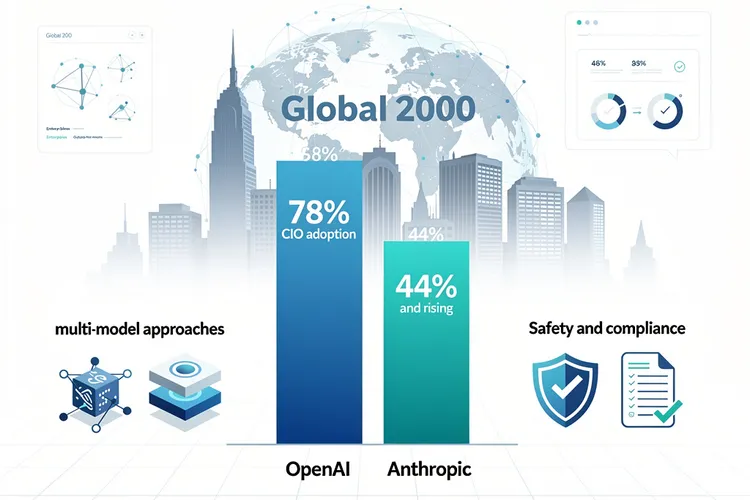
The Enterprise AI Power Struggle: How Anthropic’s Claude is Challenging OpenAI’s Dominance in Corporate America
A survey of Global 2000 companies reveals OpenAI leads with 78% CIO adoption, but Anthropic's rapid rise to 44% signals a fundamental shift in enterprise AI strategy as organizations embrace multi-model approaches and prioritize safety and compliance.

Palantir’s Explosive Growth Signals New Era of AI Dominance in Government and Enterprise Markets
Palantir Technologies delivered fourth-quarter revenue of $1.41 billion, crushing Wall Street estimates with 70% year-over-year growth. The AI software firm's aggressive 2026 guidance projects revenue reaching $7.19 billion, substantially exceeding analyst expectations, while net income surged eight-fold to $608 million, demonstrating sustainable profitability amid broader market concerns about AI valuations.
Inside Huawei Cloud’s Bold 2026 Partner Strategy: How Data Centers Become the Cornerstone of AI Infrastructure Expansion
Huawei Cloud's 2026 partner strategy positions data centers as strategic allies in AI infrastructure expansion, offering unprecedented revenue-sharing models and technical integration. The approach targets emerging markets with generous incentives while navigating geopolitical constraints and semiconductor restrictions.
Upwind’s Runtime Revolution: $250M Fuels $1.5B Cloud Security Unicorn
Upwind's $250 million Series B catapults it to $1.5 billion valuation, powering runtime-first cloud security amid 900% revenue surge. Backed by Bessemer and all-stars, the ex-Spot.io team targets AI-era threats for giants like Siemens and Roku.
Pentagon’s New Technology Chiefs Signal Major Shift in Defense Innovation Strategy
The Pentagon's Chief Technology Officer has selected six defense technology veterans with diverse backgrounds—from Amazon executives to marine biologists—to lead Critical Technology Areas, signaling a major shift in how the Defense Department approaches innovation and maintains technological superiority against strategic competitors.
Inside Elon Musk’s Audacious Plan to Fuse Rockets and AI: The SpaceX-xAI Megamerger
Elon Musk is merging SpaceX and xAI in a deal combining an $800 billion rocket manufacturer with a $230 billion AI startup, advancing his vision of space-based data centers while consolidating his technological empire ahead of a planned summer IPO.
Verizon’s Subscriber Surge Signals Schulman’s Turnaround Triumph
Verizon crushed Q4 2025 expectations with 616,000 postpaid phone adds under CEO Dan Schulman, issuing bullish 2026 guidance post-Frontier acquisition. Revenue hit $36.4 billion, signaling a strategic revival amid fierce competition.
Nevada’s Urgent Hunt for a Cyber Sentinel After Ransomware Chaos
Nevada seeks a permanent CISO after 2025 ransomware chaos disrupted 60 agencies, stole data, and exposed gaps. The role demands strategy, response leadership amid SOC buildup and federal aid, signaling a hardened push for resilience.
How a Startup’s Unsecured Database Exposed the Fragility of AI Agent Platforms
Moltbook's completely exposed database allowed anyone to hijack AI agents on the platform, revealing how rapid AI deployment is outpacing basic cybersecurity practices. The incident highlights growing security debt in the AI startup ecosystem and regulatory gaps in governing autonomous agent platforms.
DevSecOps Arsenal: Pentagon’s Push for Warfighter Code at Warp Speed
The Pentagon's DevSecOps revolution integrates security into rapid software delivery, powering over 50 factories and slashing deployment times. From Platform One's secure pipelines to cATO approvals, it equips warfighters with resilient digital edge against evolving threats.
The Invisible Shield: Why Industrial Cybersecurity Still Can’t Quantify Its Worth to the Boardroom
Despite mounting threats to industrial control systems, OT cybersecurity teams face a persistent challenge: proving their value to executives when success means incidents that never happen. The struggle to quantify risk reduction in business terms leaves critical infrastructure chronically underprotected.
Data Scientist’s Trek: From Paris Courts to Australian Mineshafts
Simon Barres bridges labs and mines at QuantumBlack, deploying AI to optimize mining yields with sensor data and real-time models. His journey from Guadeloupe basketball to Amsterdam AI leadership highlights multidisciplinary impact in heavy industry.
175,000 Kubernetes Clusters Exposed: The Massive Cloud Security Blind Spot Threatening Enterprise Infrastructure
Security researchers have discovered approximately 175,000 publicly accessible Kubernetes clusters with critical misconfigurations, exposing enterprise infrastructure to potential exploitation. This massive security gap highlights fundamental challenges in cloud security practices and the urgent need for organizations to audit and secure their containerized applications.
DevSecOps Alignment Gap: Survey Exposes Tooling Friction in Security-DevOps Teams
A Sumo Logic survey of 506 leaders reveals DevOps-security misalignment despite shared tools, with tool sprawl and AI demands exposing urgent needs for unified platforms and better collaboration.
Inside Microsoft’s Billion-User Claim: How Windows 11 Defied Its Critics and Reached a Milestone Nobody Saw Coming
Microsoft claims Windows 11 has reached one billion users, yet the operating system remains widely criticized and trails Windows 10 in market share. This paradox reveals how modern OS adoption occurs through passive channels rather than user enthusiasm, reshaping what success means in today's computing environment.
Google Transforms BigQuery Into an AI-Powered Conversational Platform for Enterprise Data Analytics
Google Cloud has transformed BigQuery with conversational AI agents and custom development tools, enabling natural language data queries while providing frameworks for governed, domain-specific AI applications. The expansion represents a fundamental shift in enterprise data analytics amid intensifying competition in the cloud warehouse market.
Why Security Awareness Training Fails: The Shift to Human Risk Management in Corporate Cybersecurity
Despite billions spent on security awareness training, human error remains the leading cause of breaches. Human risk management offers a data-driven alternative, focusing on behavioral change rather than knowledge transfer to address cybersecurity's most persistent vulnerability.
The Silent Invasion: How KimWolf Botnet Infiltrated Enterprise Networks Undetected for Months
The KimWolf botnet has quietly infiltrated corporate and government networks worldwide, using sophisticated stealth techniques to evade detection for months. This credential-based attack represents a concerning evolution in cyber threats, prioritizing long-term persistence over immediate disruption.
SAS Solidifies Market Position as Enterprise AI Adoption Demands Measurable Returns
SAS Institute secures multiple analyst recognitions as enterprise AI adoption shifts from experimentation to demanding measurable ROI. The analytics veteran navigates intensifying competition while organizations increasingly scrutinize technology investments for concrete business value and regulatory compliance capabilities.
Data Science’s Engineering Reckoning: Redefining Foundations, Training and Identity
Data science faces an identity crisis, but framing it as engineering resolves fragmentation in education and roles. Tom Narock proposes specializations, rigorous training and professional standards to prioritize reliable systems over unicorns.
Subscribe Newsletter
Subscribe to our newsletter and stay up to date with the latest news, updates, and exclusive offers. Join our community today!
Enterprise Shields Fracture: 2026’s Cyber-Physical Reckoning
As cyber-physical boundaries dissolve in 2026, enterprises confront AI-fueled attacks, cloud fragility, quantum risks, and regulatory demands. Unified defenses, Zero Trust, and resilient architectures are essential to avert cascading failures costing millions per incident.
WSU’s AI Arsenal Targets Cancer and Pandemics
Washington State University harnesses AI for cancer data analysis, virus prediction, and rapid diagnostics, accelerating medical breakthroughs while addressing ethical challenges. Tools map disparities and optimize treatments, positioning WSU at the forefront of health innovation.
The Data Science Career Paradox: Why Traditional Learning Paths Are Failing Aspiring Professionals in 2026
The data science job market has fundamentally shifted in 2026, rendering traditional learning paths ineffective. While more candidates than ever hold certifications, employers struggle to find professionals who can demonstrate real business impact, creating a paradox where credential accumulation has become disconnected from employability.
The Developer’s Dilemma: How AI Code Generators Are Creating a Skills Crisis in Software Engineering
As AI code generators accelerate software development, they're simultaneously eroding developers' fundamental skills needed to debug and validate that code. This paradox threatens software quality and security across enterprises, creating a skills crisis that may outweigh productivity gains.
Inside the FBI’s Takedown of RAMP: How Law Enforcement Dismantled a $20 Million Cybercrime Marketplace
The FBI's seizure of RAMP, a notorious darknet forum facilitating ransomware operations and cybercrime worth $20 million, marks a significant law enforcement victory. This international operation disrupts critical criminal infrastructure while highlighting ongoing challenges in combating sophisticated transnational digital threats and the adaptable nature of cybercriminal ecosystems.
The Dark Side of Autonomous AI: How Agentic Systems Could Become Weapons in Cybercriminals’ Arsenals
As autonomous AI agents evolve from theoretical constructs into practical tools, security experts warn these systems could become sophisticated weapons for cybercriminals. With capabilities to independently plan, execute, and adapt strategies, agentic AI presents unprecedented threats that could overwhelm traditional defenses and fundamentally transform the cybersecurity paradigm.
Archives
Authors
More ...-
 Vivian Stewart 57 articles
As a writer, Vivian Stewart covers retail operations with an eye for detail. They work through comparative reviews and hands‑on testing to make complex topics approachable. They believe good analysis should be specific, testable, and useful to practitioners. They frequently translate research into action for marketing teams, prioritizing clarity over buzzwords. Their coverage includes guidance for teams under resource or time constraints. They explore how policies, markets, and infrastructure intersect to create second‑order effects. They write about both the promise and the cost of transformation, including risks that are easy to overlook. They frequently compare approaches across industries to surface patterns that travel well. Readers appreciate their ability to connect strategic goals with everyday workflows. Their reporting blends qualitative insight with data, highlighting what actually changes decision‑making. They maintain a balanced tone, separating speculation from evidence. They are known for dissecting tools and strategies that improve execution without adding complexity. They emphasize decision‑making under uncertainty and imperfect data. Their work aims to be useful first, timely second.
-
 Emily Scott 68 articles
As a writer, Emily Scott covers consumer behavior with an eye for detail. They work through clear frameworks, case studies, and practical checklists to make complex topics approachable. They value transparent sourcing and prefer primary data when it is available. A recurring theme in their writing is how teams build repeatable systems and measure impact over time. They often cover how organizations respond to change, from process redesign to technology adoption. Their reporting blends qualitative insight with data, highlighting what actually changes decision‑making. They emphasize responsible innovation and the constraints teams face when scaling products or services. They maintain a balanced tone, separating speculation from evidence. Their coverage includes guidance for teams under resource or time constraints. Readers appreciate their ability to connect strategic goals with everyday workflows. They write about both the promise and the cost of transformation, including risks that are easy to overlook. They tend to favor small experiments over sweeping predictions. They value transparency, practical advice, and honest uncertainty.
-
 Emily Chen 63 articles
Known for clear analysis, Emily Chen follows retail operations and the people building it. They work through clear frameworks, case studies, and practical checklists to make complex topics approachable. They often cover how organizations respond to change, from process redesign to technology adoption. Readers appreciate their ability to connect strategic goals with everyday workflows. They examine how customer expectations evolve and how organizations adapt to meet them. They value transparent sourcing and prefer primary data when it is available. A recurring theme in their writing is how teams build repeatable systems and measure impact over time. They also highlight cultural factors that determine whether change sticks. They avoid buzzwords, focusing instead on outcomes, incentives, and the human side of technology. They explore how policies, markets, and infrastructure intersect to create second‑order effects. They believe good analysis should be specific, testable, and useful to practitioners. They tend to favor small experiments over sweeping predictions. They value transparency, practical advice, and honest uncertainty.
-
 Layla Reed 56 articles
Known for clear analysis, Layla Reed follows retail operations and the people building it. They work through long‑form narratives grounded in real‑world metrics to make complex topics approachable. They believe good analysis should be specific, testable, and useful to practitioners. They avoid buzzwords, focusing instead on outcomes, incentives, and the human side of technology. They explore how policies, markets, and infrastructure intersect to create second‑order effects. They frequently compare approaches across industries to surface patterns that travel well. They are known for dissecting tools and strategies that improve execution without adding complexity. A recurring theme in their writing is how teams build repeatable systems and measure impact over time. Their reporting blends qualitative insight with data, highlighting what actually changes decision‑making. They often cover how organizations respond to change, from process redesign to technology adoption. They maintain a balanced tone, separating speculation from evidence. Outside of publishing, they track public datasets and industry benchmarks. Readers return for the clarity, the caution, and the actionable takeaways.
-
 Stella Evans 57 articles
Stella Evans is a journalist who focuses on AI deployment. They work through trend monitoring with careful context and caveats to make complex topics approachable. They believe good analysis should be specific, testable, and useful to practitioners. They examine how customer expectations evolve and how organizations adapt to meet them. Their reporting blends qualitative insight with data, highlighting what actually changes decision‑making. Readers appreciate their ability to connect strategic goals with everyday workflows. They write about both the promise and the cost of transformation, including risks that are easy to overlook. They also highlight cultural factors that determine whether change sticks. Their coverage includes guidance for teams under resource or time constraints. Their perspective is shaped by interviews across engineering, operations, and leadership roles. They often cover how organizations respond to change, from process redesign to technology adoption. They maintain a balanced tone, separating speculation from evidence. They are interested in the economics of scale and operational resilience. They prefer evidence over hype and explain trade‑offs plainly.
-
 Micah Shaw 60 articles
Micah Shaw specializes in developer productivity and reports on the systems behind modern business. Their approach combines interviews with operators and data‑backed analysis. Their perspective is shaped by interviews across engineering, operations, and leadership roles. Readers appreciate their ability to connect strategic goals with everyday workflows. They frequently compare approaches across industries to surface patterns that travel well. Their reporting blends qualitative insight with data, highlighting what actually changes decision‑making. They maintain a balanced tone, separating speculation from evidence. Their coverage includes guidance for teams under resource or time constraints. They emphasize responsible innovation and the constraints teams face when scaling products or services. They are known for dissecting tools and strategies that improve execution without adding complexity. They look for overlooked details that differentiate sustainable success from short‑term wins. A recurring theme in their writing is how teams build repeatable systems and measure impact over time. They watch the policy landscape closely when it affects product strategy. Their work aims to be useful first, timely second.