







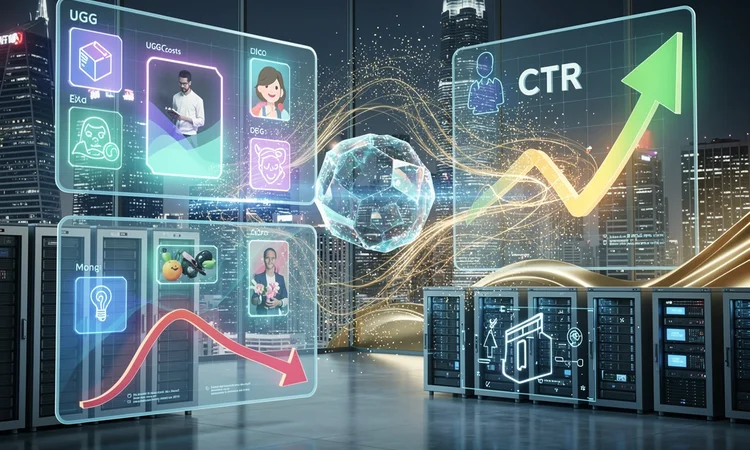
Artificial intelligence is flooding digital marketing with synthetic user-generated content, slashing production costs and accelerating ad campaigns for e-commerce brands. Tools like Creatify and MakeUGC enable marketers to generate realistic video testimonials in minutes, challenging traditional creators who charge $300 to $800 per clip. Global AI marketing revenue is projected to hit $107 billion by 2028, with 93% of marketers reporting faster content creation from these technologies, according to Fibre2Fashion .
Brands such as Unilever are remixing influencer videos with AI to achieve billions of impressions at reduced costs, as noted by Mintly Blog . On X, marketer MAX (@maxxmalist) demonstrated generating an AI UGC ad in under 30 seconds, declaring, “if you’re still paying $300–$800 per video… that era is dead – ai is already coming for the UGC market.” This shift promises 72% higher return on ad spend through optimized creatives, per Fibre2Fashion data.
Yet authenticity concerns persist. While 92% of consumers trust genuine UGC over brand ads, AI versions must blend human nuances to avoid detection, with 50% of shoppers spotting synthetic content and disengaging, as reported by August Ash .
Tools Powering the Shift
Platforms like HeyGen, Synthesia, and Creatify dominate, offering 1,000+ avatars with multilingual support. Creatify users report up to 130% higher click-through rates and 96% cost reductions, according to PiXENDA . MakeUGC.ai claims 3.1x average ROAS across 300+ brands, with videos produced for under $10 each versus weeks for human shoots.
Amazon tests AI voiceovers for product reviews, where “AI-powered shopping experts have done the research for you,” said Rajiv Mehta, Vice President of Search and Conversational Shopping, via inBeat Agency . Headway edtech garnered 3.3 billion impressions and 40% video ad ROI gains using AI UGC on TikTok.
X user George Stock (@georgesttock) highlighted AI UGC holding products from one image, yielding 88% higher conversions and 6.2x engagement, with 98% of viewers unable to detect AI.
Performance Metrics Surge
AI UGC delivers ROI 78% faster than text content, boosting average order values by 40% via personalization, Fibre2Fashion reports. Brands see 47% higher click-through rates and 29% lower acquisition costs. On Reddit’s r/digital_marketing, users noted 15% CTR jumps after switching to UGC-style ads, with AI tools like Flarecut Studio praised for model flexibility.
Simon (@SimonChoucrounz) on X predicts UGC creators must adapt: “Brands will still hire creators, but they won’t pay you to hold a camera anymore. They will pay the creators who can utilize AI.” MakeUGC.ai enables 30 ads monthly with authentic B-roll and 300+ avatars.
Real-time analytics from AI yield 37% more campaign responses, inBeat Agency states, as Meta and TikTok expand APIs for seamless integration.
Regulatory Guardrails Tighten
China’s Cyberspace Administration mandates visible and metadata labels for AI content since September 2025. The EU AI Act, fully operational by 2026, requires transparency for synthetic media in ads. The U.S. FTC bans fake reviews, emphasizing disclosure: “It prohibits businesses from creating or selling such reviews,” per their press release cited by inBeat Agency.
Best practices include labeling AI content and hybrid blending with real UGC to preserve trust. Influentials warns, “In 2026, AI will not replace creators,” positioning it as a co-pilot for efficiency while humans provide emotional connection.
Brands ignoring regulations risk fines and backlash, especially as 79% of consumers let UGC sway purchases, Fibre2Fashion notes.
Hybrid Models Emerge Victorious
Top performers combine AI scale with human oversight. Mintly Blog asserts, “AI-generated UGC and synthetic influencers won’t fully replace human creators… hybrid approaches that blend AI speed with human creativity are dominating.” Micro-influencers and nano-creators outperform on engagement, per Influentials’ 2026 trends.
UGC Go (@UGC_GO) on X cautions, “We’re seeing more brands rely on AI-generated UGC ads… But the most important effect gets lost: relatability and trust. People don’t connect with avatars.” Platforms reward raw, human-style content amid polished AI saturation.
By 2026, 90% of online content may be AI-generated, yet demand for genuine experiences persists, Fibre2Fashion predicts, urging brands to augment rather than automate fully.
2026 Trends Accelerate Adoption
Expect interactive AI actors, multilingual scaling, and VR integration, as teased by MakeUGC.ai. Social commerce surges with shoppable AI UGC, while always-on creator programs replace bursts. Performance attribution ties pay to revenue, Influentials forecasts.
X’s Stijn Feijen (@spwfeijen) showcased Sora x MakeUGC generating 350+ ads instantly, boosting reach 20x without agencies. Proceed Innovative envisions hyper-targeted ads standard by 2026.
For insiders, the pivot demands AI fluency alongside strategic human input, transforming budgets from production to optimization and turning marketing into an always-on engine.






Leave a Reply
Your email address will not be published.