



TikTok Finalizes US Restructuring Deal with Oracle, Avoids Ban

TikTok Finalizes US Restructuring Deal with Oracle, Avoids Ban

TikTok has finalized a deal to restructure its U.S. operations into a new entity majority-owned by American and allied investors, including Oracle, Silver Lake, and MGX, with ByteDance retaining a 20% stake. This hybrid model addresses data security concerns, avoids a nationwide ban, and sets a precedent for global tech sovereignty.

Posted on: by Roman Grant
AI Answers Demand New Rules: Why Google SEO Fails ChatGPT Citations

AI Answers Demand New Rules: Why Google SEO Fails ChatGPT Citations

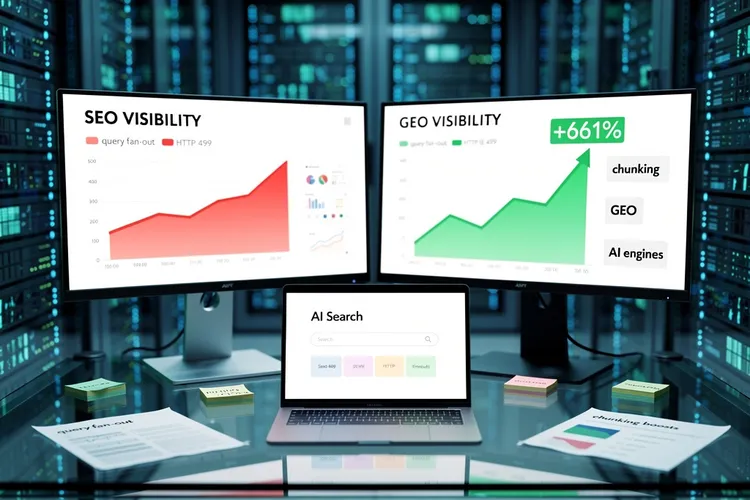
Mike King reveals why Google SEO tactics fail AI engines like ChatGPT, from query fan-out to HTTP 499 timeouts and chunking boosts. Case studies show 661% visibility gains via GEO.

Posted on: by Chloe Ortiz
Oracle Data Center Failure Exposes Critical Vulnerabilities in TikTok’s Newly American Infrastructure

Oracle Data Center Failure Exposes Critical Vulnerabilities in TikTok’s Newly American Infrastructure

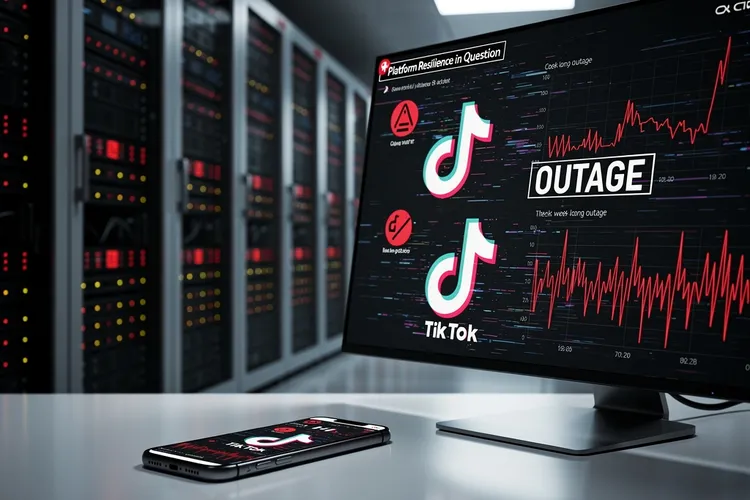
TikTok's first major technical crisis under American ownership exposed critical vulnerabilities in Oracle's data center infrastructure, disrupting posting capabilities and analytics for millions of users. The week-long outage raises urgent questions about the resilience of the platform's newly restructured operations.

Posted on: by Chloe Ortiz
CLICKFORCE’s AI Leap: Bedrock Agents Slash Ad Analysis from Weeks to Hours

CLICKFORCE’s AI Leap: Bedrock Agents Slash Ad Analysis from Weeks to Hours

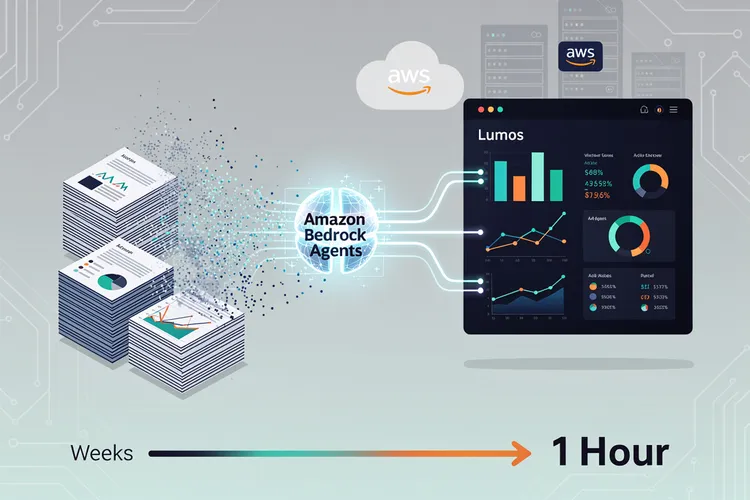
CLICKFORCE harnesses Amazon Bedrock Agents in Lumos to automate ad market analysis, cutting weeks of work to one hour. Powered by AWS services, it delivers precise insights, setting a new benchmark for data-driven advertising efficiency.

Posted on: by Aria Brooks
TikTok’s Data Center Blackout: Power Failure Exposes Vulnerabilities in New U.S. Era

TikTok’s Data Center Blackout: Power Failure Exposes Vulnerabilities in New U.S. Era

A power outage at a U.S. data center crippled TikTok's services over the weekend, disrupting algorithms and feeds just after its U.S. ownership shift. The new joint venture blames technical failure, not censorship, as users face login woes and old videos.

Posted on: by Elena Brooks
AI’s Email Revolution: Leaders’ Guide to Smarter Campaigns in 2026

AI’s Email Revolution: Leaders’ Guide to Smarter Campaigns in 2026

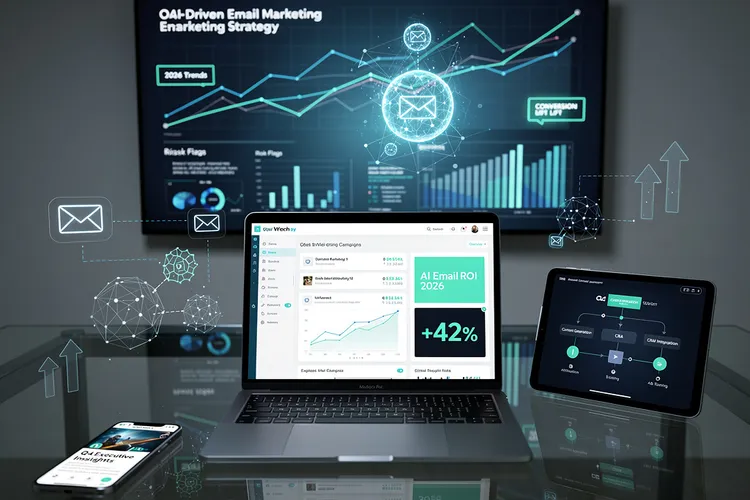
This deep dive explores AI's transformative role in 2026 email marketing, offering executives strategies for content generation, integration, and measurement while navigating pitfalls and future trends for superior ROI.

Posted on: by Roman Grant
Boss Wallah’s UGC Pivot: Capturing the $8.4 Billion Creator Gold Rush

Boss Wallah’s UGC Pivot: Capturing the $8.4 Billion Creator Gold Rush

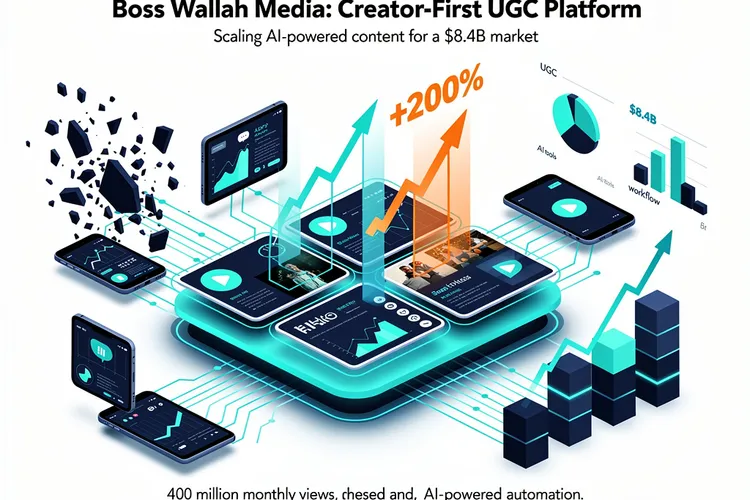
Boss Wallah Media launches a creator-first UGC platform targeting the $8.4 billion market, leveraging 400 million monthly views and AI tools to fix fragmented production. Backed by real client wins like 200% engagement boosts, it empowers creators amid booming demand.

Posted on: by Stella Evans
The Search Revolution: How AI Overviews Are Forcing Marketers to Rewrite Digital Strategy

The Search Revolution: How AI Overviews Are Forcing Marketers to Rewrite Digital Strategy

Artificial intelligence is fundamentally transforming search marketing as AI Overviews replace traditional blue links. By 2026, over 60% of queries will generate AI-powered responses, forcing marketers to abandon decades-old SEO strategies and adopt new approaches for visibility in an AI-mediated discovery environment.

Posted on: by Elena Brooks
RealHomes Breach: How a File-Upload Flaw Put 30,000 WordPress Sites at RCE Risk

RealHomes Breach: How a File-Upload Flaw Put 30,000 WordPress Sites at RCE Risk

A critical file-upload flaw in RealHomes CRM plugin exposed 30,000+ WordPress sites to remote code execution. Patches are out, but slow updates leave many vulnerable amid active scans.

Posted on: by Layla Reed
OnlyFans’ $5.5 Billion Gamble: How a Sex-Work Platform Plans Its Path to Wall Street

OnlyFans’ $5.5 Billion Gamble: How a Sex-Work Platform Plans Its Path to Wall Street

OnlyFans is negotiating a $5.5 billion sale to Architect Capital, which plans to build financial infrastructure for adult content creators and pursue a 2028 IPO, challenging traditional finance's reluctance to service the sex work industry.

Posted on: by Maya Grant

Content Engine Overhaul: Why CreativeOps and MOps Demand Fusion in 2026

Grace Wright | 2025-12-20
Content Engine Overhaul: Why CreativeOps and MOps Demand Fusion in 2026

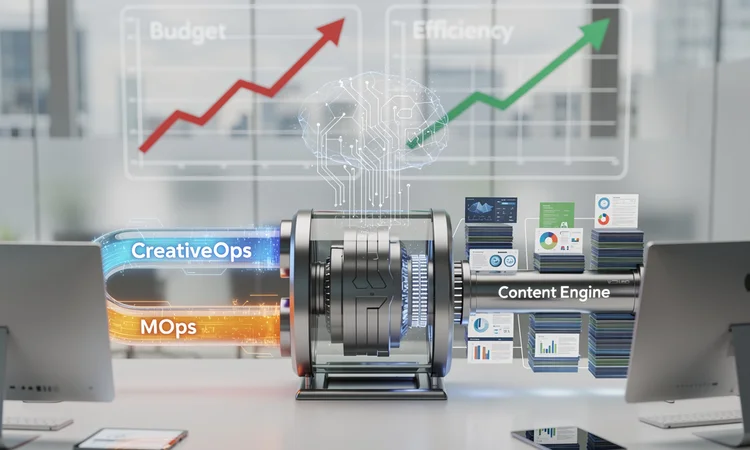
In the tightening grip of budget constraints, marketing leaders face a stark reality: CreativeOps and Marketing Operations (MOps) can no longer function as isolated silos. As Gareth Chilton argues in MarTech , “Creation, decisioning and activation now operate as one engine. Separating creative and marketing operations adds cost, complexity and operational drag.” Digitized workflows powered by generative AI, automation tools, and integrated platforms have rendered traditional handoffs obsolete, forcing a convergence that promises efficiency amid shrinking resources.

Marketing budgets plummeted to 7.7% of company revenue in 2024, a 15% drop from 9.1% the prior year, according to Gartner’s 2024 CMO Spend Survey . This “era of less,” as Gartner terms it, amplifies the friction of divided operations. CreativeOps, once focused on studio throughput like briefing and approvals, now designs modular assets with metadata for automated assembly. MOps, handling campaign launches and data fixes, increasingly governs decision logic and feedback loops. Their separation breeds duplicate processes and middleware reconciliation, eroding ROI.

Macro Pressures Driving Unity

AI acceleration intensifies this shift. McKinsey’s 2025 State of AI reveals 62% of organizations experimenting with AI agents that redefine workflows across functions, moving bottlenecks from production to governance. Forrester’s 2024 Digital Asset Management Wave positions DAM platforms as omnichannel infrastructure, enabling AI-driven personalization that blurs creative and ops boundaries. Adobe’s trends highlight surging content demands—more volume, variants, and speeds—necessitating integrated systems with templates and real-time loops.

Chilton notes, “The content problem is more volume across more variants, for more contexts, at higher speeds.” Without unity, teams duplicate leadership and platforms, funding internal fixes over customer impact. Consolidated models promise shared stewardship of templates, metadata, and KPIs like responsiveness and error rates.

Evolving Roles in the Unified Engine

CreativeOps evolves from job management to system architecture: encoding guardrails, taxonomy stewardship, and quality loops. MOps shifts to real-time system health, integrating data, content, and channels. Sue Wolski, in MarTech , urges mutual learning: CreativeOps precision for campaign SLAs, MOps analytics for briefs. “When MOps and CreativeOps learn from each other, marketing becomes an intelligent, interconnected system,” she writes.

Reporting structures amplify these tensions. Nickole Brown, in another MarTech piece, weighs options: Creative autonomy risks silos, while MOps alignment unlocks tools and data. Cella’s 2024 CIR shows only 39% of in-house creatives in planning, underscoring gaps. Brown advises integration for elevation: “If you’re considering moving creative ops under MOps, do it to elevate creative’s influence.”

Practical Paths to Consolidation

Leaders must assign senior accountability for the end-to-end engine. Pilots with cross-functional teams, shared dashboards, and system metrics map handoffs and codify wins. Screendragon’s 2025 trends , drawn from summit leaders, emphasize data flywheels: “Connect briefing, creative development, and performance data into one seamless process,” says Tom Blenkin. Fergus Ashe adds, “Modern tools link project planning with resourcing and delivery for real-time alignment.”

Hybrid roles emerge—creatives versed in metadata, ops in journeys—as AI multipliers. Events like MOps-Apalooza and Creative Operations Summit highlight community momentum toward unified ops. Chilton warns, “In most enterprise environments, CreativeOps and MOps must either consolidate… or quietly become the most significant source of operational drag.”

Cultural and Structural Hurdles Ahead

The real barrier is cultural: function-first mindsets versus system outcomes. Org charts lag martech reality, fostering shadow operations. Wolski recommends joint planning and retrospectives to validate forecasts against capacity. Brown stresses partnerships: shared goals, transparency, data flows.

2026 demands action. High-performers redesign workflows, invest in hybrids, and measure holistically. As Chilton concludes, “Over the next five years, the organizations that perform best will be those that can move past the old divide and operate content as what it already is—one interconnected system.”


Subscribe Newsletter

Subscribe to our newsletter and stay up to date with the latest news, updates, and exclusive offers. Join our community today!

Comments

Join the discussion and share your thoughts.

No comments yet. Be the first to comment.

Leave a Reply

Your email address will not be published.

Join Us

Share your perspective with confidence. Your experience could inform, inspire, and help someone live better.

Archives

Authors

More ...

Search NexaPress