






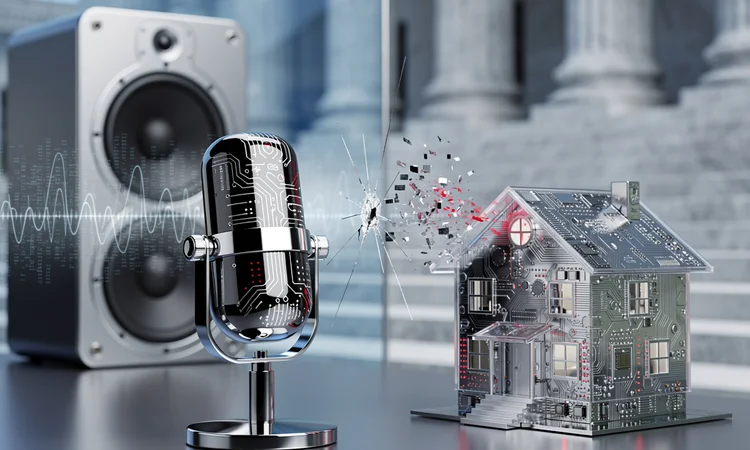
In a bold move blending politics, technology and housing finance, Fannie Mae has unleashed an advertisement featuring an AI-generated voice clone of President Donald Trump, complete with his permission. The 30-second spot, which debuted earlier this week, portrays Mr. Trump extolling the virtues of homeownership as the ‘American Dream’ while urging banks to expand credit access. A clear disclaimer at the video’s end reveals the narration as synthetic, yet the ad has ignited fierce backlash from critics who decry it as a soulless shortcut in an industry built on trust.
The commercial, produced with approval from Mr. Trump’s team, positions Fannie Mae as the ‘protector of the American Dream,’ according to AP News . It arrives amid Mr. Trump’s second term, leveraging his enduring appeal among conservative voters—a key demographic for homebuying. Fannie Mae, the government-sponsored enterprise that backs about half of U.S. mortgages, aims to boost lending amid high interest rates and affordability woes. But the use of AI has drawn sharp rebukes, with some viewing it as manipulative deepfake territory.
Tech Meets Politics in Housing Push
At its core, the ad script has Mr. Trump’s voice declaring, ‘Fannie Mae is making it easier for Americans to buy homes,’ per reports from ABC News . Created using advanced voice synthesis tools, it mimics his distinctive cadence and phrasing with uncanny precision. Fannie Mae executives, speaking off-record to industry insiders, describe it as a cost-effective way to cut through ad clutter, especially as marketing budgets tighten under regulatory scrutiny.
Permission came directly from Mr. Trump, who has embraced AI in past campaigns, including voice clones for robocalls. This isn’t his first digital avatar; similar tech powered Pennsylvania voter outreach in 2024. For Fannie Mae, the gamble pays off in visibility—views have surged past 500,000 on YouTube within days—but at the cost of authenticity debates raging across social media.
Critics Slam ‘Soulless’ Synthetic Narration
Actor Courtney Wilcox captured the sentiment in a pointed Los Angeles Times letter: ‘AI-generated content often feels static, soulless and forgettable.’ She argues businesses chasing AI’s speed overlook its inability to replicate ‘real human emotion,’ citing classics like Hershey’s ‘Christmas Bells’ as enduring benchmarks. Wilcox warns of eroded trust: ‘Using AI to sell products risks spreading false information—showing something that isn’t real.’
The backlash echoes broader industry concerns. Mortgage professionals on platforms like Reddit’s r/technology thread question if AI erodes the personal touch vital for client relationships. One top comment reads: ‘This sets a dangerous precedent for deepfakes in finance,’ reflecting fears of misuse in loan approvals or fraud schemes. National Mortgage News notes the ad’s call for credit expansion aligns with Trump’s deregulatory agenda but risks alienating wary borrowers.
Regulatory Shadows Over AI Voices
Federal regulators are watching closely. The Consumer Financial Protection Bureau has flagged AI’s role in lending disclosures, mandating transparency to prevent deception. Fannie Mae’s disclaimer—’This is an AI-generated voice with permission’—complies with emerging FTC guidelines, but critics like those in National Mortgage News argue it’s insufficient. ‘Consumers deserve the real deal, not a clone,’ one analyst told the outlet.
Palantir Technologies, Fannie Mae’s recent AI partner for fraud detection, adds irony. Their tools slash mortgage fraud analysis from months to seconds, per Fannie Mae’s X posts. Yet applying similar tech to ads blurs lines between verification and fabrication, prompting FHFA reviews of AI in marketing.
Mortgage Industry’s High Stakes
For insiders, the ad’s timing is prescient. With 30-year rates hovering near 7%, Fannie Mae’s HomeReady program—highlighted indirectly—targets low-down-payment buyers. The Trump voice aims to rally lenders, echoing his past pushes for looser underwriting. Mortgage Professional America reports it urges banks to ‘expand credit,’ potentially injecting billions into originations if adopted.
Competitors like Freddie Mac steer clear of such tactics, opting for traditional celebrity endorsements. United Wholesale Mortgage CEO Mat Ishbia tweeted skepticism: ‘AI has its place, but not impersonating leaders in ads.’ Data from Inside Mortgage Finance shows Fannie Mae’s market share at 52%, giving it leverage to experiment—though missteps could invite congressional probes.
Voice Cloning Tech Under Scrutiny
Behind the ad lies ElevenLabs or similar software, trained on public Trump speeches for sub-1% error rates. Experts at MIT’s Media Lab confirm such clones fool 90% of listeners without disclaimers. Newser details how the tech, once niche, now powers ad agencies globally, but housing’s trust factor amplifies risks.
Ethical AI advocates, including the AI Now Institute, decry ‘voice laundering’ as a gateway to scams. In mortgages, where identity theft costs $5 billion yearly, per FBI stats, the ad fuels calls for federal voice-cloning bans akin to Europe’s AI Act.
Consumer Reactions Fuel Firestorm
On X, sentiment splits sharply. Pro-Trump users hail it as ‘genius marketing,’ with thousands of likes on shares. Detractors, including #AIBan hashtags, label it ‘creepy propaganda.’ A viral thread by influencer @HousingWire analyst garnered 10,000 engagements: ‘Fannie Mae just normalized deepfakes for your loan app.’
Polls from Morning Consult show 62% of Americans distrust AI ads, up 15% since 2024. For Fannie Mae, whose brand hinges on stability post-2008 bailout, the controversy tests resilience amid $4 trillion in guarantees.
Future of Ads in Regulated Sectors
Industry veterans predict a backlash-fueled pivot. Ad Age reports agencies pitching ‘human-AI hybrids’—real actors enhanced by synth voices. Fannie Mae may follow, especially as competitors test waters. Los Angeles Times notes the ad’s Davos timing, tying into global housing forums.
Long-term, blockchain verification could authenticate voices, per Deloitte forecasts. Until then, Fannie Mae’s experiment serves as a litmus test: Will AI amplify reach or undermine the human bonds defining home finance?






Leave a Reply
Your email address will not be published.