


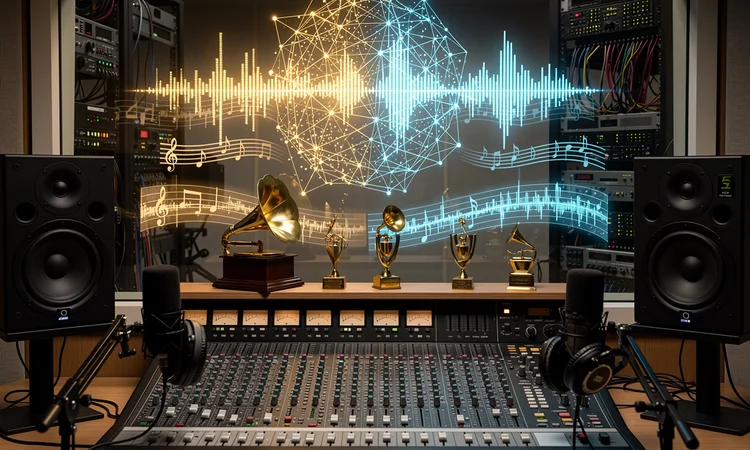
In a bold fusion of artistic legacy and cutting-edge technology, a cadre of Grammy-winning musicians has ventured into uncharted territory with an album that blends human creativity with artificial intelligence. This project, spearheaded by ElevenLabs, marks a significant milestone in how AI is reshaping music production. The album, titled “The Eleven Album,” features collaborations where artists like Liza Minnelli and Art Garfunkel have co-created tracks using AI tools, raising questions about authorship, innovation, and the future of the industry.
The initiative comes at a time when AI’s integration into creative fields is accelerating, prompting both excitement and debate. ElevenLabs, known for its AI audio research, announced the launch with much fanfare, positioning it as a “landmark music series” that unites celebrated talents with their Eleven Music model. This model generates original, studio-quality compositions, allowing artists to maintain full authorship and commercial rights, according to details shared in a press release.
Artists involved span diverse genres and eras, from Broadway icon Minnelli to folk-rock legend Garfunkel, alongside contemporary producers and songwriters. The project isn’t just a gimmick; it’s presented as a genuine collaboration where human input guides AI outputs, resulting in tracks that blend signature styles with algorithmic novelty.
The Architects Behind the AI Melody
ElevenLabs has positioned itself as a frontrunner in AI audio technology, and this album serves as a showcase for their capabilities. As reported by PR Newswire , the company inked deals with industry heavyweights to produce this series, emphasizing a new chapter in music where AI augments rather than replaces human artistry. The Eleven Music model allows for the generation of fully original tracks, which artists then refine and personalize.
Among the contributors are Patrick Patrikios, who has written and produced for pop giants like Britney Spears and Christina Aguilera; Willonius, the songwriter behind viral hits; rapper IAMSU!; composer Demitri Leiros, whose work appears in major streaming platforms; and Emily Falvey, hailed as Nashville’s top new songwriter by Forbes. This eclectic mix underscores the album’s ambition to bridge genres through AI-assisted creation.
The process, as described in various outlets, involves artists providing prompts or initial ideas to the AI, which then composes music that they can iterate upon. This collaborative approach aims to preserve the essence of human emotion while leveraging AI’s speed and versatility in generating melodies, harmonies, and even lyrics.
For industry insiders, this raises intriguing possibilities about workflow efficiencies. Traditional album production can span months or years, involving multiple sessions, revisions, and collaborations. With AI, initial drafts emerge in minutes, allowing artists to focus on refinement and performance. Yet, this speed comes with caveats, as the technology must be trained on vast datasets, potentially stirring concerns over data sources and originality.
The album’s release on platforms like Spotify makes it accessible to a broad audience, but its true impact may lie in how it influences production norms. As CNET notes, if successful, this could redefine music production paradigms, encouraging more artists to experiment with AI tools.
Critics, however, point to potential downsides. The music industry has grappled with AI’s role in voice replication and copyright issues, with past incidents like AI-generated tracks mimicking artists without consent leading to legal skirmishes. ElevenLabs addresses this by ensuring artists retain control and rights, but the broader implications for intellectual property remain a hot topic.
Spotlight on Star Collaborators
Liza Minnelli, an EGOT winner with a storied career in film, theater, and music, lends her iconic presence to the project. Her involvement is particularly noteworthy, as it represents a bridge between classic showbiz and modern tech. According to Blockchain News , Minnelli’s track showcases a blend of her signature sound with AI-generated elements, highlighting new creative possibilities without diminishing her artistry.
Art Garfunkel, half of the legendary duo Simon & Garfunkel, brings his folk sensibilities to the album. His participation signals an openness among veteran artists to embrace innovation, potentially inspiring peers to explore similar avenues. The album positions these legends as “virtual muses,” where AI interprets their styles to create fresh compositions.
Other participants add layers of diversity. IAMSU!’s rap influences introduce hip-hop elements, while Emily Falvey’s songwriting prowess infuses country-tinged narratives. This variety not only broadens the album’s appeal but also demonstrates AI’s adaptability across musical styles, a key selling point for ElevenLabs.
Industry observers are watching closely. Posts on X (formerly Twitter) reflect a mix of enthusiasm and skepticism, with users discussing how this could herald a new era or risk diluting artistic integrity. One post highlighted the historical context, noting past AI involvements in music, like the Beatles’ “Now and Then,” which won a Grammy for its AI-assisted vocal isolation.
The timing aligns with the 2026 Grammy nominations, as detailed on GRAMMY.com , featuring artists like Lady Gaga and Kendrick Lamar. While “The Eleven Album” isn’t nominated yet, its release could influence future categories, perhaps prompting the Recording Academy to consider AI-collaborative works more formally.
For producers and labels, this project offers a blueprint. By partnering with AI firms, they can reduce costs and accelerate releases, but they must navigate ethical minefields, such as ensuring fair compensation for any training data derived from existing works.
Navigating Ethical and Legal Harmonies
The intersection of AI and music isn’t without controversy. Recent years have seen lawsuits over unauthorized use of artists’ voices and compositions in AI training. ElevenLabs’ approach, emphasizing artist-led creation and rights retention, aims to sidestep these issues, as outlined in Forbes .
Still, the debate rages. Some argue that AI democratizes music creation, enabling independent artists to produce high-quality work without expensive studios. Others fear it could flood the market with generic content, making it harder for human creators to stand out.
In terms of technology, Eleven Music builds on advancements in generative AI, similar to models from competitors like Suno and Udio. A separate Forbes article discusses ElevenLabs entering this competitive space, using artist-led releases to demonstrate controlled, ethical AI applications.
Regulatory bodies are taking note. In the U.S., discussions around AI legislation could impact how such tools are developed and used. For now, projects like this album serve as test cases, illustrating best practices for collaboration.
From an insider’s perspective, the economic incentives are clear. Streaming royalties favor prolific output, and AI can help artists maintain relevance by producing more content. However, maintaining quality and authenticity remains paramount.
The album’s reception will be telling. Early buzz on X suggests curiosity, with users sharing links to tracks and debating AI’s role. One viral post even compared it to historical AI music milestones, like Timberland’s AI-generated artist video.
Future Notes in AI-Driven Composition
Looking ahead, “The Eleven Album” could inspire a wave of similar projects. Imagine established bands using AI to experiment with unreleased demos or collaborate posthumously with departed members, echoing the Beatles’ recent success.
For emerging talents, this levels the playing field, providing tools once reserved for well-funded studios. Yet, education on AI’s limitations is crucial—it’s a tool, not a replacement for human ingenuity.
Industry events like the Grammys may evolve to include AI categories, recognizing hybrid creations. As Tomorrow’s World Today explores, AI is already enhancing fan engagement through interactive trivia and experiences tied to awards shows.
Critically, the album challenges notions of creativity. Is a track co-created with AI less “authentic”? Minnelli and Garfunkel’s involvement suggests otherwise, proving that technology can amplify rather than eclipse human expression.
As more artists experiment, the music world must adapt. Labels might invest in AI training, while artists form collectives to advocate for fair use. The key is balance—harnessing AI’s potential while safeguarding the soul of music.
In this evolving symphony, “The Eleven Album” stands as a pioneering overture, inviting insiders to ponder: will AI compose the hits of tomorrow, or merely provide the sheet music for human maestros?
Echoes of Innovation Across Genres
Diving deeper into specific tracks, Minnelli’s contribution reportedly evokes her cabaret roots with AI-infused twists, creating a sound that’s both nostalgic and futuristic. Garfunkel’s folk influences merge with electronic elements, potentially attracting new listeners to his catalog.
The inclusion of hip-hop and pop producers like IAMSU! and Patrikios ensures genre diversity, appealing to varied demographics. This strategic mix could boost streaming numbers, a vital metric in today’s industry.
From a technical standpoint, ElevenLabs’ model uses advanced neural networks to analyze and generate music, trained on diverse datasets while adhering to ethical guidelines. This contrasts with earlier AI music attempts that faced backlash for lacking transparency.
Posts on X capture public sentiment, with some praising the innovation and others wary of job displacement for session musicians. Historical parallels, like AI-predicted Grammy winners from NYU models, underscore AI’s growing predictive and creative roles.
Ultimately, this project exemplifies a thoughtful integration of AI, setting a precedent for responsible innovation in music.
The album’s availability on major platforms democratizes access, allowing fans to experience this hybrid artistry firsthand. As the 2026 Grammys approach, it may spark discussions on eligibility for AI-assisted works, building on precedents like the Beatles’ win.
For industry professionals, the takeaway is clear: embrace AI as a collaborator, not a competitor, to stay ahead in a rapidly changing field.






Leave a Reply
Your email address will not be published.