






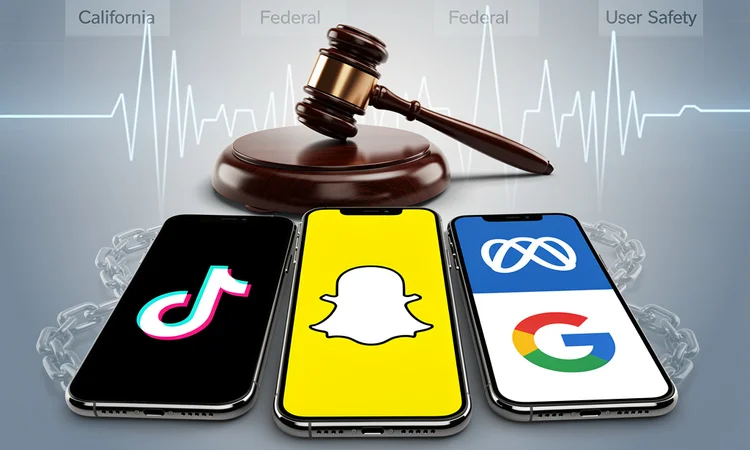
In a decisive move that fractures the unified defense front of Silicon Valley’s social media giants, TikTok and Snap Inc. have agreed to settle a sprawling array of personal injury lawsuits in California state court. The settlements, reached just days before a high-stakes jury trial was set to commence in Los Angeles, resolve allegations that the platforms were deliberately engineered to addict young users, leading to severe mental health crises including depression, eating disorders, and suicide. This strategic pivot, detailed in a report by TechCrunch , effectively removes two of the industry’s most scrutinized players from a bellwether trial that threatened to expose proprietary algorithmic mechanics to the public record.
The agreement halts proceedings in the Judicial Council Coordination Proceeding (JCCP) No. 5255, a consolidated grouping of cases that has hovered over the tech sector as a significant liability risk. While the financial terms remain confidential, the implications of the settlement reverberate far beyond the balance sheets of ByteDance and Snap. By choosing to pay rather than litigate, these companies have implicitly acknowledged the risks associated with a public examination of their internal safety protocols and design choices. This stands in stark contrast to the posture of Meta Platforms and Google, both of which continue to contest similar allegations in federal court, signaling a divergence in legal strategy that may reshape how the industry navigates the mounting wave of safety-related litigation.
The Strategic Calculation Behind Settling Claims to Avoid a Public Airing of Algorithmic Secrets and Internal Communications
For TikTok, the decision to settle comes at a moment of existential precarity. Facing a potential divestiture-or-ban scenario in the United States due to separate federal legislation, the Chinese-owned platform is currently maneuvering through a minefield of regulatory challenges. A highly publicized trial detailing alleged neglect of child safety would have provided fresh ammunition to congressional critics and regulators arguing that the app constitutes a threat to American public health. As reported by Reuters , the settlement allows TikTok to clear a significant portion of its litigation docket, permitting executives to focus their political capital on the fight for the app’s survival in the U.S. market rather than defending against emotional testimony from grieving families in a Los Angeles courtroom.
Snap Inc., the parent company of Snapchat, faces a different set of pressures that likely precipitated its exit from the trial. Unlike its trillion-dollar competitors, Snap operates with tighter margins and a stock price that has struggled to regain its pandemic-era highs. The prospect of a punitive damages award—or simply the exorbitant legal fees associated with a protracted trial—posed a material risk to the company’s financial stability. Furthermore, Snap has long attempted to position itself as the “antidote” to traditional social media, emphasizing direct communication over infinite feeds. Settling these cases allows Snap to avoid a verdict that could lump it definitively into the same category of harm as Facebook and Instagram, preserving its brand differentiation efforts.
Diverging Paths in Silicon Valley as Meta and Google Continue to Test the Limits of Section 230 Immunity
The settlement creates a conspicuous schism in the defense tactics employed by Big Tech. While TikTok and Snap have opted for resolution, Meta and Google remain entrenched in the federal multidistrict litigation (MDL) based in Oakland. These giants appear willing to bet on the robustness of Section 230 of the Communications Decency Act and First Amendment defenses, arguing that they act as publishers rather than product manufacturers. However, recent rulings have chipped away at this shield, with judges suggesting that distinct product features—such as infinite scroll, push notifications, and beauty filters—could be considered product defects rather than protected speech. Bloomberg notes that by settling, TikTok and Snap avoid setting a binding legal precedent in state court that could have been unfavorable to the industry at large, though their capitulation may embolden plaintiff attorneys to press harder against the remaining defendants.
This fragmentation also highlights the varying degrees of exposure each company faces regarding internal documentation. The discovery process in these lawsuits has already unearthed internal emails and studies suggesting that tech executives were aware of the psychological harms their products could cause but prioritized engagement metrics. For Meta, which has weathered the leaking of the “Facebook Papers,” the threshold for reputational damage is arguably higher than for Snap. However, the refusal of the larger players to join the settlement suggests a calculation that the cost of a universal settlement would be astronomical compared to the cost of fighting, given the sheer volume of users on Instagram and YouTube compared to Snapchat.
The Mechanics of Addiction and the Shift from Content Moderation to Defective Product Liability
The core of the plaintiffs’ arguments in these cases rests not on the content users see, but on the design mechanisms that keep them looking. The lawsuits allege that the platforms utilize intermittent variable rewards—similar to slot machines—to induce dopamine loops that developing brains are biologically ill-equipped to resist. By framing the issue as a product liability matter rather than a content moderation issue, plaintiffs have successfully navigated around some traditional legal defenses. Coverage from The New York Times indicates that the settlements validate this legal theory to some extent, proving that companies are willing to pay to avoid testing the “defective design” argument before a jury of peers who may be sympathetic to the plight of parents battling screen addiction.
Moreover, the settlements specifically address cases involving significant bodily harm and death, distinct from generalized anxiety claims. This distinction is crucial for industry insiders to monitor. The willingness to settle suggest that tech companies view “physical” harms—such as eating disorders leading to hospitalization or suicides linked to cyberbullying and algorithmic amplification—as distinct liability categories that are harder to defend than general claims of social media induced depression. This nuance will likely inform future product updates, as trust and safety teams may prioritize mitigating features linked to these specific, severe outcomes to reduce legal exposure.
Financial Ramifications and the Precedent for Future Mass Tort Litigation in the Technology Sector
While the dollar amounts remain sealed, the structure of the settlement suggests a mass tort framework similar to those seen in the pharmaceutical and tobacco industries. Levin Simes, the law firm representing many of the plaintiffs, has effectively utilized the pressure of an imminent trial to force a resolution. This success will likely attract more litigation finance capital into the sector, funding further lawsuits against platform operators. According to analysis by The Wall Street Journal , the cost of doing business for social media companies now includes a baked-in premium for potential tort liabilities, a shift that could impact profitability and force a re-evaluation of the aggressive growth tactics that defined the last decade of the consumer internet.
The settlement also places pressure on the insurance sector. As social media addiction claims move from theoretical risks to settled payouts, insurers underwriting directors and officers (D&O) liability or general commercial liability for tech firms may adjust their premiums or exclusions. If the cost of insuring against these lawsuits rises, it will disproportionately affect smaller platforms and startups, potentially entrenching the dominance of well-capitalized incumbents who can afford to self-insure or absorb massive legal costs. The economic ripple effects will force boardrooms across the sector to treat user safety not just as a PR metric, but as a critical financial risk vector.
Navigating the Post-Settlement Environment and the Future of Regulatory Oversight
Looking ahead, the capitulation of TikTok and Snap in California removes the immediate spectacle of a trial but accelerates the timeline for regulatory intervention. Lawmakers who have been hesitating to pass strict age-verification or design-code laws may view these settlements as an admission of guilt that necessitates legislative clean-up. The Kids Online Safety Act (KOSA) and similar state-level bills will likely gain momentum, fueled by the narrative that litigation alone is insufficient to curb the industry’s excesses. The industry must now prepare for a dual-front war: continued litigation from the holdouts in the federal MDL and a reinvigorated legislative push to codify safety standards that were previously voluntary.
Ultimately, this settlement marks the end of the era of total immunity for social media platforms. By writing checks to resolve claims of addiction and harm, TikTok and Snap have crossed a Rubicon. They have established that the user experience—the very architecture of the app—is a product subject to scrutiny and liability. For product managers, designers, and executives, the directive is shifting from maximizing time-on-site to minimizing liability-inducing design patterns. The industry is entering a maturation phase where the unrestricted engagement hacking of the past is being replaced by a more cautious, legally hedged approach to user retention.






Leave a Reply
Your email address will not be published.