


In an era where artificial intelligence has become deeply embedded in everyday consumer technology, a peculiar phenomenon has emerged that reveals the stark divide between technological sophistication and user comprehension—even among the nation’s wealthiest individuals. The humble call screening feature, a standard component of modern smartphones designed to filter unwanted communications, has become an unexpected source of confusion and frustration for high-net-worth individuals who find themselves bewildered by automated voice prompts asking them to identify themselves.
According to AppleInsider , this disconnect has manifested in numerous complaints from affluent callers who express indignation at being asked to state their name and purpose when attempting to reach contacts. The technology, which has been available on various platforms including Google’s Pixel phones since 2018 and Apple’s iOS devices through third-party applications, represents a democratization of personal gatekeeping—a service that the wealthy have traditionally enjoyed through human assistants and receptionists. Yet when the tables turn and they encounter similar screening mechanisms, many respond with confusion and resentment.
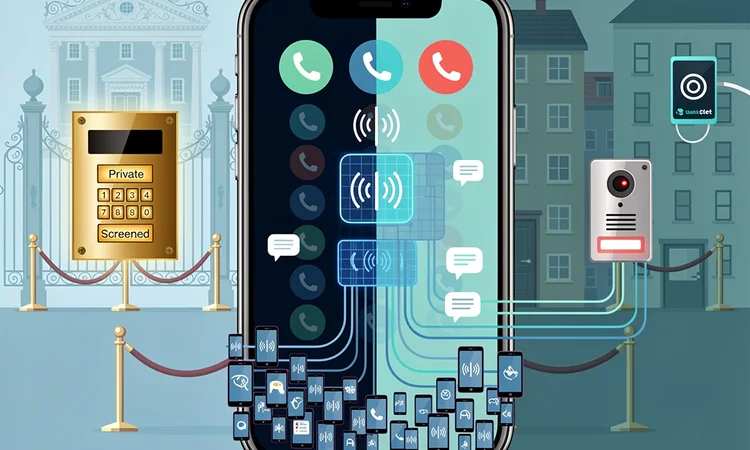
The irony is palpable: individuals who employ personal assistants, executive secretaries, and multi-layered communication protocols to filter their own incoming calls find themselves stymied when facing similar barriers erected by others. This technological equalizer has effectively given ordinary smartphone users the same screening capabilities that were once the exclusive domain of corner offices and executive suites. The feature works by intercepting incoming calls and using either automated voice recognition or AI-powered systems to request that callers identify themselves before the phone rings, allowing recipients to see a transcription of the caller’s response and decide whether to answer, send to voicemail, or block the number entirely.
The Mechanics of Modern Call Screening and Its Evolution
Call screening technology has evolved significantly from its early days as a simple voicemail system. Today’s implementations leverage sophisticated natural language processing and machine learning algorithms to provide users with unprecedented control over their communications. Google’s Call Screen feature, integrated into the Pixel phone line, uses Google Assistant to interact with callers in real-time, asking them to state their name and reason for calling. The system then transcribes this information and displays it on the recipient’s screen, allowing them to make an informed decision about whether to engage.
Apple’s approach has been somewhat different, relying primarily on third-party applications available through the App Store to provide similar functionality, though the company has built robust spam detection and call identification features directly into iOS. These systems analyze calling patterns, reported spam numbers, and other metadata to warn users about potential unwanted calls. The technology represents a significant advancement in personal privacy protection, giving individuals the power to reclaim control over their time and attention in an age of relentless digital interruption.
What makes this situation particularly noteworthy is the behavioral response from those accustomed to unfettered access. The wealthy individuals who express frustration with call screening often fail to recognize that they are encountering the same protective measures they themselves employ—just implemented through software rather than human intermediaries. This disconnect highlights a broader issue in technology adoption: the assumption that one’s own protective measures are justified and necessary, while similar protections employed by others are seen as obstacles or affronts.
The Psychology of Access and Entitlement in the Digital Age
The phenomenon reveals deeper psychological patterns related to access, privilege, and expectations in modern society. For decades, the ability to screen calls and control access has been a marker of status and power. Corporate executives, celebrities, and high-net-worth individuals have long relied on human gatekeepers to manage their communications, ensuring that only the most important or relevant contacts reach them directly. This system reinforced hierarchical structures and maintained clear boundaries between different social and professional strata.
The democratization of call screening through smartphone technology disrupts these traditional power dynamics. When a middle-class professional can deploy the same protective measures as a Fortune 500 CEO, the implicit hierarchy begins to flatten. The wealthy caller who encounters a call screening prompt may experience what psychologists call cognitive dissonance—the uncomfortable feeling that arises when one’s expectations clash with reality. They expect their calls to be answered immediately, yet they encounter the same barriers they routinely impose on others.
This situation also illuminates the often-overlooked relationship between wealth and technological literacy. While affluent individuals typically have access to the latest devices and services, actual proficiency with these tools doesn’t automatically follow. Many rely on staff members or family to manage their technology, creating a knowledge gap that becomes apparent when they encounter features designed for direct user interaction. The call screening prompt assumes a basic understanding of how modern smartphone features work—an assumption that doesn’t always hold true across all demographic groups, regardless of economic status.
Broader Implications for Privacy and Communication Norms
The call screening controversy extends beyond mere technological confusion to touch on fundamental questions about privacy, accessibility, and communication norms in the 21st century. As spam calls, robocalls, and various forms of telephone fraud have proliferated, call screening has evolved from a luxury feature to a practical necessity for many users. The Federal Trade Commission has reported that Americans received billions of robocalls annually, making protective measures essential rather than optional.
For the average smartphone user, call screening represents a critical defense against an onslaught of unwanted communications. Scammers, telemarketers, and fraudsters have become increasingly sophisticated, employing tactics like caller ID spoofing to make their calls appear legitimate. In this environment, the ability to screen unknown callers before engaging with them provides both security and peace of mind. The technology serves as a digital moat, protecting users’ time, attention, and potentially their financial security.
Yet the implementation of these protective measures creates new social challenges. When does prudent self-protection become antisocial behavior? How do we balance the need for security with the expectation of accessibility? These questions become particularly acute in professional contexts, where missing an important call could have significant consequences. The tension between protection and accessibility reflects broader societal debates about privacy, security, and the nature of human connection in an increasingly digital world.
The Class Divide in Digital Tool Adoption and Understanding
The confusion experienced by wealthy individuals when encountering call screening technology reveals a less-discussed aspect of the digital divide. While much attention has been paid to gaps in technology access based on income, less focus has been placed on gaps in technology comprehension and effective use. Wealth can provide access to devices and services, but it doesn’t guarantee understanding of how these tools work or why they exist.
This comprehension gap manifests in various ways across the socioeconomic spectrum. While lower-income individuals may struggle with access to technology itself, higher-income individuals may struggle with understanding features they’ve never needed to use personally. The wealthy caller confused by call screening may have never needed to protect themselves from spam calls in the same way that someone with a publicly listed number might. Their communications are typically managed through business lines, personal assistants, or private numbers shared selectively—creating a bubble of protection that makes consumer-level screening features seem unnecessary or confusing.
The phenomenon also highlights how technology designed for mass-market consumers can sometimes fail to account for different use cases and expectations. Call screening features are typically designed with the assumption that users want to avoid unwanted calls from strangers, telemarketers, and scammers. They’re less optimized for scenarios where callers might be important business contacts, service providers, or others who have legitimate reasons to call but may not be in the recipient’s contact list. This design assumption works well for the majority of users but creates friction for those whose communication patterns differ from the norm.
Redefining Communication Etiquette in the Smartphone Era
The call screening debate ultimately forces a reckoning with evolving communication etiquette in the smartphone era. Traditional phone etiquette, established in an age when telephone calls were relatively rare and often important, held that calls should generally be answered promptly and that screening calls was somewhat rude—unless you had a secretary to do it for you. This etiquette reflected a different technological and social reality, one where phone calls were the primary means of real-time communication and where the act of calling someone implied a certain level of urgency or importance.
Today’s communication environment bears little resemblance to that earlier era. With multiple communication channels available—text messages, emails, instant messaging apps, social media—phone calls have become just one option among many, and often not the preferred one. Younger generations in particular tend to view unsolicited phone calls as intrusive, preferring asynchronous communication methods that allow them to respond on their own schedule. In this context, call screening isn’t rude—it’s rational self-protection and time management.
The resistance from some wealthy individuals to call screening technology may represent a generational and cultural lag in adapting to these new norms. Those who came of age in an era when having someone screen your calls was a status symbol may struggle to accept that this capability is now available to everyone and that being screened is no longer a sign of being unimportant—it’s simply the new normal. The technology has democratized a practice that was once exclusive, and with that democratization comes a necessary adjustment in expectations.
Looking Forward: Technology, Access, and Social Adaptation
As artificial intelligence and machine learning continue to advance, call screening is likely to become even more sophisticated and ubiquitous. Future systems may automatically categorize calls, predict their importance based on context and timing, and even conduct preliminary conversations on behalf of users before deciding whether to alert them. These developments will further transform how we think about telephone communication and accessibility, potentially making the current controversy over basic call screening seem quaint in retrospect.
The challenge for technology designers will be creating systems that balance protection with accessibility, security with convenience, and privacy with connection. These systems must account for diverse use cases and communication patterns while remaining intuitive enough for users across all levels of technological literacy. The confusion experienced by some wealthy users when encountering call screening suggests that even seemingly simple features can create unexpected friction when they challenge established expectations or require users to think about technology in new ways.
For society more broadly, the call screening phenomenon offers a valuable lesson about how technology can simultaneously democratize access to protective measures while creating new forms of confusion and conflict. As digital tools continue to evolve and proliferate, we must grapple with questions about who these tools serve, whose needs and expectations they prioritize, and how we can ensure that technological advancement enhances rather than complicates human communication and connection. The wealthy individuals confounded by call screening may be experiencing a small taste of the confusion and frustration that many others feel when confronting unfamiliar technology—a reminder that in the digital age, we’re all navigating new terrain, regardless of our economic status or social position.






Leave a Reply
Your email address will not be published.