







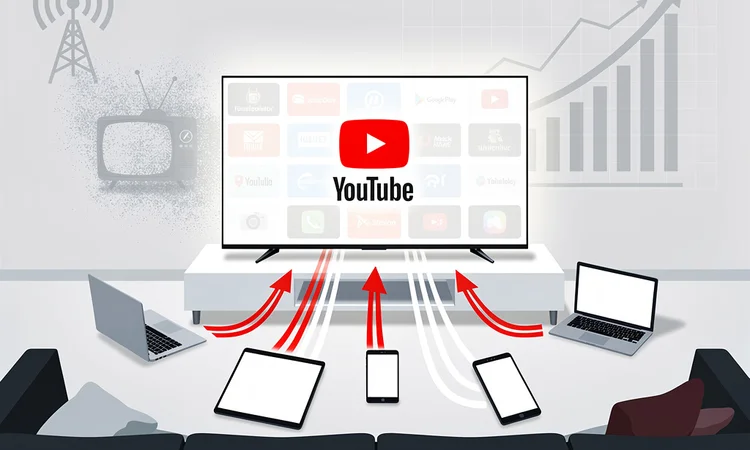
YouTube’s transformation from a platform for cat videos and amateur content into a formidable television competitor has reached a critical inflection point. The Google-owned video giant is now executing a sophisticated strategy designed to cement its position as the primary entertainment destination in American living rooms, fundamentally reshaping how millions consume media and threatening the traditional broadcasting model that has dominated for decades.
According to MakeUseOf , YouTube’s latest initiatives represent a comprehensive approach to television replacement, focusing on three critical areas: enhanced living room experiences, creator incentivization for long-form content, and strategic partnerships with traditional media companies. This multi-pronged strategy comes as YouTube already commands more viewing time on television screens than any single streaming service, including Netflix, according to Nielsen data from 2023.
The platform’s dominance on connected televisions has grown exponentially, with YouTube accounting for 8.6% of all television viewing in the United States as of late 2023. This figure surpasses every other streaming service and represents a seismic shift in viewing habits. Unlike traditional streaming platforms that rely solely on licensed or original content, YouTube’s hybrid model combines professional productions with creator-generated programming, offering an unprecedented breadth of content that keeps viewers engaged for extended periods.
The Creator Economy Fuels Television Ambitions
Central to YouTube’s television strategy is its relationship with content creators, who are increasingly producing programming that rivals traditional television in production quality and audience engagement. The platform has introduced new monetization tools specifically designed to encourage creators to develop longer, more television-appropriate content. These include enhanced ad revenue sharing for content viewed on television screens and promotional algorithms that favor content optimized for the living room viewing experience.
Industry analysts note that YouTube’s creator-first approach provides a sustainable competitive advantage that traditional broadcasters and streaming services cannot easily replicate. While Netflix and Disney+ must invest billions in content production and licensing, YouTube’s decentralized content creation model distributes production costs across millions of creators worldwide. This economic efficiency allows YouTube to offer a virtually unlimited content library without the crushing debt burdens that plague traditional streaming competitors.
Technical Infrastructure Investments Transform User Experience
YouTube has committed substantial resources to improving the technical experience for television viewers, recognizing that living room audiences have different expectations than mobile users. The platform has redesigned its television interface multiple times, introducing features like improved navigation, voice search optimization, and recommendation algorithms specifically calibrated for communal viewing rather than individual consumption.
The company has also invested heavily in streaming quality infrastructure, ensuring that 4K content plays smoothly on large screens and that buffering issues—once a common complaint—have become increasingly rare. These technical improvements have been critical to YouTube’s ability to compete with premium streaming services that have traditionally offered superior playback quality. The platform now supports high dynamic range (HDR) video, surround sound audio, and other features that consumers expect from their television viewing experience.
Advertising Innovation Drives Revenue Growth
YouTube’s advertising model on television represents a fundamental reimagining of how commercials can work in the streaming era. Unlike traditional linear television, which forces all viewers to watch the same advertisements simultaneously, YouTube’s targeted advertising delivers personalized commercials based on viewer demographics, interests, and viewing history. This precision targeting commands premium rates from advertisers while potentially offering viewers more relevant commercial content.
The platform has introduced new ad formats specifically designed for television viewing, including pause ads that appear when viewers stop content, and interactive advertisements that allow viewers to explore products using their remote controls. These innovations have attracted major brand advertisers who previously focused exclusively on traditional television, diversifying YouTube’s revenue base beyond the direct-response advertisers that dominated its early years.
Competition With Traditional Broadcasters Intensifies
Traditional broadcasters have watched YouTube’s ascendance with growing alarm, recognizing that the platform threatens not just their viewership but their entire business model. Major networks have attempted to counter YouTube’s growth by launching their own streaming services and creating YouTube channels, but these efforts have produced mixed results. The fundamental challenge facing traditional broadcasters is that their content production model—expensive, centralized, and risk-averse—cannot compete with YouTube’s distributed creation system in terms of volume, diversity, or cost efficiency.
Some networks have chosen collaboration over competition, licensing their content libraries to YouTube and creating official channels that generate significant viewership. Sports leagues, in particular, have found YouTube to be a valuable platform for highlights, behind-the-scenes content, and supplementary programming that drives engagement with their primary broadcasts. This symbiotic relationship suggests that YouTube’s future may involve integration with traditional media rather than complete replacement.
Regulatory Challenges Loom on the Horizon
As YouTube’s influence over television viewing grows, the platform faces increasing scrutiny from regulators concerned about market concentration and content moderation. Unlike traditional broadcasters, which operate under strict Federal Communications Commission regulations regarding content standards and public interest obligations, YouTube has largely avoided similar oversight by positioning itself as a technology platform rather than a media company.
This regulatory arbitrage may not persist indefinitely. Lawmakers in both the United States and Europe have expressed interest in applying traditional broadcasting standards to large online video platforms, potentially requiring YouTube to implement content restrictions, carry public interest programming, or provide equal time for political candidates. Such regulations could fundamentally alter YouTube’s business model and competitive position, though the company has successfully lobbied against most proposed restrictions to date.
The International Expansion Imperative
While YouTube has achieved remarkable success in the United States, the platform’s global expansion presents both opportunities and challenges. In many international markets, YouTube faces competition from local video platforms with better understanding of regional preferences and existing relationships with local creators. The platform has responded by investing in market-specific features, including support for regional languages, partnerships with local telecommunications companies, and creator development programs designed to cultivate homegrown talent.
Emerging markets represent particularly significant growth opportunities, as millions of consumers in Asia, Africa, and Latin America acquire their first connected televisions. YouTube’s ability to deliver free, ad-supported content gives it a substantial advantage over subscription-based competitors in price-sensitive markets. The platform has introduced lightweight versions of its application designed for regions with limited bandwidth and has partnered with mobile carriers to offer zero-rated YouTube access that doesn’t count against data caps.
Content Moderation at Scale Remains Problematic
YouTube’s transition from internet platform to television replacement has intensified longstanding concerns about content moderation and child safety. Unlike traditional television networks, which employ teams of standards and practices executives to review content before broadcast, YouTube relies primarily on automated systems and user reports to identify problematic content. This reactive approach has led to repeated controversies involving children’s content, misinformation, and extremist material appearing on the platform.
The company has invested billions in artificial intelligence systems designed to identify and remove policy-violating content before it reaches viewers, but these systems remain imperfect. As YouTube becomes the primary video source for families, the stakes of moderation failures increase substantially. Parents who might tolerate occasional inappropriate content on a computer screen have different expectations for material appearing on their living room television, potentially creating reputational risks for YouTube if high-profile moderation failures occur.
The Future of Television Consumption
YouTube’s success in capturing television viewing time reflects broader changes in how audiences consume video content. The rigid schedules and limited choices that characterized traditional broadcasting have given way to on-demand access to virtually unlimited programming. Younger viewers, in particular, show little attachment to linear television, preferring the autonomy and variety that YouTube provides. This generational shift suggests that YouTube’s television dominance will likely accelerate as digital natives age and traditional television viewers decline.
The implications extend beyond entertainment into news, education, and civic discourse. As YouTube replaces local television news and national broadcasts for growing numbers of viewers, questions arise about the platform’s role in maintaining an informed citizenry and supporting democratic institutions. Unlike traditional broadcasters, which face public interest obligations and journalistic standards, YouTube’s algorithmic curation prioritizes engagement over accuracy or importance, potentially creating information ecosystems that reinforce existing beliefs rather than challenging them.
The platform’s evolution from supplementary internet service to primary television replacement represents one of the most significant media transformations in modern history, comparable to the displacement of radio by television in the mid-twentieth century. Whether YouTube can successfully navigate the regulatory, technical, and social challenges that accompany this transition will determine not just the company’s future but the nature of television itself for generations to come.






Leave a Reply
Your email address will not be published.