








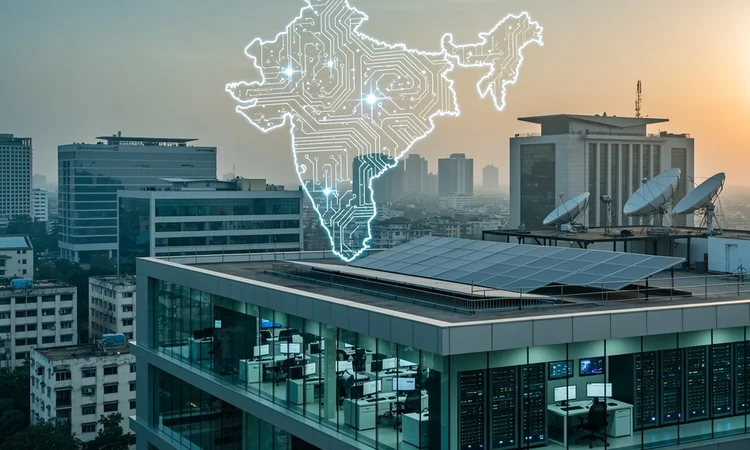
India’s emergence as a global artificial intelligence powerhouse stems not from vast computational resources or massive data centers, but from a deliberate strategy to cultivate human capital at scale. As the nation prepares to host the AI Impact Summit, its approach to developing AI talent offers a pragmatic blueprint that emerging economies can adapt to accelerate their own technological transformation without requiring the infrastructure investments that have defined AI leadership in the United States and China.
The Indian model centers on leveraging existing educational infrastructure, creating industry-academia partnerships, and implementing policy frameworks that incentivize private sector participation in workforce development. According to the Atlantic Council , India’s strategy demonstrates how nations can “enable emerging economies tap the benefits” of AI through focused talent development rather than competing directly with established technology powers on infrastructure spending. This approach has produced over 416,000 AI specialists, positioning India as the second-largest source of AI talent globally, trailing only the United States.
India’s success reflects decades of investment in technical education, particularly through the Indian Institutes of Technology (IITs) and the National Programme on Technology Enhanced Learning (NPTEL). These institutions have created a pipeline that produces approximately 1.5 million engineering graduates annually, with increasing specialization in machine learning, data science, and related AI disciplines. The government’s recent AI for All initiative aims to democratize AI education further by providing free training modules accessible to students across socioeconomic backgrounds.
Building Bridges Between Academia and Industry Demands
The effectiveness of India’s AI talent strategy lies in its ability to align academic curricula with rapidly evolving industry requirements. Major technology companies including Google, Microsoft, and Amazon have established research centers in Bangalore, Hyderabad, and other Indian cities, creating feedback loops that inform educational content and provide students with practical exposure to cutting-edge projects. These partnerships have proven mutually beneficial: companies gain access to cost-effective talent pools while educational institutions receive guidance on market-relevant skills and sometimes direct funding for research initiatives.
The private sector’s role extends beyond hiring graduates. Companies like Tata Consultancy Services, Infosys, and Wipro have developed extensive internal training programs that reskill existing employees in AI technologies. These corporate universities process tens of thousands of professionals annually, effectively functioning as parallel educational systems that complement traditional academic institutions. This dual-track approach addresses both the need for foundational AI education and the requirement for continuous upskilling in a field where knowledge becomes obsolete within years.
Government policy has catalyzed this ecosystem through targeted interventions. The National AI Portal, launched in 2020, serves as a centralized repository for AI resources, datasets, and learning materials. The Ministry of Electronics and Information Technology has allocated funding for AI centers of excellence at premier institutions, while also supporting smaller colleges in tier-2 and tier-3 cities to develop basic AI competencies. These initiatives recognize that AI talent development cannot remain concentrated in elite institutions if India aims to maintain its competitive advantage.
Addressing the Quality-Quantity Balance in Technical Education
Despite impressive numbers, India faces persistent challenges regarding the quality and practical readiness of its AI graduates. Industry surveys consistently indicate that a significant percentage of engineering graduates lack job-ready skills, requiring substantial additional training before contributing meaningfully to AI projects. This gap between credentials and capabilities has prompted reforms in assessment methodologies and greater emphasis on project-based learning, internships, and industry certifications alongside traditional degree programs.
The National Education Policy 2020 attempts to address these concerns by promoting multidisciplinary education, reducing rigid specialization at undergraduate levels, and encouraging critical thinking over rote learning. For AI education specifically, this means integrating ethics, domain knowledge from fields like healthcare and agriculture, and communication skills alongside technical competencies. The policy framework recognizes that effective AI professionals need broader capabilities than purely technical expertise, particularly as AI applications expand into diverse sectors requiring domain-specific understanding.
Language barriers present another dimension to India’s talent development challenge and opportunity. While English proficiency has traditionally been a strength for Indian tech professionals in global markets, the push to democratize AI education requires creating learning materials in regional languages. Several state governments have initiated programs to deliver AI training in Hindi, Tamil, Telugu, and other languages, expanding access beyond English-educated urban populations. This linguistic diversity in AI education could become a template for other multilingual developing nations.
Creating Sustainable Ecosystems Beyond Metropolitan Centers
India’s AI talent strategy increasingly focuses on geographic distribution to prevent brain drain from smaller cities and rural areas to major metropolitan centers or overseas markets. The government’s Digital India initiative has improved internet connectivity in previously underserved regions, enabling remote learning and creating possibilities for distributed AI work. Startup India programs provide incentives for AI ventures in tier-2 and tier-3 cities, attempting to create local employment opportunities that retain talent in their home regions.
This decentralization effort faces significant obstacles, including limited access to mentorship, fewer networking opportunities, and reduced exposure to cutting-edge projects compared to major tech hubs. However, the COVID-19 pandemic’s normalization of remote work has partially mitigated these disadvantages, demonstrating that meaningful AI work can occur outside traditional office environments. Several Indian AI startups now operate with fully distributed teams, sourcing talent from across the country based on skills rather than location.
The retention of AI talent within India remains an ongoing concern, as lucrative opportunities in the United States, Europe, and increasingly in the Middle East continue attracting top graduates. Brain drain represents both a challenge and an unexpected advantage: the Indian diaspora in global tech companies creates networks that facilitate knowledge transfer, investment flows, and eventually, return migration of experienced professionals who bring back expertise and capital. This circular talent flow has become integral to India’s AI ecosystem, though policymakers continue seeking ways to increase the percentage of top talent choosing domestic opportunities.
Establishing Frameworks That Transcend National Boundaries
The Atlantic Council analysis emphasizes that India’s hosting of the AI Impact Summit provides a platform to formalize and share its talent development methodologies with other emerging economies. Unlike technology transfer agreements that often involve proprietary systems and significant costs, workforce development frameworks can be adapted and implemented with relatively modest investments. Countries in Southeast Asia, Africa, and Latin America face similar challenges regarding AI adoption: limited infrastructure budgets, large young populations requiring employment opportunities, and aspirations to participate in the global digital economy beyond low-value services.
India’s experience offers several transferable lessons. First, leveraging existing educational infrastructure proves more effective than building specialized AI institutions from scratch. Second, creating incentives for private sector participation in training reduces the burden on government budgets while ensuring market relevance. Third, focusing on practical skills and project-based learning produces job-ready graduates faster than purely theoretical programs. Fourth, addressing AI education in local languages expands access and creates culturally relevant applications. These principles can guide nations at different development stages in crafting appropriate talent strategies.
The framework also acknowledges that different nations will emphasize different aspects based on their unique circumstances. Countries with strong manufacturing sectors might prioritize AI applications in industrial automation and supply chain optimization, while agricultural economies could focus on precision farming and crop monitoring applications. India’s own AI talent development reflects its service sector strengths, but the underlying principles of aligning education with economic priorities remains universally applicable.
Navigating Ethical Dimensions and Responsible AI Development
As India positions itself as a thought leader in AI talent development, questions of ethics and responsible AI practices gain prominence. The country’s draft AI ethics framework emphasizes transparency, accountability, and fairness, recognizing that AI systems trained on biased data or deployed without adequate safeguards can perpetuate discrimination and cause harm. Integrating these considerations into AI education ensures that the next generation of practitioners approaches technology development with awareness of social implications.
India’s demographic diversity presents both challenges and opportunities for developing ethical AI systems. The country’s experience managing data from populations speaking hundreds of languages, practicing different religions, and spanning vast socioeconomic ranges provides practical insights into building inclusive AI systems. This experience becomes particularly valuable as AI applications expand globally and confront similar diversity challenges. Indian AI professionals trained to consider these factors from the outset bring valuable perspectives to international projects and teams.
The regulatory environment continues evolving to balance innovation with protection. India’s approach has generally favored light-touch regulation that encourages experimentation while establishing guardrails for sensitive applications like facial recognition and automated decision-making in critical sectors. This regulatory philosophy, combined with the talent development strategy, creates an ecosystem where AI innovation can flourish while maintaining public trust. For emerging economies, this balance between enabling innovation and ensuring responsible development represents a crucial consideration often overlooked in purely technical discussions of AI adoption.
Measuring Success Beyond Traditional Metrics
Evaluating the effectiveness of India’s AI talent strategy requires looking beyond simple metrics like the number of graduates or research papers published. More meaningful indicators include the diversity of AI applications being developed, the percentage of AI solutions addressing local problems rather than merely replicating Western applications, and the retention rates of trained professionals within the country or region. India’s growing portfolio of AI applications in agriculture, healthcare, education, and governance suggests that its talent development approach is producing professionals capable of identifying and solving contextually relevant problems.
The economic impact provides another measure of success. India’s AI sector contributes an estimated $7.8 billion to the economy, with projections suggesting this could reach $500 billion by 2025 if current growth trajectories continue. More importantly, AI applications are driving productivity improvements across traditional sectors, with manufacturing companies reporting efficiency gains of 20-30% through AI-enabled predictive maintenance and quality control systems. These economic benefits, distributed across multiple sectors rather than concentrated in technology companies alone, demonstrate the broad-based impact of accessible AI talent.
For other nations considering similar strategies, India’s experience suggests that meaningful results require sustained commitment over years or decades rather than short-term initiatives. The foundation for India’s current AI capabilities was laid through investments in technical education dating back to the 1950s and 1960s. Contemporary AI-specific programs build on this base rather than creating entirely new systems. Emerging economies must therefore think strategically about building foundational capabilities that will support AI adoption while implementing targeted interventions to accelerate progress in specific areas.
Shaping Global AI Development Through Inclusive Participation
The broader significance of India’s AI talent strategy extends beyond national interests to questions of who shapes the future of artificial intelligence globally. If AI development remains concentrated in a handful of countries, the resulting technologies will inevitably reflect the priorities, values, and blind spots of those specific contexts. Expanding the geographic and cultural diversity of AI practitioners helps ensure that the technology develops in ways that serve broader humanity rather than narrow interests.
India’s approach to AI talent development, if successfully replicated and adapted by other emerging economies, could democratize participation in AI innovation. This democratization matters not only for economic reasons but for ensuring that AI systems work effectively across different cultural contexts, languages, and social structures. The alternative—AI systems designed primarily by and for wealthy Western and East Asian markets—risks creating technologies that function poorly or cause unintended harm when deployed in different contexts.
As the AI Impact Summit convenes, India’s opportunity lies in formalizing its talent development experiences into frameworks that other nations can adapt while avoiding the prescriptive approaches that have characterized many previous technology transfer initiatives. The most valuable contribution may not be a detailed playbook to be followed rigidly, but rather a set of principles, lessons learned, and practical examples that empower other nations to craft strategies appropriate to their unique circumstances. In this way, India’s AI talent journey becomes not just a national success story but a catalyst for more inclusive global participation in humanity’s most transformative technology.






Leave a Reply
Your email address will not be published.