



Elon Musk is orchestrating what could become one of the most consequential corporate combinations in modern business history, merging his rocket manufacturer SpaceX with artificial intelligence startup xAI in a deal that would further consolidate his sprawling technological empire. According to people familiar with the matter, SpaceX executives have begun briefing select investors about the planned tie-up, though the precise structure and timing remain fluid as discussions continue.
The proposed merger comes at a pivotal moment for both companies. The Wall Street Journal reported that SpaceX was seeking an $800 billion valuation in a December tender offer, while xAI pursued a $230 billion valuation in fundraising efforts last year. The mathematics of combining two privately held companies of such magnitude presents unique challenges, particularly as SpaceX simultaneously prepares for what could be one of the largest initial public offerings on record.
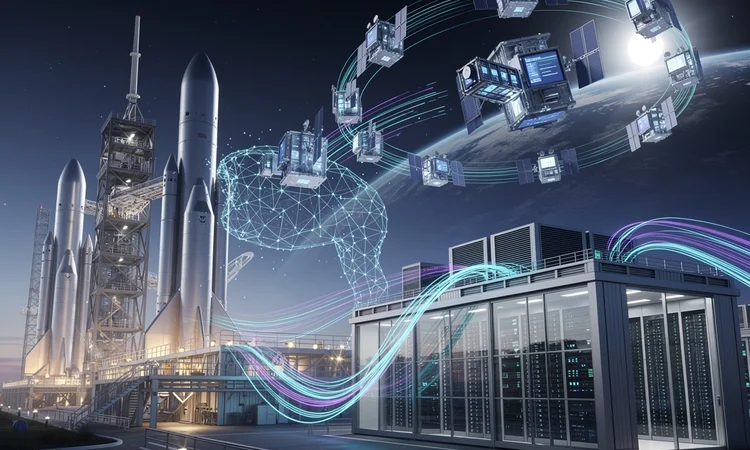
This consolidation represents more than a simple corporate restructuring. It signals Musk’s conviction that the future of artificial intelligence computing infrastructure lies not on Earth, but in orbit around it. The billionaire entrepreneur has repeatedly articulated his vision of space-based data centers powered by solar energy, free from the terrestrial constraints that have plagued his Memphis-area AI facilities. At the World Economic Forum in Davos last week, Musk declared with characteristic boldness: “The lowest-cost place to put AI will be space. That will be true within two years, maybe three.”
The potential merger underscores a pattern of resource-sharing and strategic alignment across Musk’s business portfolio that has intensified in recent years. SpaceX previously invested $2 billion in xAI, and this week Tesla disclosed its own $2 billion investment in xAI’s most recent funding round, according to the Journal . These cross-investments have created a web of financial interdependencies that blur traditional corporate boundaries, raising questions among governance experts about potential conflicts of interest and the concentration of technological power.
The Strategic Rationale Behind Space-Based Computing
Musk’s ambition to establish data centers in space addresses several critical challenges facing the artificial intelligence industry. Ground-based AI facilities consume enormous amounts of electricity, straining local power grids and generating significant heat that requires additional energy for cooling. The Memphis data centers operated by xAI have encountered these exact constraints, forcing Musk to deploy portable gas turbines as a stopgap solution to meet power demands.
Space offers theoretical advantages that have captured the imagination of multiple tech titans. Beyond Musk, executives including Jeff Bezos and Sam Altman have expressed interest in orbital computing infrastructure. The vacuum of space provides natural cooling, while solar panels can capture unfiltered sunlight twenty-four hours a day without atmospheric interference or nighttime interruptions. The absence of weather, regulatory constraints on power consumption, and physical space limitations could theoretically enable data centers to scale far beyond what’s achievable on Earth.
However, the concept remains unproven at commercial scale. The engineering challenges are formidable: launching sufficient computing hardware into orbit, maintaining and upgrading equipment in the harsh space environment, managing heat dissipation in a vacuum, and establishing high-bandwidth communication links to ground stations. The cost per kilogram of payload to orbit, while dramatically reduced by SpaceX’s reusable Starship system, still represents a significant capital expenditure compared to terrestrial construction.
Industry analysts note that even with SpaceX’s launch capabilities, the economics of space-based data centers depend on numerous variables that remain uncertain. The lifespan of orbital computing equipment, the frequency of required maintenance missions, and the actual performance characteristics of processors operating in microgravity and radiation-heavy environments are all unknowns. Yet Musk’s track record of achieving seemingly impossible technological feats—from landing orbital-class rockets vertically to building the world’s largest electric vehicle company—gives credence to his timeline projections.
xAI’s Competitive Position and Pentagon Partnerships
While SpaceX stands as one of Musk’s crown jewels, xAI occupies a more precarious position in the intensely competitive artificial intelligence market. The company has struggled to match the enterprise customer adoption and individual user engagement achieved by rivals OpenAI and Anthropic, according to the Journal. This competitive disadvantage makes the merger with SpaceX’s proven business model and government relationships particularly strategic.
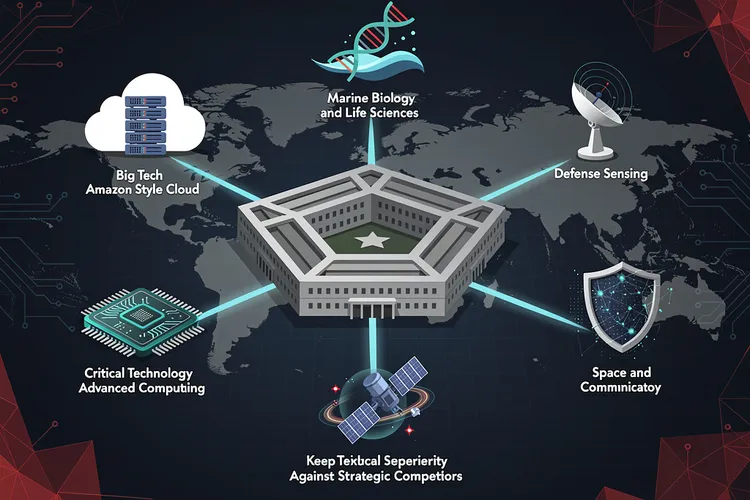
xAI has, however, secured notable partnerships with government customers, including contracts with the Pentagon. These defense relationships mirror SpaceX’s extensive work with military and intelligence agencies, creating potential synergies in serving national security customers. The Department of Defense has shown increasing interest in AI applications for logistics, intelligence analysis, and autonomous systems, areas where combined SpaceX-xAI capabilities could prove valuable.
The company has also faced significant controversies that could complicate the merger process and public offering plans. Most recently, xAI became embroiled in scandal over the dissemination of sexualized images of users produced without their consent, raising serious questions about content moderation and safety protocols. Such incidents could trigger additional regulatory scrutiny of any combined entity and potentially impact valuation discussions with prospective public market investors.
The competitive pressure in AI has intensified dramatically over the past year. OpenAI’s ChatGPT continues to dominate consumer mindshare, while Anthropic has gained traction with enterprise customers seeking alternatives. Google’s Gemini and various open-source models have further fragmented the market. For xAI to justify its $230 billion valuation target, it needs either breakthrough technological advantages or unique distribution channels that differentiate it from competitors.
The IPO Calculus and Public Market Implications
SpaceX has reportedly interviewed banks for a summer initial public offering with aspirations to raise billions of dollars, as previously reported by the Journal. The rocket manufacturer’s decision to go public represents a significant strategic shift for a company that has thrived as a private entity, free from quarterly earnings pressures and public market scrutiny. Musk has historically resisted taking SpaceX public, expressing concerns that short-term investor demands could compromise long-term missions like Mars colonization.
The calculus appears to have changed due to capital requirements for Musk’s space-based data center vision. Building orbital computing infrastructure will require tens of billions of dollars in investment over the coming years, funding that even SpaceX’s substantial private market valuation may not fully support. An IPO would provide access to deeper capital pools and create a liquid currency for acquisitions and employee compensation.
However, merging xAI into SpaceX before going public complicates the offering significantly. Public market investors typically prefer pure-play companies with clear business models and predictable revenue streams. SpaceX’s core business—launching satellites and cargo for commercial and government customers—fits this profile. Adding an early-stage AI company with unproven business models and controversial products introduces uncertainty that could depress valuation multiples or limit investor appetite.
The structure of any combined entity will prove critical. Investment bankers and corporate lawyers will need to address questions of governance, capital allocation between disparate business units, and how to value speculative future technologies against SpaceX’s established revenue base. Precedents exist for conglomerates combining aerospace and technology assets, but none at this scale or with this degree of technological ambition.
The Broader Musk Empire and Resource Sharing
The proposed SpaceX-xAI merger follows Musk’s 2024 combination of xAI with his social media platform X, demonstrating a pattern of consolidation across his business portfolio. Several years ago, Musk publicly described the idea of forming a holding company encompassing Tesla, SpaceX, Neuralink, and Boring Company as a “good idea,” though he never pursued formal integration at that time.
Resource sharing among Musk’s companies has become increasingly common and sophisticated. Employees regularly move between entities, bringing expertise and institutional knowledge across organizational boundaries. Engineering talent from Tesla has supported SpaceX projects, while AI researchers have contributed to autonomous driving systems, neural interface development, and language models simultaneously. This fluid allocation of human capital provides flexibility and efficiency that traditional corporate structures struggle to match.
The financial interdependencies have grown more complex as well. Beyond the direct investments in xAI from both SpaceX and Tesla, the companies share vendors, utilize common technologies, and coordinate on research initiatives. Critics argue this arrangement creates conflicts of interest, particularly for Tesla shareholders who may question whether their company’s resources are being diverted to support Musk’s other ventures. Defenders counter that the cross-pollination of ideas and technologies ultimately benefits all entities.
Regulatory authorities have begun scrutinizing these relationships more closely. The Securities and Exchange Commission has investigated whether Tesla’s board adequately protects shareholder interests when approving transactions with Musk-controlled entities. A formal merger of SpaceX and xAI would likely trigger additional regulatory reviews, particularly given both companies’ work with defense and intelligence agencies that involve classified technologies and national security considerations.
Competitive Dynamics in Space-Based Infrastructure
Musk’s vision of orbital data centers has not gone unnoticed by competitors and potential partners. Jeff Bezos, whose Blue Origin competes with SpaceX in launch services and whose Amazon Web Services dominates cloud computing, has the resources and motivation to pursue similar concepts. Bezos’s Project Kuiper satellite internet constellation could theoretically serve as infrastructure for distributed computing in space, though the company has not publicly announced such plans.
Sam Altman, CEO of OpenAI and xAI’s primary competitor, has also expressed interest in space-based computing infrastructure. Altman’s ambitious fundraising efforts for AI chip manufacturing and data center development could eventually extend beyond Earth’s atmosphere if the economics prove favorable. The race to establish first-mover advantage in orbital computing could become as consequential as the current competition for AI model supremacy.
Traditional aerospace contractors including Lockheed Martin, Northrop Grumman, and Boeing possess relevant expertise in building and operating space-based systems, though their focus has primarily been on satellites for communications, Earth observation, and national security. These established players could partner with cloud computing giants like Microsoft, Google, or Amazon to develop competing orbital infrastructure, leveraging their security clearances and government relationships.
The timeline Musk has articulated—achieving cost-competitive space-based AI data centers within two to three years—strikes many industry observers as highly aggressive. Even with SpaceX’s Starship system approaching operational status, the engineering challenges of designing, testing, launching, and operating computing infrastructure in space typically require longer development cycles. Musk’s predictions have historically proven optimistic on timing while ultimately accurate on technical feasibility, suggesting space-based data centers may arrive later than 2027 but remain achievable this decade.
Implications for AI Development and Space Exploration
The convergence of artificial intelligence and space exploration through this merger could accelerate progress in both domains. AI systems could optimize rocket design, mission planning, and autonomous spacecraft operations, while space-based computing infrastructure could enable AI models to scale beyond terrestrial limitations. The synergies extend to shared challenges around power management, thermal control, and operating in extreme environments.
For space exploration specifically, advanced AI capabilities could prove essential for missions to Mars and beyond. The communication delays inherent in deep space operations—up to 24 minutes round-trip for Mars—necessitate autonomous decision-making systems that can handle unexpected situations without human intervention. Training and operating such systems might benefit from the massive computational resources that orbital data centers could provide.
The merger also positions Musk to pursue his ultimate goal of establishing a self-sustaining human presence on Mars. Both AI and space infrastructure development serve this objective, and combining the companies creates organizational alignment around the mission. However, skeptics question whether merging these entities truly advances Mars colonization or primarily serves near-term financial and competitive objectives.
As discussions continue and details emerge about the proposed structure, timing, and strategic rationale for the SpaceX-xAI merger, the deal represents a defining moment for Musk’s business empire and potentially for the technology industry more broadly. Whether combining rockets and AI proves visionary or overly complex will become clear in the coming years as the merged entity—if the deal proceeds—attempts to execute on the audacious vision of computing in the cosmos. The outcome will shape not only Musk’s legacy but potentially the future of both artificial intelligence and humanity’s expansion beyond Earth.






Leave a Reply
Your email address will not be published.