






The Grease Heist: Unraveling a Multimillion-Dollar Scheme in America’s Heartland
In the quiet industrial corners of Des Moines, Iowa, a federal grand jury has unveiled a sprawling criminal enterprise that reads like a thriller from the underbelly of global commodity markets. On December 9, 2025, indictments were handed down against 13 individuals, most of them Chinese nationals, accused of orchestrating a sophisticated racket involving the theft and interstate resale of used restaurant cooking oil. This isn’t just petty larceny; it’s a conspiracy charged under the Racketeer Influenced and Corrupt Organizations (RICO) Act, alongside money laundering and transportation of stolen property. The operation, spanning multiple states, highlights vulnerabilities in an overlooked but lucrative sector: the recycling of waste oil into biodiesel fuel.
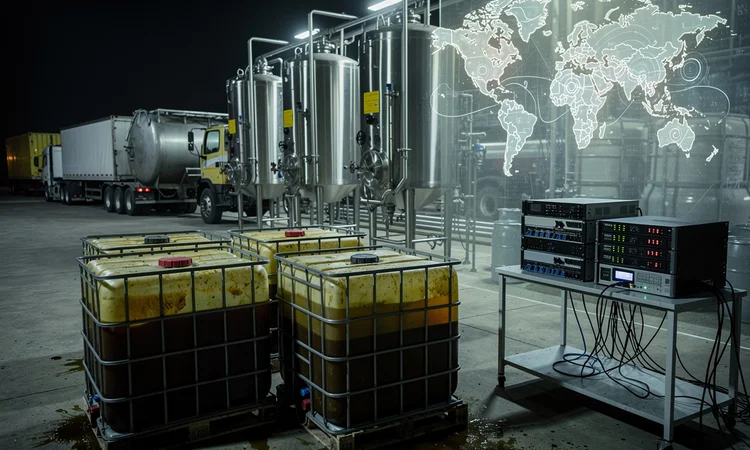
At the heart of the case is a network that allegedly siphoned off thousands of gallons of used cooking oil from restaurants across the Midwest and beyond. This “yellow grease,” as it’s known in the trade, is a valuable raw material for biofuel production, fetching prices that have surged amid global demand for sustainable energy alternatives. Prosecutors from the U.S. Attorney’s Office for the Southern District of Iowa detail how the defendants, operating under the guise of legitimate recycling firms, broke into storage tanks at night, using siphons and trucks to haul away the oil. The stolen goods were then transported across state lines and sold to unwitting buyers, generating millions in illicit profits.
The lead defendants include figures like Yi Liang Li, a 43-year-old from Ontario, Canada, and Cheng Tang, 45, from Queens, New York, both facing charges that could result in decades behind bars. According to the indictment, the group laundered proceeds through a web of bank accounts and shell companies, some linked back to operations in China. This international dimension adds layers of complexity, raising questions about cross-border enforcement in an era of heightened U.S.-China tensions over trade and intellectual property.
From Kitchen Waste to Black-Market Gold
The economics of used cooking oil reveal why such a scheme could thrive. In recent years, the biodiesel industry has boomed, driven by environmental regulations and incentives like the federal Renewable Fuel Standard. Used cooking oil, once discarded as waste, now commands prices upward of $3 per gallon when refined into low-carbon fuel. Industry estimates suggest the U.S. market for recycled oils exceeds $2 billion annually, with demand spiking as companies like Neste and Valero pivot toward greener energy sources.
Court documents paint a picture of meticulous planning. The conspirators allegedly scouted restaurant locations, timing their thefts to avoid detection. In one instance, they targeted chains in Iowa, Nebraska, and Missouri, using encrypted communications to coordinate hauls. The oil was funneled to processing plants where it was mixed with legitimate supplies, obscuring its origins. This blending tactic not only maximized profits but also exploited gaps in supply-chain oversight, where traceability remains a challenge.
Echoing these details, reporting from NewsNation highlights how the stolen oil was refined into biodiesel and sold on the open market, potentially ending up in vehicle tanks nationwide. The scale is staggering: investigators claim the operation moved over 100,000 gallons monthly, translating to losses for legitimate recyclers and restaurants that contract for oil collection.
Ties to Broader Espionage Concerns
While this case centers on commodity theft, it intersects with ongoing U.S. scrutiny of Chinese-linked activities. The defendants’ nationalities have drawn parallels to high-profile espionage indictments, such as the March 2024 case against Linwei Ding for stealing AI trade secrets from Google, as noted in a Department of Justice press release . Though not directly related, the pattern underscores a perceived trend of economic crimes tied to Chinese entities.
Posts on X (formerly Twitter) reflect public sentiment, with users like financial analyst Kyle Bass referencing past convictions for intellectual property theft, emphasizing a narrative of systemic “lie, cheat, steal” tactics. One post from NTD News in 2020 discussed hackers indicted for stealing trade secrets, including attempts on COVID-19 research, amplifying concerns about state-sponsored activities. In this Iowa case, while no direct government ties are alleged, the international money flows suggest possible overseas orchestration.
Further context comes from Wikipedia’s entry on Chinese espionage in the United States , which chronicles a litany of cases from cyber intrusions to trade secret thefts spanning over a decade. The indictment here, while focused on physical theft, fits into this broader mosaic, prompting experts to question if such operations are isolated or part of a larger strategy to undermine U.S. industries.
Regulatory Gaps and Industry Vulnerabilities
The biodiesel sector’s rapid growth has outpaced regulatory frameworks, creating fertile ground for exploitation. Unlike heavily monitored commodities like oil or precious metals, used cooking oil lacks standardized tracking mechanisms. Restaurants often rely on third-party collectors, but contracts can be bypassed by thieves who strike under cover of darkness. This vulnerability is exacerbated in rural areas like Iowa, where enforcement resources are stretched thin.
A recent article in KCCI reports that Iowa sits at the epicenter of this conspiracy, with local restaurants suffering repeated hits. The economic ripple effects are significant: legitimate collectors lose revenue, biodiesel producers face supply disruptions, and end consumers may unknowingly support criminal enterprises through higher fuel prices.
Industry insiders point to the need for better technology, such as GPS-tracked storage tanks or blockchain-based traceability systems. Companies like Darling Ingredients, a major player in oil recycling, have ramped up security measures, but the indictment reveals how far criminals will go. Prosecutors allege the group used counterfeit documents to pose as authorized haulers, a tactic that deceived even vigilant managers.
Legal Ramifications and Global Implications
The RICO charges elevate this from simple theft to organized crime, allowing prosecutors to pursue asset forfeiture and dismantle the entire network. If convicted, defendants face up to 20 years per count, plus fines that could total millions. The case is being handled by Assistant U.S. Attorneys MacKenzie Tubbs and Mikaela Shotwell, with FBI involvement underscoring its priority.
This isn’t an isolated incident. A WHIO TV report details the arrest of a suspect in Dayton, Ohio, linked to the same conspiracy, expanding the geographic scope. Similarly, broader trends in export violations, like the recent Tampa indictments for smuggling AI chips to China covered by FOX 13 Tampa Bay , highlight escalating U.S. efforts to curb illicit trade.
On the international front, the case could strain U.S.-China relations further. While the Biden administration has prioritized supply-chain security, incoming policies under President-elect Trump may intensify scrutiny. A Gateway Pundit piece from November 2025 discusses a scientist convicted of spying for China, part of a “troubling trend” that includes technology and resource theft.
Paths Forward for Prevention
To combat such schemes, experts advocate for enhanced collaboration between law enforcement and industry. The Renewable Fuels Association has called for federal grants to bolster security in the biofuels chain, potentially integrating AI-driven surveillance to detect anomalies in collection patterns.
Restaurants, too, are adapting. Chains like McDonald’s and local diners in the Midwest are investing in locked, monitored grease traps, reducing theft opportunities. Yet, the indictment serves as a wake-up call: as demand for sustainable fuels grows, so does the incentive for crime.
Looking ahead, this case may set precedents for prosecuting environmental commodity thefts under organized crime statutes. With biodiesel projected to comprise 10% of U.S. diesel by 2030, safeguarding this resource is crucial. The Iowa indictments, while focused on grease, illuminate broader risks in emerging markets where waste becomes wealth.
Echoes in Policy and Enforcement
The money laundering aspect reveals sophisticated financial maneuvers, with funds allegedly wired to accounts in Asia. This mirrors tactics in other cases, such as the 2015 Reuters factbox on U.S. accusations against China over trade secrets , where economic espionage often involves layered concealment.
Public reaction on X underscores frustration, with posts decrying repeated instances of theft tied to Chinese nationals. One user, Pushpkar Bhardwaj, highlighted a Houston smuggling case involving AI tech, netting over $50 million in seizures, drawing parallels to the oil racket’s scale.
As trials unfold, the biodiesel industry watches closely. Enhanced regulations could emerge, mandating digital ledgers for oil transactions to prevent blending of stolen goods. For now, the indictments stand as a testament to the hidden battles in America’s industrial underbelly, where everyday waste fuels both innovation and intrigue.





Leave a Reply
Your email address will not be published.