







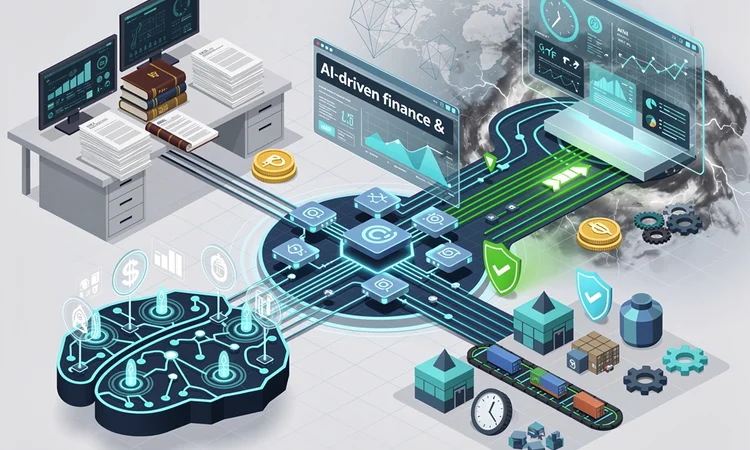
In the wake of supply shocks, labor shortages, interest rate volatility and geopolitical tensions, finance and procurement functions have shed their back-office stigma to emerge as vital pillars of corporate resilience. Etosha Thurman, chief marketing officer for finance and spend management at SAP, describes this shift: “The last few years have stress-tested every assumption about stability as supply shocks, labor shortages, interest rate swings and geopolitical tensions all hit at once.” Procurement teams now secure supplies, renegotiate contracts and mitigate risks, while finance professionals forecast relentlessly, safeguard cash and fund expansion, according to an Axios analysis sponsored by SAP.
Resilience today spans forecasting accuracy, risk mitigation, spend oversight, cash preservation and swift responses drawn from supplier, partner and customer networks. Thurman emphasizes that “resilience is no longer just a supply chain or IT concern. It lives in how companies forecast and mitigate risks, spend and manage cash, and how quickly teams can act on signals from their network of suppliers, partners, and customers.” This evolution demands integrated intelligence over fragmented tools.
SAP addresses this by embedding AI directly into core workflows, from sourcing events to supplier interactions and financial processes. “Companies do not need more tools; they need intelligence built into the work they already do,” Thurman states. This approach enables teams to detect risks early and pivot instantly, transforming disruptions into strategic advantages.
AI Agents Enter the Fray
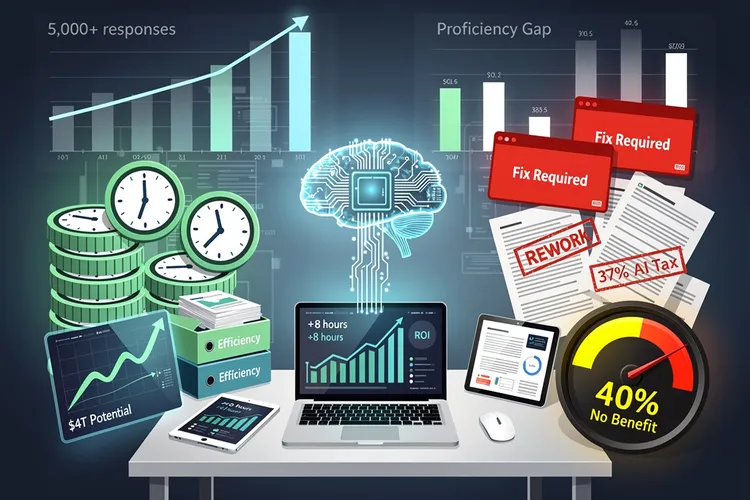
SAP’s innovations, including task-specific AI agents paired with the Joule co-pilot, mark a leap from query-based AI to embedded decision-making. A survey with The Economist revealed that 75% of respondents saw productivity or efficiency gains from AI, underscoring its shift from optional to essential. For sourcing teams, SAP’s Sourcing Assistant scans supplier bids in seconds, highlights variances and flags issues, as Thurman notes: “The result is more time spent on judgment and strategy and less on gathering information.”
These efficiencies redirect efforts toward mitigating performance risks, bolstering supplier ties, crafting strategies and collaborating earlier with stakeholders. “Efficiency gains are creating space for influence. With room to think ahead rather than react, teams can assess long-term risks more deeply and explore new opportunities that once felt out of reach,” Thurman explains in the Axios piece.
SAP’s Q4 2025 Business AI release expanded Joule Agents across finance, HR and supply chain, introducing models like SAP-RPT-1 and zero-copy data sharing with Snowflake, per SAP News . At SAP Connect 2025, next-gen SAP Ariba innovations promised agentic AI for bid analysis by Q1 2026, automating comparisons and recommendations to boost productivity, as detailed in SAP News .
Unifying Silos with Integrated Suites
The SAP Business Suite links finance, procurement, supply chain and HR, dismantling silos for a unified business view. “When the business is connected at the data level, leaders can see impact earlier, coordinate more effectively, and make decisions that reflect the full context of the organization,” Thurman asserts. An Economist Impact study found 89% of procurement professionals confident in leveraging AI for efficiency, with 78% trusting it for external risk management—a 37% year-over-year rise, reported in SAP News .
Diginomica’s coverage of SAP Connect highlighted Thurman’s push to break people silos: “Hey, these are the priorities that your finance colleagues are facing, and this is how we’re easing that… it opens up the conversation about how procurement needs to shift.” Customers like Heartland Dental demonstrated end-to-end thinking via SAP Ariba, per Diginomica .
Procurement Magazine interviewed Thurman on SAP Ariba’s procure-to-pay transformations: “AI integration enables procurement teams to meet today’s demands while simultaneously reducing manual intervention, enforcing compliance and enhancing user experience.” Guided buying promotes risk-aware, sustainable purchases with financial incentives, positioning procurement as a strategic enabler.
Leadership Imperatives in the AI Era
Effective AI adoption starts with visionary leadership. Thurman advises: “What we see working well… is leaders setting a vision for AI and communicating it broadly. This creates transparency, which builds understanding and trust in AI. Providing AI training and change-management is essential.” Begin small in high-impact zones, prioritize people and tie to goals like growth and resilience.
New skills dominate: relationship management to interpret AI signals amid stakeholder dynamics; judgment to counter hallucinations, querying risk appropriateness and alignment; creativity unleashed from routine tasks for novel models and expansions. “AI doesn’t replace creativity—it augments it,” Thurman says. Supply & Demand Chain Executive noted CFOs prioritizing sustainability (62%), AI integration (41%) and supply chain reconfiguration (37%) over cost savings (17%), per SDCE .
SAP Sapphire 2025 unveiled agentic AI for finance and spend, with Joule enhancing tasks like bid retrieval in SAP Ariba Procurement. Thurman’s SAP News keynote stressed harmonized data and integrated apps for agility amid uncertainty.
Real-World Impacts and Future Trajectories
AI automates grunt work—expenses, receipts, approvals—freeing teams for strategy, as X posts from industry observers note SAP Concur’s receipt-scanning AI outperforming startups. Procurement Magazine detailed SAP Ariba’s global Intake Management for streamlined requests and compliance.
Looking to 2026, resilience hinges on seamless intelligence integration. Thurman envisions: “SAP’s products work in lockstep with customers… helping them anticipate disruption sooner, advance strategic goals, and unlock new value beyond cost control.” With AI proficiency topping skill priorities, per Economist Impact , finance and procurement stand ready to convert uncertainty into accelerated growth.






Leave a Reply
Your email address will not be published.