

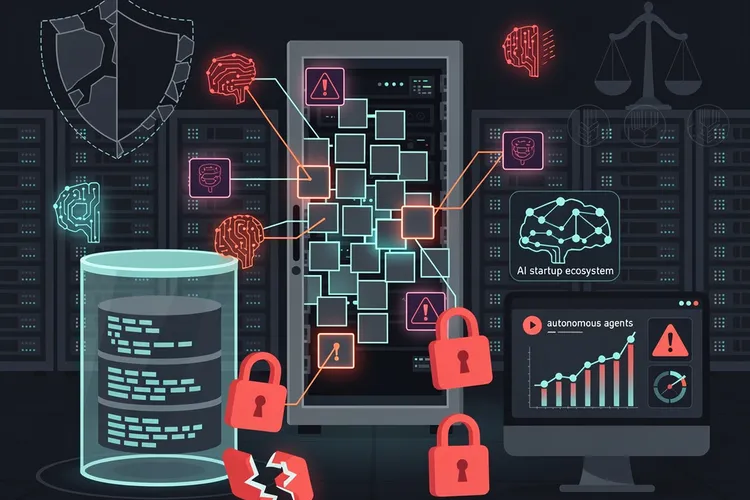
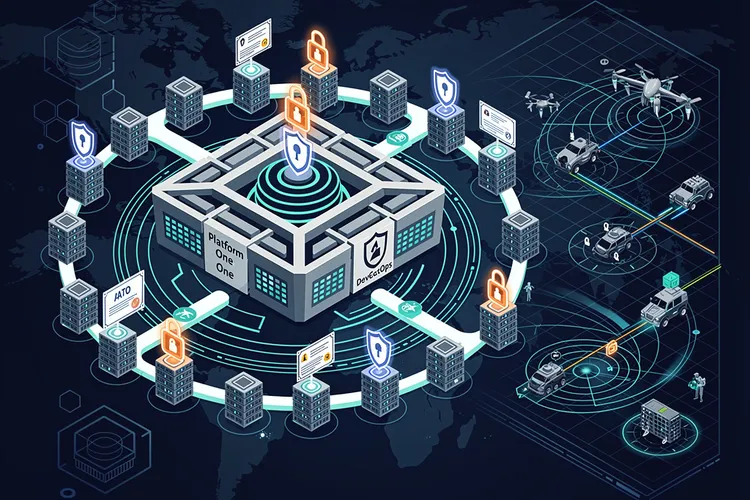

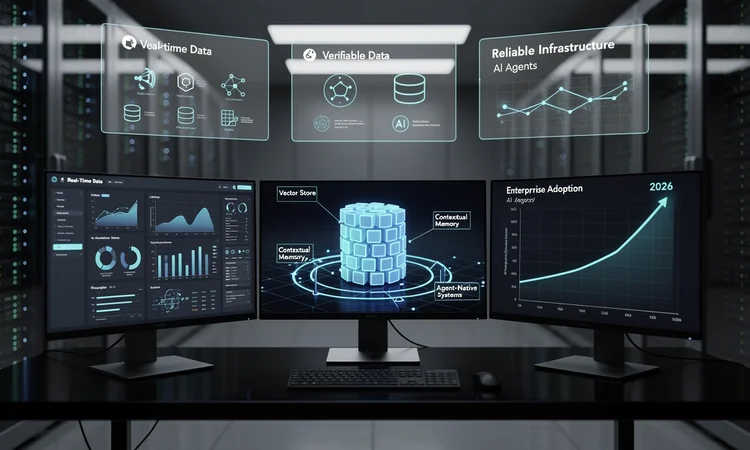
In the rush toward autonomous AI agents, a long-dormant truth has resurfaced: databases are the unyielding foundation of reliable intelligence. As enterprises deploy agentic systems at scale, the fragility of data infrastructure has emerged as the primary bottleneck, demanding robust, real-time storage solutions that traditional cloud abstractions once obscured.
“You can’t have reliable AI agents without reliable data infrastructure,” argues Matt Asay in InfoWorld . This resurgence echoes the early days of computing, when data persistence defined system viability, but now amplified by agents that query, update, and orchestrate across petabytes in milliseconds.
Recent forecasts underscore the shift. Gartner predicts 40% of enterprise applications will integrate task-specific AI agents by 2026, up from less than 5% today, per an AWS report . Financial giants like Itaú Unibanco have migrated mainframe workloads to AWS, achieving 99.99% uptime for 70 million customers, proving mission-critical data layers are non-negotiable.
Agentic Demands Redefine Storage
Agentic AI—autonomous systems that plan, reason, and act—exposes database shortcomings. Traditional OLTP systems, optimized for human-paced transactions, falter under agents’ relentless read-write barrages. “2026 is the year databases stop being passive storage and become active substrates for autonomous software creation,” states a PingCAP analysis .
Unlike humans, agents spawn ephemeral workloads without throttling. They branch schemas, merge experiments, and discard resources at machine speed, necessitating scale-to-zero economics and dynamic cost surfaces. Instaclustr’s managed services for Apache Cassandra and Kafka provide the scalable backbone, enabling real-time data fusion for adaptive decisions.
VentureBeat warns that RAG, once hailed for grounding LLMs, yields to contextual memory in agentic workflows. Systems like Hindsight and Memobase maintain state, learn from feedback, and adapt, rendering static retrieval obsolete for operational deployments.
Vector Stores Evolve Amid Reliability Scrutiny
Vector databases, purpose-built for embeddings, powered the generative AI surge but now face reliability probes. “Data + AI teams are beginning to realize those vector databases they’ve been relying on might not be as reliable as they thought,” notes Towards Data Science . Lacking built-in monitoring for embeddings and search, they risk degrading agent accuracy.
Pinecone, a managed vector service, excels in uptime and scalability for RAG, while open-source FAISS offers raw power for custom integration. Yet, as Towards Data Science observes, observability tools are rising to track vector drift, ensuring sub-50ms retrievals for interactive agents.
Hybrid approaches dominate: Postgres with pgvector extensions now rivals dedicated stores, blending operational data with semantic search. Knack highlights Postgres’s 2025 native vector support, enhancing AI-driven semantic capabilities without rip-and-replace overhauls.
Enterprise Shifts Toward Intelligent Foundations
Databricks reports over 80% of new databases created by AI agents, signaling a pivot to agent-native infrastructure. Box CEO Aaron Levie emphasizes systems of record as guardrails: “When we have 100X more agents than humans, we’ll care a lot about the workflows and data those agents are tied to.”
The New Stack identifies four infrastructure pivots for 2026: intelligent processing, multi-modal integration, and real-time architectures. SearchCans stresses real-time data as table stakes, warning that outdated info spells competitive defeat.
Google Cloud, a Gartner Leader in Cloud Database Management Systems for 2025, positions AlloyDB for agentic eras, fusing analytical petabytes with transactional speed. Agents demand this duality to act on historical context in real time.
Memory and Provenance as Competitive Moats
Persistent memory distinguishes production agents. LangChain’s State of Agent Engineering reveals 57% of organizations rely on base models with RAG, forgoing fine-tuning’s overhead. Yet, agentic memory—long-context retention across sessions—becomes mandatory.
SiliconANGLE predicts scaling via contextual intelligence, with semantic layers supplanting unification narratives. Medium’s 2026 Data Engineering Roadmap urges architects to curate meaning for AI consumers, providing provenance on reliability and relations.
X discussions amplify urgency. Astasia Myers notes Databricks’ stat, while Levie warns of fragility in data pulls: “The fragility point often has nothing to do with the model and everything to do with whether the agent pulled the right value.”
Protocols and Acquisitions Signal Consolidation
Interoperability protocols like Anthropic’s MCP and Google’s A2A standardize agent-tool connections, per MachineLearningMastery. TechTarget reports A2A’s merger with IBM’s framework, backed by AWS, Microsoft, and Snowflake.
M&A accelerates: Meta’s $14.3 billion in Scale AI, IBM’s $11 billion Confluent bid. Solutions Review forecasts a $7 trillion enterprise AI data market by 2030, with Dell enhancing platforms for reliable outcomes.
Graph databases surge for AI reasoning, per ZDNet, comprising the fastest-growing category in the $137 billion market. Their connected patterns fuel inferences relational stores can’t match.
Production Realities Demand Governance
Securiti’s 2026 trends highlight data provenance and ungoverned agents as risks. PerleLabs anchors AI data via blockchain-stored human judgments, restoring legitimacy in high-stakes domains.
AWS Developer Advocate Elizabeth Fuentes stresses long-term memory: “AI agents forgetting users is a problem.” Contextual AI’s Agent Composer transforms enterprise RAG into production agents, per VentureBeat.
As agents proliferate, databases evolve from commodities to strategic assets, ensuring verifiable truth powers the next computing paradigm.






Leave a Reply
Your email address will not be published.