

# Amazon’s Mega-Store Gambit: Reinventing Retail in the Heartland
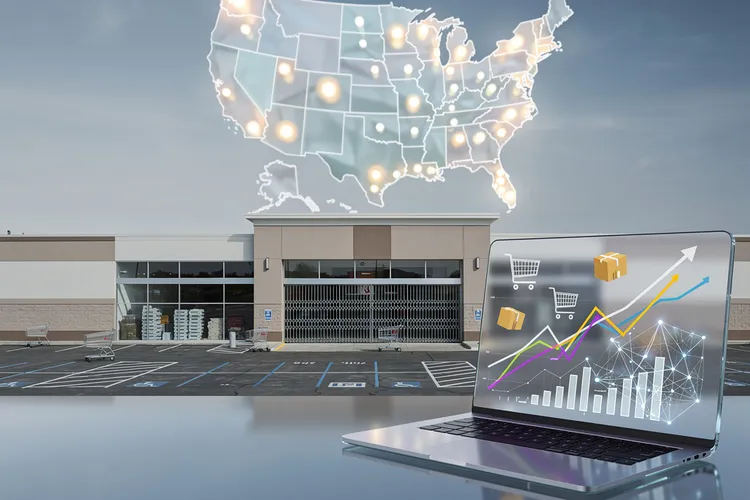
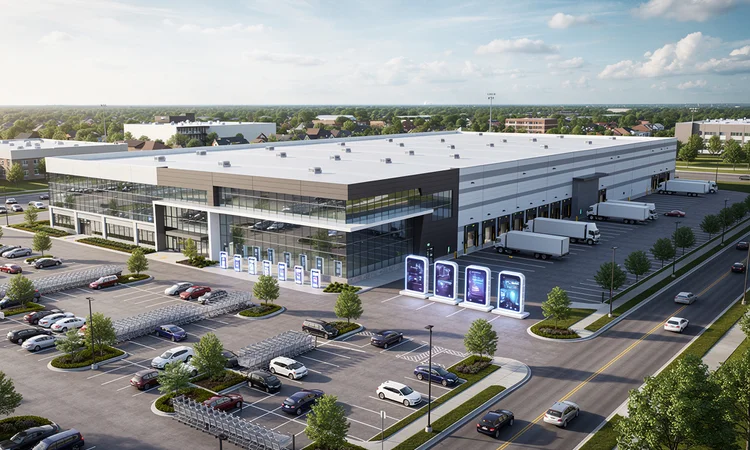
Amazon is venturing into uncharted territory with plans for its most ambitious physical retail project yet: a sprawling 230,000-square-foot big-box store in Orland Park, Illinois, a suburb southwest of Chicago. This development marks a significant pivot for the e-commerce behemoth, which has long dominated online shopping but struggled to replicate that success in brick-and-mortar settings. The store, approved by local officials just days ago, promises to blend in-person browsing with seamless digital integration, potentially reshaping how consumers approach everyday purchases.
The Orland Park site, located at the intersection of 159th Street and LaGrange Road, spans 35 acres of largely undeveloped land, including a shuttered restaurant. Amazon’s proposal cleared the village’s Plan Commission earlier this month with a 6-1 vote, as reported by Orland Park Patch , and received final approval from the Village Board on January 20, 2026, in a 5-2 decision. This green light allows Amazon to proceed with demolition and construction, eyeing an opening as early as next year.
At its core, the store will dedicate roughly half its space to retail operations, offering groceries, general merchandise like household essentials, and on-site prepared foods. The remaining half will serve as a fulfillment center, handling online orders and in-store pickups without disrupting the shopping experience. This hybrid model aims to address common pain points in retail, such as crowded aisles from order pickers, by segregating operations.
Blending Digital and Physical Worlds
Shoppers can expect innovative features that leverage Amazon’s tech prowess. For instance, in-store kiosks will allow customers to order items not immediately available, like a preferred color of clothing, and retrieve them at checkout. Heavy items, such as bulk pet food, can be digitally requested for direct delivery to vehicles. These details emerged during presentations to local officials, highlighting Amazon’s intent to create a frictionless experience that marries the convenience of online shopping with the immediacy of in-store visits.
This isn’t Amazon’s first foray into physical retail, but it represents a scale-up from past experiments. The company has operated smaller formats like Amazon Go stores, which use cashierless technology, but has scaled back significantly, closing more than half of them since 2023. Its acquisition of Whole Foods in 2017 for $13.5 billion brought upscale groceries into the fold, while the Amazon Fresh brand targets mass-market shoppers with competitive pricing. Yet, as noted in a Wall Street Journal analysis, these efforts have yielded inconsistent results, prompting this bold shift to big-box territory.
Industry analysts see potential in this approach. Colin Sebastian of Baird points out that Amazon’s online ecosystem already excels in selling everyday items like electronics and sundries, making a large-format store a logical extension. By tapping into Prime member data, Amazon could stock shelves with locally popular products, personalizing the experience in ways competitors might struggle to match.
Local Impacts and Community Reactions
The project has sparked debate in Orland Park, a community of about 60,000 residents. Proponents highlight economic benefits, including an estimated 200 construction jobs and 500 permanent positions, plus substantial tax revenue for the village. Village leaders argue the development aligns with long-term plans for the area, transforming underutilized farmland into a commercial hub, according to coverage from WGN-TV .
However, concerns about traffic congestion loom large. The site’s location at a busy intersection could exacerbate gridlock, with residents voicing fears during public meetings. Some worry about the store’s long-term viability, given Amazon’s history of shuttering physical locations. As one local official noted in discussions reported by ABC7 Chicago , the back-of-house fulfillment space—larger than typical for retail—raised suspicions it might function more as a warehouse than a store.
Amazon representatives have countered these worries by emphasizing the store’s retail focus. Katie Jahnke Dale, speaking on behalf of the company, assured officials that separate entrances for delivery drivers and online pickups would minimize disruptions. This setup, she explained, ensures in-store shoppers aren’t navigating around fulfillment activities, a common issue in hybrid models.
Competitive Pressures and Market Dynamics
Amazon’s move comes amid fierce rivalry in the retail sector. Traditional big-box players like Walmart and Target have long commanded the in-person shopping arena, where over 80% of U.S. retail sales still occur, per U.S. Census Bureau data. Walmart’s Supercenters, averaging around 182,000 square feet, set the benchmark, but Amazon’s proposed 230,000-square-foot behemoth would eclipse that, offering a footprint large enough to house nearly two average Target stores.
This expansion isn’t isolated; sources familiar with Amazon’s strategy indicate plans for additional big-box locations across the U.S., signaling a broader push into physical retail. Posts on X (formerly Twitter) reflect growing buzz, with users discussing Amazon’s ambitions to rival Walmart by combining groceries and merchandise in massive formats. One post from a financial analyst highlighted the store’s potential to integrate same-day delivery with in-person options, echoing Amazon CEO Andy Jassy’s earlier announcements about expanding grocery delivery to thousands of cities.
Analysts like Neil Saunders of GlobalData caution that success hinges on differentiation. In a saturated market, Amazon must offer compelling reasons for shoppers to switch loyalties—perhaps through exclusive Prime perks, data-driven inventory, or tech-enhanced conveniences. Saunders questions whether the world needs another big-box option, but acknowledges Amazon’s data advantages could provide an edge.
Historical Context and Strategic Evolution
Amazon’s retail journey has been a rollercoaster. Starting with bookstores in 2015 and evolving to Amazon Go’s cashierless tech in 2018, the company has tested various concepts. The Fresh brand, revamped after initial stumbles, now emphasizes affordability, contrasting with Whole Foods’ premium positioning. Yet, as detailed in a CNBC report, these ventures haven’t fully cracked the code for physical dominance.
The Orland Park store builds on lessons from these experiments. By allocating space for fulfillment, Amazon addresses e-commerce integration challenges that plagued earlier efforts. It’s a nod to changing consumer behaviors, where hybrid shopping—browsing in-store but ordering online—has surged post-pandemic.
Moreover, this initiative aligns with Amazon’s broader grocery ambitions. Recent expansions, as announced by Jassy on X in 2025, include same-day delivery of perishables to over 1,000 U.S. locations, with plans to reach 2,300 by year’s end. The big-box format could serve as a physical anchor for these services, blending them into a one-stop destination.
Economic and Operational Insights
From an operational standpoint, the store’s design prioritizes efficiency. The segregated fulfillment area allows workers to assemble online orders away from retail traffic, potentially speeding up processes and reducing errors. This could appeal to time-strapped shoppers, especially in suburban areas where drive-up services are popular.
Economically, the project is poised to inject vitality into Orland Park. PCMag notes that after scaling back other brick-and-mortar ventures, this move represents a renewed commitment to physical retail. The expected job creation and tax influx could bolster local infrastructure, though officials must mitigate traffic concerns through planned improvements.
Industry insiders view this as Amazon’s attempt to capture a slice of the $1 trillion-plus U.S. grocery market, where online penetration remains low at about 10%. By offering prepared foods and general merchandise alongside staples, the store targets families and bulk buyers, directly challenging Costco’s membership model and Walmart’s everyday low prices.
Future Prospects and Industry Ripples
Looking ahead, Amazon’s big-box entry could influence retail trends. If successful, it might prompt competitors to enhance their digital integrations, accelerating the convergence of online and offline shopping. Posts on X suggest enthusiasm among investors, with discussions framing this as Amazon’s direct assault on Walmart’s turf, complete with mega-stores boasting expansive footprints.
Challenges remain, including regulatory hurdles and community pushback. In Orland Park, the 5-2 approval vote reflected divided opinions, with dissenters citing potential overdevelopment. Yet, as covered by FOX 32 Chicago , Amazon’s pitch emphasized alignment with community goals, positioning the store as a modern retail evolution.
Ultimately, this project underscores Amazon’s relentless innovation drive. By scaling up to big-box proportions, the company bets on a formula that could finally bridge its digital empire with physical retail realities, potentially redefining suburban shopping for years to come.
Technological Innovations and Consumer Appeal
Delving deeper into the tech elements, Amazon’s kiosks and digital ordering systems draw from its vast ecosystem. Imagine scanning a QR code for product details or using voice assistants for recommendations—features that could make the store a testing ground for emerging retail tech.
Consumer appeal will likely hinge on value. Prime members might enjoy exclusive discounts or faster checkouts, leveraging the program’s 200 million-plus subscribers. This could erode loyalty to rivals, especially if Amazon undercuts prices on staples.
In the broader context, this store fits into Amazon’s multi-pronged strategy, including drone deliveries and AI-driven inventory management, all aimed at seamless customer experiences.
Sustainability and Long-Term Viability
Sustainability considerations are also at play. Amazon has pledged carbon neutrality by 2040, and the Orland Park store could incorporate energy-efficient designs, such as solar panels or optimized logistics to reduce emissions.
Long-term viability depends on adaptability. If consumer preferences shift further online, the physical space might evolve into more of a showroom or pickup hub. Analysts from Crain’s Chicago Business suggest this flexibility is key, given Amazon’s history of pivoting.
As the retail sector continues to evolve, Amazon’s Orland Park venture stands as a bold experiment, one that could either solidify its omnichannel dominance or highlight the enduring challenges of physical retail expansion.






Leave a Reply
Your email address will not be published.