








CUPERTINO, Calif. — In a significant departure from its typically methodical and predictable hardware release cycle, Apple Inc. is reportedly orchestrating an aggressive, two-stage overhaul for its flagship MacBook Pro line in 2026. The strategy involves two distinct updates within a single calendar year, a move that signals a new competitive urgency and a complex transition in core technologies for the company’s crucial professional notebook division.
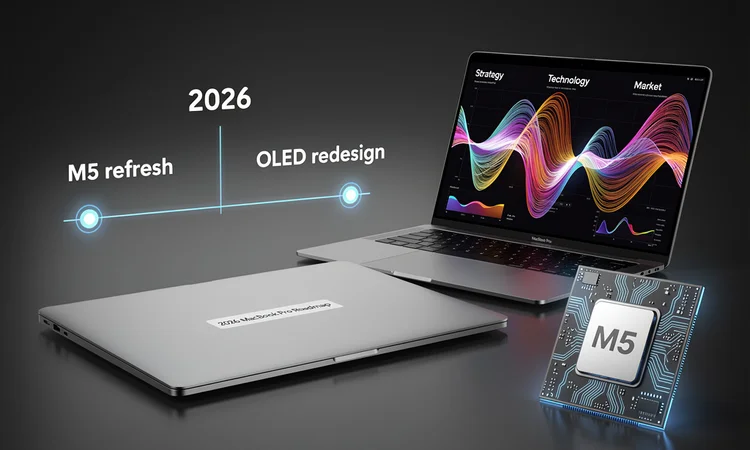
The plan, according to detailed investor notes from veteran TF International Securities analyst Ming-Chi Kuo, begins with an iterative but powerful update in the first half of 2026. This initial refresh will see the introduction of the M5 Pro and M5 Max processors, the next generation of Apple’s custom silicon. Later that year, however, Apple is planning a far more substantial move: the launch of a completely redesigned MacBook Pro. This second model, as reported by MacRumors , will feature a new, thinner, and lighter industrial design and is widely expected to be the first Mac to incorporate long-awaited OLED display technology. This dual-release cadence is highly unusual for Apple and points to a complex balancing act involving supply chain maturation, processor roadmaps, and a strategic response to a rapidly evolving personal computing market.
Navigating a Complex Chip and Display Transition
The foundation of Apple’s Mac strategy rests on the relentless advancement of its M-series processors. The introduction of the M4 chip in the latest iPad Pro provided a clear look at Apple’s immediate priorities: artificial intelligence and radical efficiency. Apple’s own announcement touted the M4 as an “outrageously powerful chip for AI,” built on second-generation 3-nanometer technology and featuring the company’s most powerful Neural Engine to date, capable of 38 trillion operations per second. As detailed by Apple Newsroom , this focus is a direct response to the industry-wide pivot toward on-device AI.
This sets a high bar for the M5 family, slated for the 2026 MacBook Pros. The early 2026 spec bump will likely serve as a bridge, introducing the M5’s raw performance and enhanced AI capabilities within the existing chassis. This allows Apple to get its next-generation silicon into the hands of professionals without waiting for the more complex manufacturing ramp-up of a full redesign. The real prize, however, is the synergy of the M5’s efficiency with the new technologies planned for the late-2026 model, particularly the power-sipping nature of an OLED screen, which is critical for enabling a thinner design without compromising the MacBook Pro’s signature battery life.
The Long-Awaited Leap to OLED Technology
For years, the professional creative community has anticipated Apple’s transition to OLED displays in its notebooks, a technology it has already embraced in its iPhones and Apple Watches. The current mini-LED screens in MacBook Pros offer exceptional brightness and contrast, but OLED promises further improvements, including true per-pixel local dimming for perfect black levels, superior power efficiency when displaying dark content, and potentially thinner and lighter panel construction. The move has been delayed by the high cost and manufacturing challenges of producing large, high-resolution, and color-accurate OLED panels that meet Apple’s stringent quality standards.
According to display industry analyst Ross Young of Display Supply Chain Consultants, the timeline is finally solidifying around 2026. A report from 9to5Mac confirms that suppliers like Samsung Display and LG Display are gearing up their production lines for the necessary 8th-generation OLED panels required for laptops. The late-2026 timing of the redesigned MacBook Pro aligns perfectly with this supply chain forecast, suggesting the OLED screen will be the centerpiece of that major update. This technological leap is not just about visual fidelity; it is a critical enabler for the device’s physical transformation.
A Renewed Obsession with Thinness and Design
The late-2026 MacBook Pro is also expected to herald a return to an Apple hallmark: a relentless pursuit of thinner and lighter designs. The stunningly slim profile of the M4-powered iPad Pro is seen by industry watchers as a clear signal of the design ethos championed by Apple’s executive team. This renewed focus is not limited to tablets. A report from Bloomberg indicates that Apple is actively developing a “significantly thinner” next-generation iPhone, Apple Watch, and MacBook Pro, aiming to once again make its products the thinnest and lightest in their respective categories.
Achieving this in a “Pro” notebook without compromising thermal performance or structural integrity is a monumental engineering challenge. The power efficiency of both the M5 chip and the new OLED display will be instrumental. A more efficient system generates less heat, requiring a less bulky cooling apparatus and allowing for a slimmer chassis. This focus on industrial design is a strategic move to re-assert Apple’s dominance in hardware aesthetics and portability, areas where competitors have made significant inroads.
Deconstructing an Unconventional Release Cadence
The decision to bifurcate the 2026 release raises strategic questions. One interpretation is that it is a sophisticated supply chain management tactic. Introducing the M5 chip first allows Apple and its primary chipmaker, TSMC, to mature the manufacturing process for the new silicon. Six to nine months later, with the M5 in high-volume production, Apple can smoothly launch the redesigned model, which depends on a separate, equally complex supply chain for its new chassis and OLED panels. This staggering de-risks the launch of the year’s most important Mac by isolating major technological transitions.
Another angle is market positioning. The first update caters to professionals on a strict upgrade cycle who prioritize performance above all else and need the latest processing power as soon as possible. The second, more premium model, targets those willing to wait and pay for the absolute latest in design and display technology. This creates two distinct buying opportunities within one year, potentially capturing a wider swath of the market and creating a powerful sales driver for the holiday quarter of 2026.
Wider Implications for Apple’s Competitive Stance
This aggressive MacBook Pro roadmap does not exist in a vacuum. It is a direct counter-maneuver to a resurgent PC market increasingly focused on AI. Microsoft’s Copilot+ PC initiative, powered by ARM-based chips from Qualcomm, represents the most significant challenge to the MacBook’s performance-per-watt dominance since the M1 was introduced. Competitors are now making direct comparisons, with Microsoft claiming its new Surface devices outperform the M3 MacBook Air in sustained performance, as noted by The Verge . Apple cannot afford to be complacent.
The two-part 2026 strategy is therefore a show of force. It telegraphs that Apple is prepared to accelerate its own roadmap to counter competitive threats. By pushing its silicon leadership with the M5 and then redefining the premium notebook experience with an OLED-equipped, ultra-thin design, Apple aims to create a product so advanced that it leapfrogs the competition’s best efforts. It is a high-stakes, capital-intensive strategy that underscores the Mac’s importance to Apple’s ecosystem and its commitment to defining the future of the professional personal computer.






Leave a Reply
Your email address will not be published.