






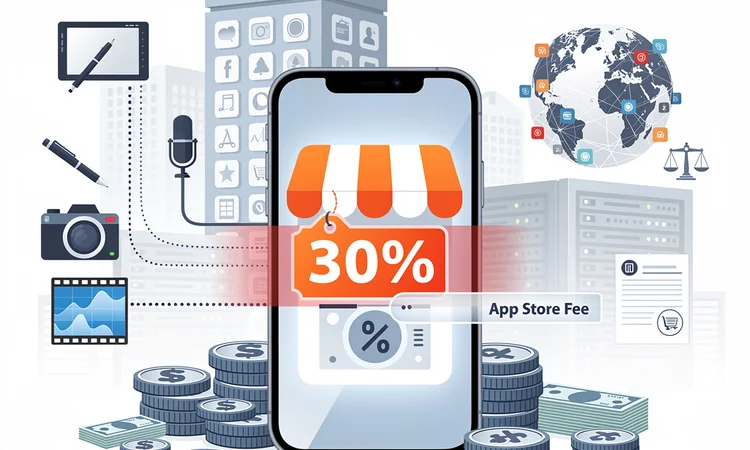
Apple has delivered an ultimatum to Patreon that threatens to upend the creator economy platform’s business model and potentially reduce income for thousands of content creators. The tech giant is requiring Patreon to transition all iOS subscription purchases to Apple’s in-app payment system by November 2024, a move that would subject creators to Apple’s controversial 30% commission on first-year subscriptions and 15% on subsequent years. According to Slashdot , this directive represents one of the most significant enforcement actions Apple has taken against a major creator platform since implementing its App Store policies.
The mandate places Patreon in an impossible position: comply with Apple’s demands and force creators to either absorb significant revenue losses or increase prices for their supporters, or risk removal from the iOS App Store entirely. Patreon has historically processed payments through its own system, allowing creators to retain a larger portion of subscription revenue after Patreon’s own fees. The company charges creators between 5% and 12% depending on their service tier, a fraction of what Apple’s commission would extract. This difference could mean the elimination of thousands of dollars annually for professional creators who depend on Patreon income as their primary livelihood.
The timing of Apple’s enforcement is particularly notable given ongoing regulatory scrutiny of the company’s App Store practices across multiple jurisdictions. The European Union’s Digital Markets Act has already forced Apple to allow alternative payment systems in Europe, while similar legislative efforts are underway in the United States, Japan, and South Korea. Yet Apple continues to aggressively defend its commission structure in markets where it maintains the legal authority to do so, arguing that the App Store provides valuable services including payment processing, fraud prevention, and customer acquisition that justify its fee structure.
The Creator Economy Collision Course
Patreon’s platform supports more than 250,000 creators who collectively earn hundreds of millions of dollars annually from subscriber memberships. These creators span every conceivable content category, from podcasters and video producers to writers, musicians, and visual artists. Many have built sustainable careers by cultivating direct relationships with supporters willing to pay monthly subscriptions ranging from a few dollars to hundreds of dollars for exclusive content and community access. The introduction of Apple’s 30% commission would fundamentally alter the economics that have made these careers possible.
For a creator earning $5,000 monthly through Patreon subscriptions, Apple’s commission would immediately reduce that income by $1,500 in the first year, dropping to $750 in subsequent years. When combined with Patreon’s existing fees, creators could lose more than one-third of their gross revenue to platform fees alone. This calculation doesn’t account for payment processing costs, taxes, or the expenses creators incur producing their content. The mathematics simply don’t work for many creators operating on modest margins, particularly those in developing countries where creator income goes further but where raising prices to compensate would price out local supporters.
Patreon’s Limited Options and Strategic Response
Patreon has publicly stated it will comply with Apple’s directive but is working to minimize the impact on creators. The company is exploring several mitigation strategies, including automatically increasing subscription prices for iOS users to offset Apple’s commission, though this approach risks reducing conversion rates and subscriber retention. Patreon has also emphasized that subscriptions initiated through other platforms—including the web, Android devices, or other channels—would not be subject to Apple’s fees, creating a strong incentive for creators to direct potential subscribers away from iOS.
This situation mirrors conflicts Apple has had with other major platforms. Spotify has been particularly vocal about what it characterizes as Apple’s anticompetitive behavior, filing formal complaints with European regulators and launching public campaigns against the “Apple tax.” Epic Games famously went to court against Apple after implementing its own payment system in Fortnite, resulting in a lengthy legal battle that produced mixed results. Netflix, Amazon, and other major subscription services have responded by simply removing the ability to subscribe through iOS apps, forcing users to sign up through web browsers where Apple cannot claim a commission.
The Broader Implications for Platform Power
Apple’s move against Patreon illuminates the fundamental tension between platform owners and the businesses built atop their infrastructure. Apple argues that it created and maintains the iOS ecosystem, investing billions in development, security, and marketing that makes the iPhone an attractive platform for both users and developers. From this perspective, the commission represents fair compensation for providing access to hundreds of millions of affluent customers with high engagement rates and strong willingness to pay for digital services.
Critics counter that Apple’s position amounts to rent-seeking behavior that exploits the company’s monopoly control over iOS app distribution. Unlike traditional retail scenarios where multiple distribution channels compete, Apple maintains exclusive control over how iOS users can install applications. Developers cannot distribute iOS apps through alternative app stores or direct downloads, giving Apple unprecedented leverage to dictate terms. This control becomes particularly problematic when Apple competes directly with the services it hosts—Apple Music competing with Spotify, Apple Arcade competing with game developers, and Apple’s own subscription services competing with countless third-party offerings.
The regulatory environment is shifting, albeit slowly. The European Union has been most aggressive, with the Digital Markets Act forcing Apple to allow alternative payment systems and app stores on iOS devices sold in Europe. However, Apple has implemented these changes in ways that critics argue maintain the company’s economic advantages through alternative fee structures and technical limitations. The United States has been slower to act, with proposed legislation stalling in Congress despite bipartisan support for addressing app store competition concerns.
Economic Realities for Independent Creators
The Patreon situation highlights how platform policy decisions cascade through the creator economy with real financial consequences for individuals. Unlike large media companies or well-funded startups that can absorb platform fees as a cost of customer acquisition, independent creators typically operate with minimal overhead and depend on maximizing the percentage of subscriber revenue they retain. A 30% reduction in income can mean the difference between sustainable creative work and needing to return to traditional employment.
Many creators have already begun diversifying their revenue streams and platform presence in response to various platform risks. The deplatforming incidents on YouTube, Twitter, and other social networks have taught creators that building an audience on a single platform creates dangerous dependencies. Patreon itself has positioned as a solution to this problem, offering creators a direct relationship with supporters that doesn’t depend on algorithmic visibility or platform policy whims. Yet now Patreon finds itself subject to Apple’s platform power, demonstrating that even diversification strategies have limitations when fundamental infrastructure remains controlled by a handful of technology giants.
Technical Workarounds and Their Limitations
Some observers have suggested technical workarounds that might allow Patreon and its creators to minimize Apple’s commission impact. The most straightforward approach involves removing subscription functionality from the iOS app entirely, directing users to subscribe through web browsers where Apple cannot enforce its commission. This strategy has proven effective for Netflix, Spotify, and other major services, though it introduces friction into the user experience and likely reduces conversion rates.
Another potential approach involves implementing a two-tier pricing structure where iOS subscriptions cost more than web-based subscriptions, with the price difference covering Apple’s commission. While this maintains creator income levels, it creates an awkward user experience and potentially violates Apple’s anti-steering provisions that prohibit apps from explicitly directing users to alternative payment methods. Apple has historically been aggressive about enforcing these provisions, rejecting app updates that even hint at cheaper alternatives available outside the App Store.
The most radical option would be for Patreon to exit the iOS App Store entirely, becoming a web-only service accessible through mobile browsers. This approach would eliminate Apple’s leverage but would also sacrifice the discoverability, convenience, and legitimacy that comes with App Store presence. For a service dependent on mobile engagement—supporters checking for new content, creators posting updates, community interactions—losing a native iOS app would represent a significant competitive disadvantage.
The Regulatory Reckoning Ahead
Apple’s aggressive stance with Patreon may prove to be poorly timed given the regulatory momentum building against app store monopolies. Legislators and regulators in multiple jurisdictions are examining whether the market power wielded by Apple and Google over mobile app distribution constitutes an abuse of dominant position that harms competition and consumer welfare. The Patreon situation provides a clear example of how platform policies can harm third-party businesses and the individuals who depend on them, exactly the type of case study that tends to motivate regulatory action.
However, regulatory processes move slowly, and any relief for Patreon and its creators likely remains years away. In the meantime, the company must navigate Apple’s requirements while trying to minimize damage to its creator community. The outcome of this conflict will likely influence how other creator platforms approach iOS distribution and may accelerate the development of alternative platform strategies that reduce dependence on Apple’s ecosystem. For the thousands of creators who have built careers on Patreon, the next several months will determine whether their iOS audience remains accessible on economically viable terms or whether platform economics force uncomfortable choices about pricing, distribution, and the sustainability of their creative work.






Leave a Reply
Your email address will not be published.