





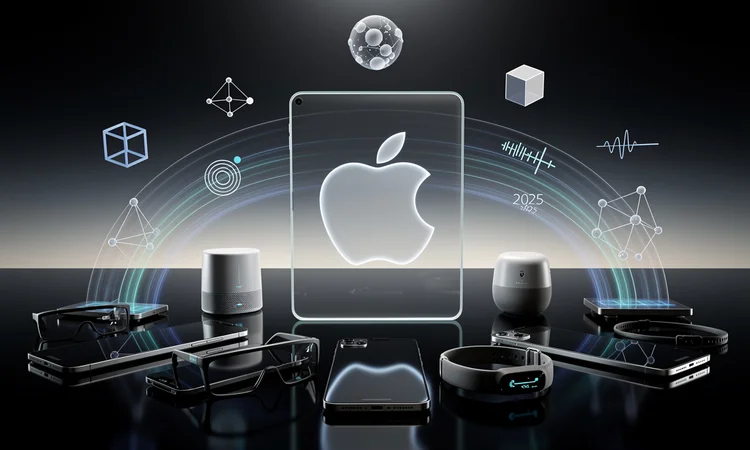
Apple Inc.’s typically reserved chief executive Tim Cook has broken from his characteristically cautious communication style to hint at groundbreaking innovations arriving in 2025, signaling what industry analysts are interpreting as the company’s most ambitious product year since the iPhone’s introduction. During the company’s first-quarter earnings call, Cook’s comments suggested Apple is preparing to unveil technologies that extend far beyond the artificial intelligence features that have dominated tech industry discourse, potentially reshaping multiple product categories simultaneously.
The remarks come at a pivotal moment for the Cupertino-based technology giant, which faces mounting pressure to demonstrate innovation leadership while navigating an increasingly competitive global marketplace. According to 9to5Mac , Cook specifically emphasized that Apple’s pipeline includes “innovations that have never been seen before,” a phrase that represents an unusually bold departure from the company’s standard practice of downplaying future product developments until official announcements.
This strategic shift in communication approach suggests Apple’s leadership recognizes the need to rebuild investor and consumer excitement following quarters of relatively incremental updates. The company’s stock performance and market position have faced scrutiny as competitors have aggressively marketed their AI capabilities, while Apple’s more measured approach to artificial intelligence integration has led some observers to question whether the company risks falling behind in the current technology cycle.
The Strategic Context Behind Cook’s Confidence
Apple’s product development philosophy has historically emphasized refinement and integration over being first to market with new technologies. This approach has served the company well in previous technology transitions, from smartphones to wearables, where Apple often entered established categories and redefined them through superior execution and ecosystem integration. Cook’s recent statements suggest the company believes it has reached similar inflection points across multiple product lines simultaneously.
The timing of these hints aligns with reports from supply chain analysts indicating significant manufacturing preparations for new product categories. Industry sources have noted unusual component orders and manufacturing partner preparations that suggest Apple is preparing for launches that extend beyond typical annual refresh cycles. These preparations involve not just existing product lines but entirely new manufacturing processes, according to analysts tracking the company’s Asian supply chain partners.
Beyond Artificial Intelligence: A Broader Innovation Thesis
While much of the technology industry’s attention has focused on generative AI and large language models, Cook’s emphasis on “never-been-seen” innovations suggests Apple’s development efforts extend into territories that may not fit neatly into current AI-focused narratives. The company has historically excelled at identifying technologies that can be integrated into consumer products in ways that feel intuitive rather than experimental, a pattern that appears to be guiding its current development priorities.
Apple’s research and development spending has increased substantially in recent years, reaching levels that suggest investments extending well beyond software improvements to existing products. The company’s R&D expenditures as a percentage of revenue have climbed steadily, indicating long-term bets on technologies that may not generate immediate returns but could establish new product categories or fundamentally transform existing ones.
The Vision Pro Factor and Spatial Computing’s Evolution
The Vision Pro headset, launched in early 2024, represents Apple’s most significant new product category in years, yet its high price point and limited initial market have led to questions about the platform’s trajectory. Cook’s recent comments may signal that Apple is preparing to address these limitations with either more accessible versions of the spatial computing platform or complementary technologies that expand its utility beyond early adopter audiences.
Industry observers note that Apple’s pattern with new categories typically involves an initial premium product that establishes the technology and user experience framework, followed by more accessible versions and ecosystem expansion. The original iPhone, iPad, and Apple Watch all followed this trajectory, suggesting the Vision Pro may be receiving similar treatment with announcements that could make spatial computing relevant to broader consumer and professional markets.
Hardware and Services Convergence Accelerates
Apple’s increasing emphasis on services revenue has created opportunities for hardware innovations that unlock new subscription and recurring revenue streams. The company’s services business now generates more revenue than many Fortune 500 companies’ entire operations, creating financial flexibility for hardware investments that might have longer payback periods but strengthen the overall ecosystem’s value proposition.
This convergence strategy appears to be guiding product development decisions across categories. Recent patent filings and hiring patterns suggest Apple is investing heavily in technologies that blur boundaries between devices, enabling seamless transitions between screens, input methods, and computing contexts. These investments could manifest in products that make the company’s ecosystem significantly more valuable than the sum of its individual components.
The Competitive Pressure Intensifies
Apple’s innovation signals come as competitors have accelerated their own product development cycles, particularly in areas like foldable devices, AI integration, and wearable technology. Samsung, Google, and emerging Chinese manufacturers have all demonstrated willingness to experiment with form factors and features that Apple has historically avoided, creating market segments where Apple currently lacks presence.
The company’s response to this competitive pressure has typically involved patience followed by definitive entries that redefine category expectations. Cook’s hints suggest Apple believes it has reached the point where its development efforts have matured sufficiently to make such definitive statements across multiple categories, potentially addressing several competitive gaps simultaneously rather than through sequential product updates.
Manufacturing and Supply Chain Implications
Delivering on promises of unprecedented innovation requires not just breakthrough design and engineering but also manufacturing capabilities that can produce new technologies at Apple’s required scale and quality standards. The company’s supply chain partnerships and manufacturing relationships represent decades of investment in capabilities that competitors struggle to replicate, providing advantages in bringing complex new products to market.
Recent reports from manufacturing regions indicate Apple has been working with partners on new production techniques and quality control processes that differ significantly from those used for existing product lines. These preparations suggest products that may involve new materials, assembly methods, or component integration approaches that require substantial lead time to perfect before mass production begins.
The Investor and Market Response
Financial markets have responded cautiously to Cook’s hints, with investors seeking more concrete details about product timing, pricing, and market potential before adjusting valuations significantly. Apple’s market capitalization and investor expectations create challenges for new products, which must generate substantial revenue to meaningfully impact the company’s overall financial performance given its existing scale.
However, the company’s track record of successfully launching and scaling new categories provides credibility to Cook’s optimistic framing. Apple has demonstrated an ability to create entirely new markets or dramatically expand existing ones, from tablets to wireless earbuds to smartwatches. If the promised innovations achieve similar market creation or expansion, they could justify the confidence reflected in Cook’s recent communications.
Privacy and Security as Differentiators
Apple’s consistent emphasis on privacy and security as product differentiators may play a central role in whatever innovations emerge this year. As concerns about data collection, AI training practices, and digital security have intensified, Apple’s positioning on these issues has become increasingly valuable, potentially enabling product approaches that competitors cannot easily replicate without fundamental business model changes.
The company’s investments in on-device processing, differential privacy techniques, and secure enclave technologies provide a foundation for innovations that could address growing consumer and regulatory concerns about technology’s impact on privacy. Products that deliver advanced capabilities while maintaining Apple’s privacy commitments could represent the “never-been-seen” innovations Cook referenced, particularly if they solve problems that current AI-focused approaches cannot address while respecting user privacy.
As the year progresses, the technology industry will be watching closely to see whether Apple can deliver on the expectations Cook’s comments have created. The company’s historical pattern suggests major announcements may come at its Worldwide Developers Conference in June or special events later in the year, providing opportunities to unveil the innovations that have generated such anticipation. Whether these products represent incremental advances or genuine category creation will determine whether Cook’s confidence proves justified and whether Apple can maintain its position as the technology industry’s most influential product company.






Leave a Reply
Your email address will not be published.