





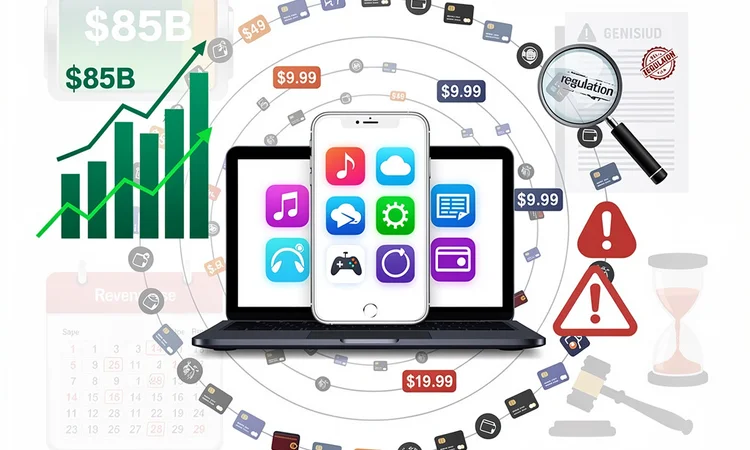
Apple Inc.’s relentless march toward subscription-based revenue streams has positioned the technology giant at a precarious crossroads, where the company’s financial ambitions increasingly collide with consumer tolerance and regulatory oversight. As the Cupertino-based behemoth continues to expand its services portfolio, industry observers warn that the company’s aggressive monetization tactics could undermine the premium brand loyalty that has long been its competitive advantage.
The iPhone maker’s services division, which encompasses everything from Apple Music and iCloud storage to Apple TV+ and the newly expanded Apple One bundle, now generates more than $85 billion annually, representing roughly 22% of the company’s total revenue. This transformation from a hardware-centric business model to one increasingly dependent on recurring revenue has been celebrated by Wall Street analysts, who prize the predictability and high margins associated with subscription income. However, according to 9to5Mac , the company now faces mounting pressure to balance its growth objectives against the risk of alienating its core customer base through subscription fatigue.
The tension became particularly evident following Apple’s recent price increases across multiple service tiers, a move that sparked immediate backlash from consumers already grappling with inflation and economic uncertainty. Apple Music subscriptions rose by $1 per month for individual plans, while Apple TV+ saw a 43% price increase over two years, climbing from $4.99 to $6.99 monthly. These adjustments, while seemingly modest in isolation, compound when users subscribe to multiple Apple services, potentially adding $20 to $30 in additional annual costs per household.
The Architecture of Apple’s Services Empire
Apple’s subscription strategy extends far beyond entertainment and storage solutions. The company has systematically woven recurring payments into nearly every aspect of its ecosystem, from AppleCare+ extended warranties to Apple Arcade gaming subscriptions, Fitness+ workout programs, and News+ magazine bundles. The Apple One package, which consolidates multiple services at a discounted rate, exemplifies the company’s bundling philosophy—a tactic borrowed from cable television providers that simultaneously increases customer lifetime value while creating higher barriers to exit.
The financial engineering behind this approach is sophisticated. By converting one-time hardware purchases into ongoing service relationships, Apple has created a more resilient revenue stream that cushions the company against cyclical downturns in device sales. During quarters when iPhone sales soften due to market saturation or extended replacement cycles, services revenue provides crucial stability. This diversification strategy has proven particularly valuable as smartphone innovation has plateaued, with incremental improvements no longer compelling consumers to upgrade devices annually.
Consumer Tolerance Approaches Breaking Point
Yet the sustainability of this model faces serious questions. Consumer advocacy groups have begun highlighting what they characterize as “subscription creep”—the gradual accumulation of recurring charges that collectively strain household budgets. A typical Apple household might now carry subscriptions for iCloud storage (essential for backing up photos and data), Apple Music (to access the family’s music library), Apple TV+ (for original content), and AppleCare+ (for device protection), totaling more than $50 monthly before considering the Apple One bundle discount.
The psychological burden extends beyond mere dollars. Users report growing frustration with the complexity of managing multiple subscriptions, confusion about what services are actually necessary versus optional, and resentment at feeling locked into the Apple ecosystem. This sentiment is particularly acute regarding iCloud storage, which many users view as a de facto tax on owning Apple devices, given the limited free storage tier of just 5GB—insufficient for backing up even a single modern iPhone with its high-resolution photos and videos.
Regulatory Headwinds Intensify
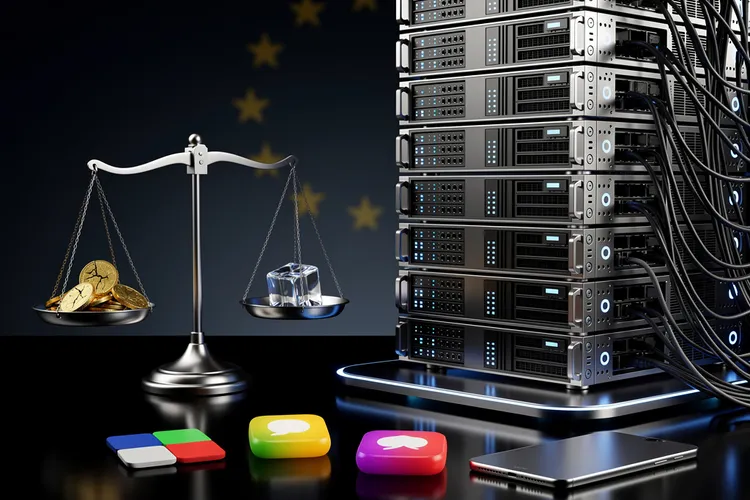
Apple’s subscription push has also attracted regulatory attention across multiple jurisdictions. European Union regulators have scrutinized the company’s App Store policies, which mandate that developers use Apple’s in-app purchase system and remit 15-30% commissions on subscription revenues. This arrangement, critics argue, inflates prices for consumers while limiting competition. The Digital Markets Act, which took effect in 2023, has forced Apple to allow alternative payment systems in Europe, potentially undermining the company’s ability to extract commissions from third-party subscriptions.
In the United States, the Department of Justice’s ongoing antitrust investigation has examined whether Apple’s bundling practices constitute anticompetitive behavior. Regulators are particularly interested in whether the company leverages its control over iOS to advantage its own services over competitors. For instance, Apple Music enjoys deep integration with Siri and iOS that rival services like Spotify cannot replicate, despite Spotify’s larger subscriber base globally. These preferential arrangements, combined with Apple’s ability to pre-install its apps and promote its services through system-level notifications, create what competitors describe as an unlevel playing field.
The Margins Tell a Compelling Story
From a purely financial perspective, Apple’s strategic pivot makes undeniable sense. Services carry gross margins exceeding 70%, compared to roughly 36% for hardware products. Every dollar of services revenue therefore contributes significantly more to Apple’s bottom line than an equivalent dollar from iPhone or Mac sales. This margin differential explains why CEO Tim Cook has consistently emphasized services growth in earnings calls and why the company’s stock valuation has expanded even as unit sales of core products have stagnated.
The services segment also provides Apple with valuable customer data and engagement metrics that inform product development and marketing strategies. Subscription relationships create ongoing touchpoints that keep users actively engaged with the Apple ecosystem, increasing the likelihood of future hardware purchases. A customer paying monthly for Apple Music, iCloud, and Apple TV+ has invested not just financially but emotionally in the platform, making defection to Android or other alternatives psychologically and practically more difficult.
Innovation Questions Loom Large
However, critics contend that Apple’s subscription focus may be diverting resources and attention from hardware innovation—the company’s historical strength. The perception that recent iPhone iterations offer only marginal improvements has fueled speculation that Apple has become complacent, prioritizing recurring revenue extraction over breakthrough product development. This concern is particularly relevant as the company attempts to establish new product categories like the Vision Pro mixed-reality headset, which itself carries subscription requirements for content access.
The challenge extends to service quality and differentiation. Apple TV+, despite garnering critical acclaim for shows like “Ted Lasso” and “Severance,” maintains a relatively small content library compared to Netflix, Disney+, and other streaming competitors. Apple Music, while offering high-fidelity audio and seamless device integration, struggles to differentiate itself functionally from Spotify. Apple News+ has failed to achieve significant traction, with publishers complaining about unfavorable revenue-sharing terms. These competitive dynamics raise questions about whether consumers will maintain multiple subscriptions long-term or eventually consolidate around fewer, more comprehensive services.
The Path Forward Demands Delicate Calibration
Industry analysts suggest Apple must carefully recalibrate its subscription strategy to avoid triggering a consumer backlash that could damage its premium brand positioning. Potential adjustments might include more generous free tiers for essential services like iCloud storage, more flexible bundling options that allow customers to customize their service packages, and clearer value propositions that justify price increases through tangible feature additions rather than simple inflation adjustments.
The company could also explore alternative monetization models that feel less extractive to consumers. For instance, Apple might offer lifetime purchase options for certain services, allow family sharing across more service tiers, or create loyalty programs that reward long-term customers with discounted rates. Such approaches would acknowledge that customer goodwill represents a finite resource that requires careful stewardship, particularly as economic pressures make consumers increasingly price-sensitive and willing to question subscription value propositions.
Ecosystem Lock-in Cuts Both Ways
Apple’s ecosystem strategy, long viewed as its greatest competitive moat, may prove a double-edged sword in the subscription era. While the seamless integration across devices creates powerful network effects that discourage switching, it also means that subscription dissatisfaction can cascade across the entire product portfolio. A customer frustrated by iCloud storage costs or Apple TV+ price increases may begin questioning their broader commitment to Apple products, potentially influencing future hardware purchase decisions worth thousands of dollars.
The company’s challenge is compounded by demographic shifts. Younger consumers, particularly Generation Z users, have grown up in the subscription economy and exhibit less brand loyalty than previous generations. They readily switch between services based on content availability, pricing, and features, viewing subscriptions as fungible commodities rather than long-term commitments. This cohort’s preferences may ultimately limit Apple’s ability to maintain subscription growth rates without continuous innovation and value delivery that justifies ongoing payments.
As Apple navigates this complex environment, the company’s decisions will likely influence broader industry trends. Other technology giants, including Google, Amazon, and Microsoft, are watching closely to gauge consumer tolerance for subscription proliferation. Apple’s experience may determine whether the subscription model represents a sustainable foundation for technology companies’ future revenue or merely a transitional phase before market saturation forces new approaches. The stakes extend beyond Apple’s financial performance to encompass fundamental questions about how consumers interact with technology and what business models will dominate the next decade of digital services.






Leave a Reply
Your email address will not be published.