








The enterprise technology sector is witnessing a fundamental transformation in how organizations architect their cloud infrastructure, with multi-cloud strategies emerging as the dominant approach for managing digital operations. According to a comprehensive market research report published by GlobeNewswire , the global multi-cloud computing market is experiencing unprecedented growth, driven primarily by enterprises seeking to eliminate vendor dependency and enhance operational resilience.
The strategic imperative behind multi-cloud adoption extends far beyond simple risk mitigation. Organizations are discovering that distributing workloads across multiple cloud service providers delivers tangible benefits in performance optimization, cost management, and regulatory compliance. This approach allows enterprises to leverage specialized capabilities from different providers—utilizing Amazon Web Services for compute-intensive operations, Microsoft Azure for enterprise integration, and Google Cloud Platform for advanced analytics and machine learning applications—while maintaining the flexibility to shift resources based on changing business requirements.
Vendor Lock-In Concerns Drive Strategic Diversification
The specter of vendor lock-in has long haunted enterprise technology decision-makers, but the concern has intensified as cloud infrastructure becomes increasingly central to business operations. Organizations that committed exclusively to single-cloud providers in the early 2010s now find themselves constrained by proprietary tools, specialized APIs, and data transfer costs that make migration prohibitively expensive. The multi-cloud approach addresses these concerns by design, enabling enterprises to maintain competitive leverage with providers while preserving the option to redistribute workloads based on pricing, performance, or strategic considerations.
Financial services institutions have emerged as particularly aggressive adopters of multi-cloud strategies, driven by stringent regulatory requirements and the need for operational continuity. Banks and investment firms are deploying critical applications across multiple cloud environments, ensuring that regulatory compliance obligations in different jurisdictions can be met while maintaining disaster recovery capabilities that extend beyond any single provider’s infrastructure. This approach has proven especially valuable as data sovereignty regulations proliferate globally, requiring organizations to maintain precise control over where customer information resides.
Technical Complexity Creates New Management Challenges
While multi-cloud strategies offer compelling advantages, they introduce significant technical and operational complexity that organizations must navigate carefully. Managing security policies, identity access controls, and network configurations across disparate cloud platforms requires sophisticated tooling and specialized expertise. The proliferation of cloud management platforms and orchestration tools reflects the market’s response to these challenges, with vendors developing solutions that provide unified visibility and control across heterogeneous cloud environments.
The skills gap in multi-cloud management represents a critical constraint on adoption velocity. Organizations report difficulty recruiting and retaining professionals with expertise spanning multiple cloud platforms, particularly when specialized knowledge of containerization technologies like Kubernetes and service mesh architectures becomes essential. This talent scarcity has fueled growth in managed service providers specializing in multi-cloud operations, as enterprises opt to outsource complexity rather than build internal capabilities from scratch.
Cost Optimization Emerges as Primary Value Driver
Beyond risk mitigation, cost optimization has emerged as a primary driver of multi-cloud adoption, with enterprises discovering significant savings through strategic workload placement. Organizations are developing sophisticated algorithms to analyze application requirements against provider pricing models, automatically shifting workloads to the most cost-effective platform for specific use cases. This approach proves particularly valuable for batch processing, development environments, and non-critical workloads where performance requirements remain flexible.
The practice of cloud arbitrage—leveraging pricing differences and promotional credits across providers—has matured into a standard operating procedure for cost-conscious enterprises. Organizations maintain relationships with multiple providers specifically to capitalize on competitive pricing dynamics, negotiating volume discounts while preserving the ability to shift spending based on evolving rate structures. This competitive pressure has benefited enterprises broadly, as providers compete aggressively on pricing to capture larger shares of enterprise cloud budgets.
Hybrid and Edge Computing Expand Multi-Cloud Architectures
The evolution of multi-cloud strategies increasingly incorporates hybrid cloud configurations and edge computing deployments, creating distributed architectures that span public cloud providers, private data centers, and edge locations. This expansion reflects the reality that certain workloads—whether due to latency requirements, data gravity, or regulatory constraints—cannot migrate entirely to public cloud infrastructure. Organizations are deploying unified management platforms that treat on-premises infrastructure as simply another cloud environment, enabling consistent operations across the entire technology stack.
Edge computing requirements are accelerating this architectural complexity, as organizations deploy computing resources closer to data sources and end users. Manufacturing facilities, retail locations, and telecommunications networks increasingly require local processing capabilities that integrate seamlessly with centralized cloud infrastructure. Multi-cloud strategies that incorporate edge deployments enable organizations to process data locally while maintaining centralized control and leveraging cloud-based analytics and machine learning capabilities.
Security and Compliance Considerations Shape Deployment Patterns
Security architecture in multi-cloud environments demands fundamentally different approaches compared to single-provider deployments. Organizations must implement consistent security policies across platforms while accounting for provider-specific capabilities and limitations. Zero-trust security models have gained prominence in multi-cloud contexts, as traditional perimeter-based security proves inadequate when applications and data span multiple cloud environments. Identity and access management becomes particularly complex, requiring federated authentication systems and granular permission controls that function consistently across providers.
Compliance requirements significantly influence how organizations architect multi-cloud deployments, particularly for enterprises operating in heavily regulated industries. Healthcare organizations subject to HIPAA regulations, financial institutions navigating PCI-DSS requirements, and government contractors managing classified information must carefully map compliance obligations to specific cloud environments. This often results in segmented architectures where different workload categories deploy to providers based on certification status and regional availability.
Market Growth Projections Signal Sustained Momentum
Industry analysts project robust growth for the multi-cloud computing market through 2031, with compound annual growth rates exceeding traditional single-cloud deployments. This growth trajectory reflects both new cloud adoption by organizations previously reliant on on-premises infrastructure and migration by existing cloud users transitioning from single-provider to multi-provider strategies. The market expansion encompasses not only infrastructure-as-a-service offerings but also platform and software services designed specifically for multi-cloud environments.
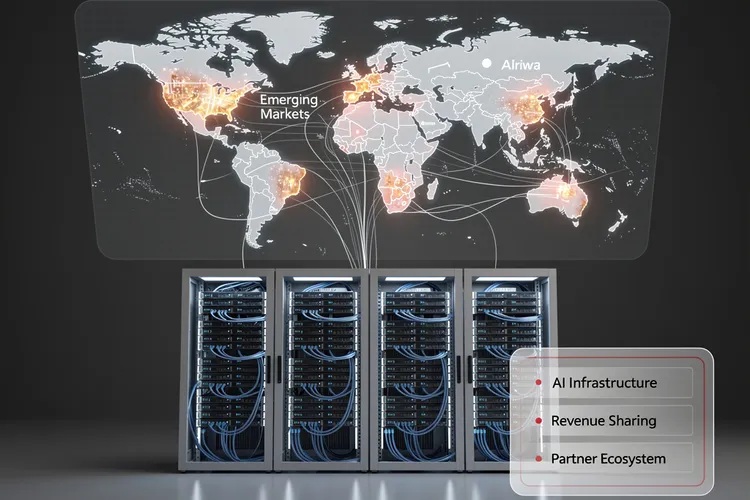
Geographic variations in multi-cloud adoption reveal interesting patterns, with North American and European enterprises leading in deployment maturity while Asia-Pacific organizations demonstrate the highest growth rates. Regional differences in cloud provider availability, data sovereignty regulations, and enterprise digital transformation timelines contribute to these variations. Emerging markets show particular interest in multi-cloud strategies as a means of avoiding dependence on foreign technology providers while accessing global cloud capabilities.
Kubernetes and Containerization Enable Portability
The widespread adoption of containerization technologies, particularly Kubernetes, has dramatically reduced technical barriers to multi-cloud deployment. Containers provide application portability across cloud platforms, enabling organizations to package applications with their dependencies and deploy them consistently regardless of underlying infrastructure. Kubernetes has emerged as the de facto standard for container orchestration, with all major cloud providers offering managed Kubernetes services that facilitate multi-cloud deployments.
This standardization around container technologies has spawned an ecosystem of tools and platforms designed specifically for multi-cloud operations. Service mesh technologies enable sophisticated traffic management and security policies across distributed applications, while observability platforms provide unified monitoring and logging across cloud environments. The maturation of these supporting technologies has transformed multi-cloud from a conceptual aspiration into a practical operational reality for enterprises of all sizes.
Future Developments Point Toward Increased Automation
The future trajectory of multi-cloud computing points toward increased automation and artificial intelligence-driven optimization. Organizations are developing systems that automatically select optimal cloud platforms for specific workloads based on real-time analysis of performance requirements, cost considerations, and availability metrics. Machine learning algorithms increasingly inform decisions about workload placement, capacity planning, and resource optimization across multi-cloud environments.
As multi-cloud strategies mature, the focus is shifting from basic deployment capabilities toward advanced optimization and governance. Enterprises are implementing sophisticated financial management systems that provide granular visibility into cloud spending across providers, enabling detailed chargeback models and cost allocation. Governance frameworks are evolving to address the unique challenges of multi-cloud environments, establishing policies for data residency, application deployment standards, and provider selection criteria that balance technical requirements with business objectives.






Leave a Reply
Your email address will not be published.