








Intel’s Pyrrhic Win: A Slashed Fine in Europe’s Enduring Chip Wars
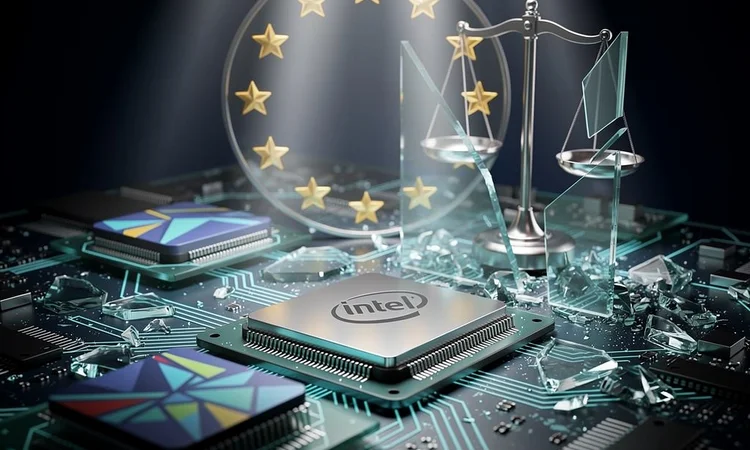
In a decision that underscores the protracted nature of antitrust battles in the technology sector, Europe’s second-highest court has upheld a finding against Intel Corp. for abusing its dominant position in the computer chip market, yet significantly reduced the associated penalty. The ruling, issued on Wednesday, slashes the fine from €376 million to €237 million, offering the U.S. chip giant partial relief after years of legal wrangling. This outcome stems from a case originating in the early 2000s, when Intel was accused of employing anticompetitive tactics to sideline rivals like Advanced Micro Devices Inc. (AMD).
The European General Court, based in Luxembourg, rejected Intel’s primary appeal against the European Commission’s 2023 determination, which pinpointed the company’s use of rebates and payments to computer manufacturers as tools to exclude competitors. However, the court found fault with the Commission’s calculation of the fine, deeming it excessive and adjusting it downward by about €140 million. This adjustment reflects a nuanced assessment of the duration and severity of Intel’s practices, which involved conditional incentives that effectively locked in customers and stifled competition in the x86 central processing unit (CPU) market.
For industry observers, this verdict represents more than a financial reprieve; it highlights the evolving standards of antitrust enforcement in the European Union, where regulators have increasingly targeted Big Tech’s market behaviors. Intel, once the unchallenged leader in semiconductors, has faced mounting pressures not only from regulatory scrutiny but also from shifting market dynamics, including the rise of ARM-based architectures and intensifying competition from players like AMD and Nvidia Corp.
Echoes of a Decade-Long Saga
The roots of this dispute trace back to 2009, when the European Commission initially levied a record €1.06 billion fine on Intel for similar anticompetitive conduct. That penalty was partially annulled in 2022 by the same General Court, prompting the Commission to recalibrate and impose the €376 million fine in 2023. Intel’s latest challenge focused on contesting the evidence of harm to competition, arguing that its rebates were standard business practices rather than predatory maneuvers.
Court documents reveal that the judges affirmed the Commission’s view of Intel’s “naked restrictions,” such as payments to manufacturers like Dell and Hewlett-Packard to delay or cancel AMD-based products. Yet, in reducing the fine, the court emphasized that the penalty should be proportionate to the infringement’s scope, covering a period from 2002 to 2007. This precision in fine-tuning reflects broader EU jurisprudence, where penalties must balance deterrence with fairness, as noted in reporting from Reuters .
Intel’s response has been measured, with a spokesperson indicating the company is reviewing the decision while maintaining that its practices were competitive and beneficial to consumers. The fine reduction, equivalent to roughly $163 million at current exchange rates, is a welcome offset for Intel, which reported $54 billion in revenue last year amid challenges like production delays and geopolitical tensions affecting supply chains.
Market Ripples and Competitive Shifts
Beyond the courtroom, this ruling arrives at a pivotal moment for Intel. The company is navigating a turbulent phase, marked by CEO Pat Gelsinger’s ambitious turnaround plan, including massive investments in U.S. manufacturing to counter reliance on Asian foundries. However, ongoing antitrust scrutiny could complicate these efforts, as regulators worldwide scrutinize how dominant players maintain their edge in critical technologies like AI accelerators and edge computing.
Analysts point out that while the reduced fine is a fraction of Intel’s cash reserves—estimated at over $20 billion—it symbolizes persistent regulatory headwinds. In the U.S., Intel faces its own antitrust probes, including a lawsuit from the Federal Trade Commission alleging monopolistic practices in the GPU market. This transatlantic pressure mirrors cases against other tech behemoths, such as Google’s repeated EU fines totaling billions for Android and search dominance.
Posts on X (formerly Twitter) from users like market watchers and tech enthusiasts reflect mixed sentiments, with some hailing the fine cut as a victory for corporate resilience, while others criticize it as insufficient accountability for past market distortions. One post noted the irony of Intel receiving a €515 million interest payment earlier this year from a prior fine reversal, underscoring the financial back-and-forth in these sagas.
Regulatory Evolution in Tech Dominance
The EU’s antitrust framework, bolstered by the Digital Markets Act, positions it as a global pacesetter in reining in tech giants. In Intel’s case, the Commission’s persistence—despite multiple court setbacks—demonstrates a commitment to fostering competition in semiconductor markets, which are vital for everything from consumer electronics to national security. As detailed in an analysis by Seeking Alpha , the reduced fine still upholds the core finding of abuse, potentially influencing how companies structure loyalty programs and rebates moving forward.
Comparisons to AMD’s trajectory are inevitable; the rival chipmaker’s market share surged from under 20% in the mid-2000s to over 30% today, partly attributed to Intel’s constrained practices during the infringement period. Industry insiders suggest this ruling could embolden smaller players to pursue complaints, though the lengthy timelines—spanning nearly two decades—highlight the challenges of timely enforcement in fast-moving tech sectors.
Moreover, the decision intersects with global trade tensions. Intel’s push for domestic production aligns with U.S. subsidies under the CHIPS Act, yet EU regulators remain vigilant against imported anticompetitive behaviors. This dynamic is evident in recent fines against Qualcomm and Broadcom, signaling a consistent approach to chip industry oversight.
Strategic Implications for Intel’s Future
Looking ahead, Intel must recalibrate its strategies amid this legal clarity. The company has pivoted toward foundry services, aiming to manufacture chips for competitors, a move that could mitigate antitrust risks by promoting openness. However, as reported in TechRadar , the upheld ruling serves as a reminder of past missteps, potentially affecting investor confidence as Intel competes in emerging arenas like quantum computing and automotive semiconductors.
Financially, the €237 million fine is manageable, but cumulative legal costs and reputational impacts add up. Stock reactions were muted, with Intel shares dipping slightly on the news, per data from Investing.com , reflecting broader market concerns over profitability amid high capital expenditures.
For the broader semiconductor ecosystem, this case underscores the need for transparent practices. Experts argue that while rebates can drive efficiency, they must not cross into exclusionary territory, a line the EU court has now more clearly delineated.
Global Antitrust Parallels and Lessons Learned
Parallels with other high-profile cases abound. Apple’s ongoing EU battles over App Store fees and Meta’s data privacy fines illustrate a pattern of aggressive oversight. In Intel’s instance, the fine reduction—detailed in coverage from U.S. News —might encourage appeals, as partial victories can yield substantial savings.
Industry veterans recall how the original 2009 fine spurred internal reforms at Intel, including enhanced compliance programs. Today, with AI and machine learning reshaping chip demands, companies like Intel are investing billions in R&D to stay ahead, but regulatory guardrails ensure these innovations benefit a competitive market.
Sentiment on platforms like X echoes this, with traders noting the fine’s cut as a “major comeback” for Intel, potentially freeing resources for innovation. Yet, critics argue the penalty remains too lenient given the market distortions.
Path Forward in a Fragmented Market
As Intel charts its course, the ruling could influence negotiations with partners and regulators alike. The company’s recent deals, such as collaborations with TSMC for advanced nodes, signal a shift toward cooperation over dominance. This evolution is crucial in an era where supply chain resilience is paramount, especially amid U.S.-China trade frictions.
The EU’s decision also bolsters its reputation as a tough enforcer, potentially deterring future infringements. For Intel, absorbing this hit while pushing forward with its IDM 2.0 strategy—integrating design, manufacturing, and packaging—will be key to reclaiming market leadership.
Ultimately, this chapter in Intel’s antitrust odyssey reinforces the delicate balance between innovation and fair play. As the chip wars intensify, with new entrants like custom silicon from hyperscalers, the lessons from this case will resonate far beyond Europe’s borders, shaping how tech titans navigate dominance in an interconnected world.






Leave a Reply
Your email address will not be published.