







Finland Recruits Burned-Out US AI and Tech Talent with Visas, Better Balance

Finland Recruits Burned-Out US AI and Tech Talent with Visas, Better Balance

Finland is actively recruiting disillusioned U.S. tech professionals in AI and software by offering superior work-life balance, fast-track visas, and a high quality of life, aiming to attract talent by 2026 amid American burnout. This strategy challenges global tech dynamics, positioning Finland as an innovative haven.

Posted on: by Vivian Stewart
India’s AI Workforce Strategy Emerges as Model for Developing Nations Seeking Technology Leadership

India’s AI Workforce Strategy Emerges as Model for Developing Nations Seeking Technology Leadership

India's deliberate strategy to cultivate AI talent at scale offers emerging economies a practical blueprint for technological transformation. By leveraging educational infrastructure, fostering industry partnerships, and implementing supportive policies, India has become the world's second-largest source of AI specialists without massive infrastructure investments.

Posted on: by Elena Brooks
Apple’s Chip Crunch: iPhone Boom Meets AI Supply Squeeze

Apple’s Chip Crunch: iPhone Boom Meets AI Supply Squeeze

Apple's iPhone demand surges past supply limits as TSMC prioritizes AI chips and memory prices soar from data-center hunger, forcing strategic shifts and potential margin pressure in 2026.

Posted on: by Vivian Stewart
AI’s Payroll Power Play: ISG Ranks Leaders Reshaping Employee Value

AI’s Payroll Power Play: ISG Ranks Leaders Reshaping Employee Value

ISG's 2025 Buyers Guides crown ADP, Oracle, and UKG as payroll leaders, with AI driving error detection, compliance, and employee financial tools. By 2028, half of firms will use AI to preempt payroll issues, boosting resilience.

Posted on: by Samuel Johnson
Remote Jobs Defy RTO Mandates: Demand Surges 19.8% in Late 2025

Remote Jobs Defy RTO Mandates: Demand Surges 19.8% in Late 2025

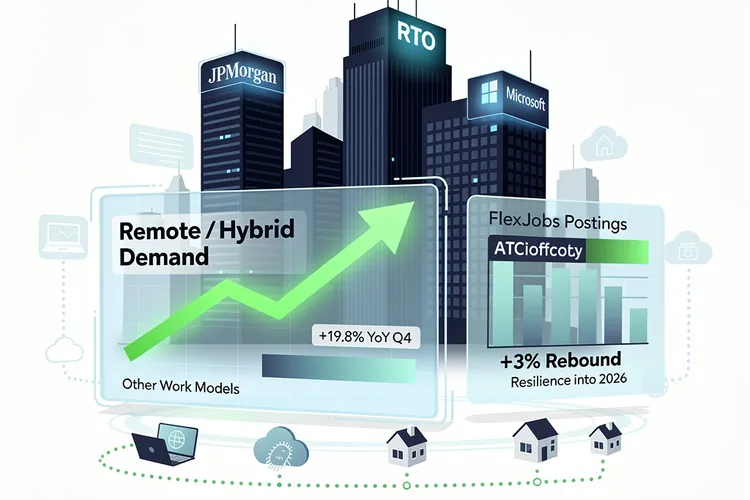
Despite 2025's RTO mandates at JPMorgan, Microsoft, and others, Toptal reports 19.8% YoY growth in remote/hybrid demand for Q4, outpacing all models. FlexJobs notes a 3% rebound in postings, signaling resilience into 2026.

Posted on: by Amelia Keller
The IMF’s Stark Warning: How Trade Wars and Central Bank Independence Threaten Global Recovery

The IMF’s Stark Warning: How Trade Wars and Central Bank Independence Threaten Global Recovery

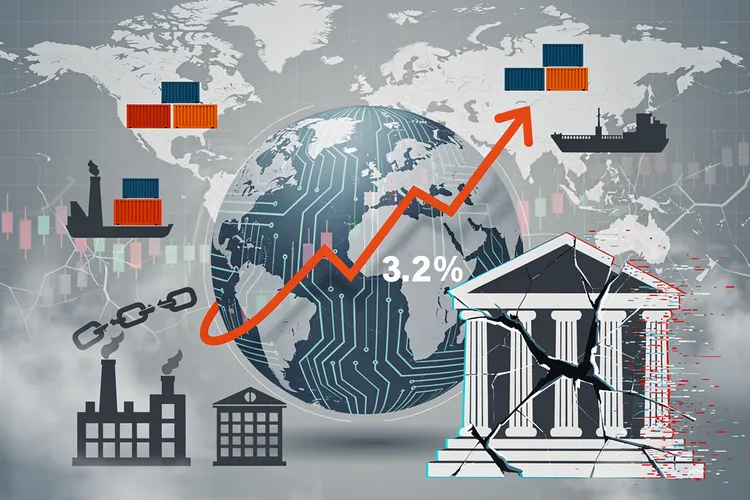
The IMF warns that escalating trade tensions and threats to central bank independence could derail global economic recovery, with growth projected to slow to 3.2% in 2025 amid mounting policy uncertainties and fragile post-pandemic conditions.

Posted on: by Samuel Johnson
Warsh’s Fed Nomination: Trump’s Bid to Reshape Monetary Policy

Warsh’s Fed Nomination: Trump’s Bid to Reshape Monetary Policy

President Trump nominated former Fed governor Kevin Warsh to replace Jerome Powell, sparking debates on policy shifts, Senate confirmation risks, and market impacts amid inflation and independence concerns.

Posted on: by Amelia Keller
AI Agents Reshape Procurement: McKinsey’s Blueprint for 25-40% Gains

AI Agents Reshape Procurement: McKinsey’s Blueprint for 25-40% Gains

McKinsey reveals AI agents could boost procurement productivity 25-40%, creating new roles and strategic clout amid tariffs and disruptions. Surveys show 40% piloting GenAI, with case studies proving multimillion savings.

Posted on: by Leo Rossi
DC Metro Sees Hybrid Work Boom: Half Adopt 3.2 Office Days Weekly

DC Metro Sees Hybrid Work Boom: Half Adopt 3.2 Office Days Weekly

In the D.C. metro area, nearly half the workforce has adopted hybrid schedules, averaging 3.2 office days per week, per a recent report. This post-pandemic shift reshapes commutes, real estate, and work-life balance, fostering productivity and retention amid challenges like traffic and equity issues. It signals a new normal for flexible work.

Posted on: by Jack Chen
AI’s Productivity Chasm: Execs Claim Days Saved, Workers See ‘Tax’ on Time

AI’s Productivity Chasm: Execs Claim Days Saved, Workers See ‘Tax’ on Time

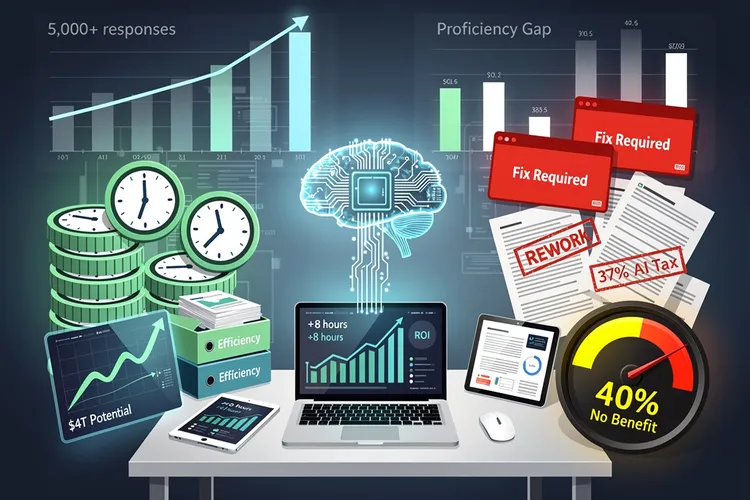
Executives report AI saving over eight hours weekly, but 40% of workers see no benefit, with gains eroded by a 37% 'AI tax' of error fixes. Surveys of 5,000+ reveal a proficiency gap stalling ROI amid $4 trillion promises.

Posted on: by Emily Chen

France’s Visio Gambit: Booting Teams and Zoom for Sovereign Video Supremacy

Zoe Patel | 2026-01-22
France’s Visio Gambit: Booting Teams and Zoom for Sovereign Video Supremacy

PARIS—France’s government is set to purge Microsoft Teams, Zoom, Webex, and Google Meet from its public sector by 2027, installing a homegrown videoconferencing platform called Visio as the exclusive tool for civil servants. The move, announced January 26, 2026, by Minister Delegate for the Civil Service and State Reform David Amiel, marks a bold stride in Europe’s quest for technological autonomy amid escalating U.S.-Europe tensions over data control and service reliability.

Visio, developed by the government’s Interministerial Directorate for Digital Affairs ( Ministry of Economy and Finance press release ), has already amassed 40,000 regular users after a year-long pilot. Deployment to 200,000 agents is underway, with full rollout across all state services targeted by 2027. No external licenses will be renewed post-deadline, forcing a clean break from U.S. vendors.

“This project is a concrete illustration of the Prime Minister and the Government’s commitment to regaining our digital independence,” Amiel declared during a visit to the CNRS’s I2BC research facility. “We cannot risk having our scientific exchanges, our sensitive data, and our strategic innovations exposed to non-European actors.”

Security Imperatives Drive the Switch

Current fragmentation—agencies juggling Teams, Zoom, and others—breeds vulnerabilities, dependencies, and inefficiencies, officials argue. Visio unifies communications on French-controlled infrastructure, hosted by Outscale, a Dassault Systèmes subsidiary certified under ANSSI’s rigorous SecNumCloud standard, ensuring data stays on French soil beyond U.S. jurisdiction like the CLOUD Act ( Euronews ).

The platform integrates AI-driven transcription with speaker diarization from startup Pyannote, keeping processing in-house without external clouds. Real-time captions arrive summer 2026 via Kyutai’s models. These features match commercial rivals while prioritizing confidentiality for public servants only—not open to private firms.

Geopolitical catalysts abound: U.S. cloud outages last year exposed Europe’s reliance, while sanctions on EU figures like Thierry Breton heightened surveillance fears. “Digital sovereignty is simultaneously an imperative for our public services, an opportunity for our businesses, and insurance against future threats,” Amiel added ( The Register ).

Early Adopters Pioneer the Shift

CNRS leads, ditching Zoom for Visio by March’s end across 34,000 employees and 120,000 researchers. Joining them: Assurance Maladie, Directorate General of Public Finances (DGFiP), and Ministry of the Armed Forces—all generalizing use in Q1 2026. Amiel toured CNRS with DINUM director Stéphanie Schaer and deputy science director Alain Schuhl, underscoring research-sector buy-in ( NDTV Profit ).

Cost savings sweeten the deal: €1 million annually per 100,000 users migrating off licenses, per government estimates. This aligns with France’s Suite Numérique ecosystem, supplanting U.S. tools like Gmail and Slack exclusively for state use ( Windows Central ).

Visio supports up to 150 participants with recording, screen-sharing, chat, and reactions—core functions refined through pilot feedback, per DINUM specs.

French Tech Stack Powers Resilience

Outscale’s SecNumCloud qualification, the pinnacle of French cloud security, underpins Visio, aligning with Prime Minister’s “Cloud au centre” doctrine. Pyannote’s diarization and Kyutai’s impending subtitles embed domestic AI, fostering startups and insulating against foreign disruptions ( ITdaily ).

The initiative counters Big Tech dominance, echoing Zoho CEO Sridhar Vembu’s X post: “France announced today it’s phasing out Teams, Zoom, etc. to be replaced with a French/European solution called Visio. The very definition of a ‘sovereign nation’ should now include ‘technology sovereignty’. Big Tech now is the New East India company” ( The National ).

X chatter amplifies buzz, with Techmeme highlighting the Outscale host and Euronews link, while users note “Visio”—French shorthand for visioconférence—avoids branding pitfalls despite Microsoft overlap.

Broader Sovereignty Push Gains Momentum

Visio fits France’s multi-year detox from non-EU software, prioritizing ANSSI-backed tools for sensitive data. It sidesteps U.S. platforms’ sovereignty caveats—Microsoft concedes it “cannot guarantee” full control—while nurturing a €1B+ savings pipeline across users.

EU parallels emerge: Germany eyes similar mandates; India’s Vembu praises the model. Critics flag development costs and scalability, but pilots affirm viability, with Reddit threads hailing it as Europe’s tech leap.

As rollout accelerates, France positions Visio not just as a Teams-killer, but a blueprint for public-sector resilience in a fractured digital order.


Subscribe Newsletter

Subscribe to our newsletter and stay up to date with the latest news, updates, and exclusive offers. Join our community today!

Comments

Join the discussion and share your thoughts.

No comments yet. Be the first to comment.

Leave a Reply

Your email address will not be published.

Join Us

Share your perspective with confidence. Your experience could inform, inspire, and help someone live better.

Archives

Authors

More ...

Search NexaPress



