






India’s AI Classroom Revolution: Google’s Gemini Scales Where Silicon Valley Stumbles

India’s AI Classroom Revolution: Google’s Gemini Scales Where Silicon Valley Stumbles

India leads global Gemini usage for learning, teaching Google to scale AI amid 247 million students, state curricula, and access gaps. Partnerships and tools like JEE mocks position it as a worldwide proving ground.

Posted on: by Micah Shaw
DeepSeek’s Bold Push: AI Search and Agents Challenge Google, OpenAI

DeepSeek’s Bold Push: AI Search and Agents Challenge Google, OpenAI

DeepSeek's January job postings reveal plans for a multilingual, multimodal AI search engine and persistent agents, intensifying rivalry with Google and OpenAI. Building on cost-efficient models like R1, the startup targets phone-first queries and autonomous task execution.

Posted on: by Vivian Stewart
Poetiq’s Lean Squad Outsmarts AI Giants on Reasoning Frontier

Poetiq’s Lean Squad Outsmarts AI Giants on Reasoning Frontier

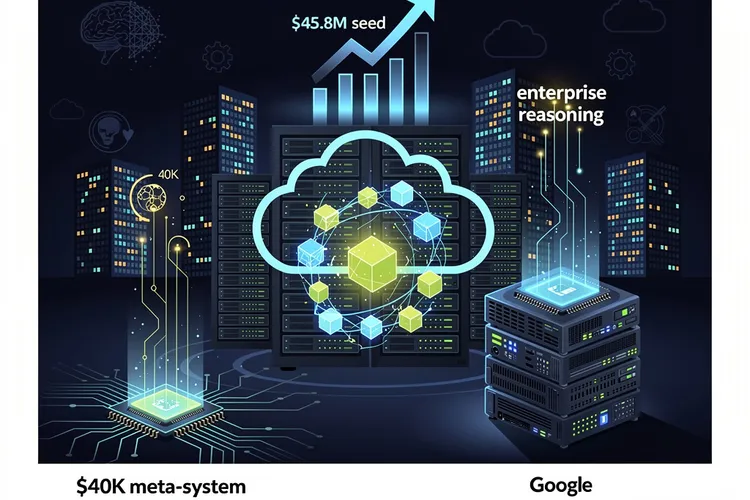
Poetiq's six-person team topped ARC-AGI-2 with a $40K meta-system, beating Google at half cost, then raised $45.8M seed to scale recursive agents enhancing any LLM for enterprise reasoning.

Posted on: by Elena Brooks
NASA’s Artemis Fuel System Failures Expose Critical Vulnerabilities in America’s Return to Lunar Exploration

NASA’s Artemis Fuel System Failures Expose Critical Vulnerabilities in America’s Return to Lunar Exploration

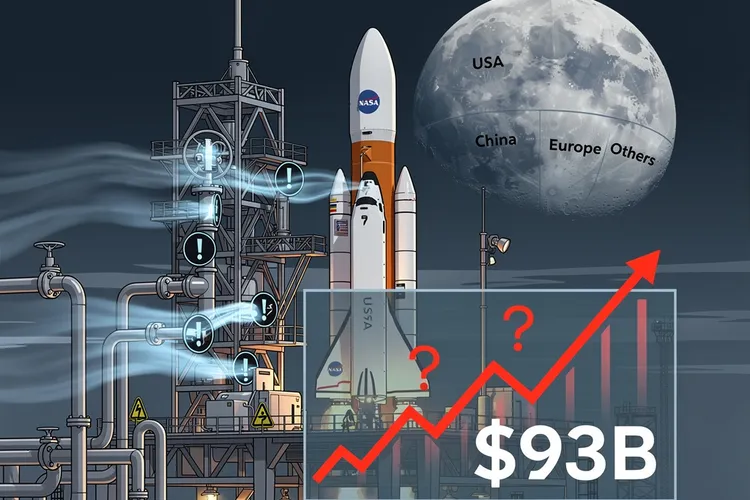
NASA's Space Launch System faces persistent hydrogen fuel leaks that have delayed the Artemis moon program, exposing critical gaps in expertise and raising questions about the $93 billion program's sustainability amid rising costs and international competition in lunar exploration.

Posted on: by Aria Brooks
AI Agents Shatter Compliance Foundations, Forcing CISOs to the Front Lines

AI Agents Shatter Compliance Foundations, Forcing CISOs to the Front Lines

AI agents are upending SOX, GDPR, PCI DSS, and HIPAA by autonomously executing regulated tasks, thrusting CISOs into accountability for compliance via identity and access controls. New governance treats AI as non-human identities amid rising regulatory demands.

Posted on: by Emily Scott
How One Company’s Radical AI Profit-Sharing Plan Is Rewriting the Productivity Playbook

How One Company’s Radical AI Profit-Sharing Plan Is Rewriting the Productivity Playbook

A company's innovative profit-sharing program ties employee compensation directly to AI tool usage and productivity gains, creating financial incentives that drive adoption rates far beyond industry norms while addressing worker concerns about automation and job security.

Posted on: by Samuel Johnson
Musk’s Abundance Dream vs. Amodei’s Job Apocalypse: AI’s Economic Reckoning

Musk’s Abundance Dream vs. Amodei’s Job Apocalypse: AI’s Economic Reckoning

Elon Musk predicts AI-driven abundance will render retirement savings irrelevant by 2030, while Anthropic's Dario Amodei warns of massive job losses and inequality demanding urgent fixes. Their visions clash on the path to AI's economic transformation.

Posted on: by Zoe Wright
The Agent-Native Revolution: How AI Agents Are Rewriting the Rules of Software Development

The Agent-Native Revolution: How AI Agents Are Rewriting the Rules of Software Development

The software industry is undergoing a fundamental transformation as agent-native architecture emerges, where AI agents rather than humans become the primary users of digital systems. This shift demands new approaches to development, security, and business operations.

Posted on: by Jack Chen
Uber’s Calculated Return to Greater China: Why Macau Marks a Pivotal Strategic Shift

Uber’s Calculated Return to Greater China: Why Macau Marks a Pivotal Strategic Shift

Uber's expansion into Macau marks its first new Asian market in years, representing a calculated test of whether the ride-hailing giant can succeed in Greater China after its costly 2016 retreat. The tourism-dependent territory offers unique advantages that could inform future regional strategy.

Posted on: by Zoe Wright
How Anthropic’s AI Is Driving NASA’s Mars Rover Through Uncharted Terrain

How Anthropic’s AI Is Driving NASA’s Mars Rover Through Uncharted Terrain

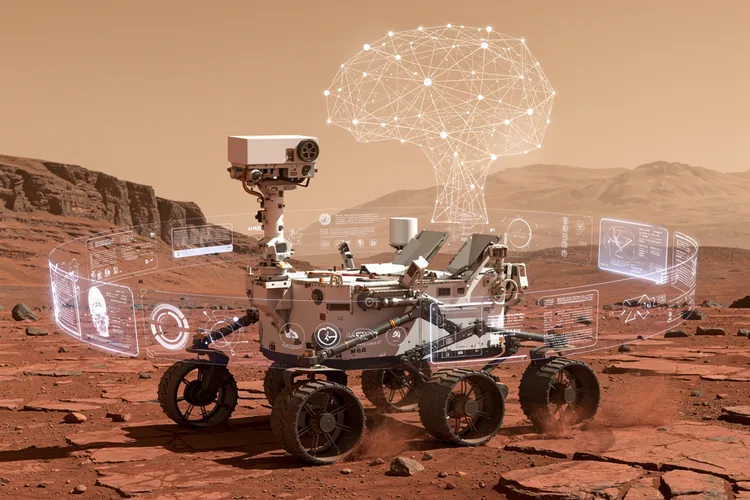
NASA's deployment of Anthropic's Claude AI to navigate the Perseverance rover on Mars marks a pivotal shift in space exploration, demonstrating how artificial intelligence can augment human decision-making in extraterrestrial missions and accelerate scientific discovery millions of miles from Earth.

Posted on: by Leo Rossi

Gemini Takes the Wheel: Google Maps’ AI Goes Hands-Free for Walkers and Cyclists

Grace Wright | 2026-03-12
Gemini Takes the Wheel: Google Maps’ AI Goes Hands-Free for Walkers and Cyclists

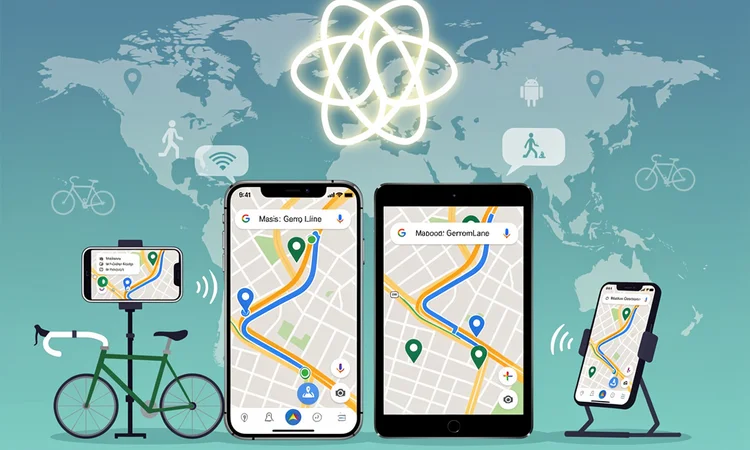
Google has extended its Gemini AI’s conversational prowess to walking and cycling navigation in Google Maps, marking a pivotal shift in how users interact with the app during pedestrian travel. Announced on January 29, 2026, the update allows hands-free queries worldwide on iOS where Gemini is available, with Android rollout underway. Users can now summon Gemini via voice commands or a top-right icon, transforming static directions into dynamic dialogues.

This expansion builds on Gemini’s driving-mode debut in November 2025, as detailed in Google’s blog post . For walkers, Gemini serves as a “personal walking tour guide,” responding to prompts like “OK Google, what neighborhood am I in?” or “What are top-rated restaurants nearby?” with route-tailored suggestions drawn from Maps’ real-world data. Cyclists gain safety-focused aids, querying “What’s my ETA?” or commanding “Text Sarah I’m 10 minutes behind” to send messages without releasing handlebars—though texting is Android-only, per 9to5Google .

Conversational AI Reshapes On-Foot Navigation

The feature supports multi-turn conversations, enabling follow-ups such as “Is there a budget-friendly restaurant with vegan options along my route?” followed by “What’s parking like there?” as reported by TechCrunch . Activation occurs through “Hey Google” hotwords or tapping the blue Gemini spark icon, replacing the legacy four-color microphone in many instances. Google likens the experience to “talking to a friend in the passenger seat,” a phrase echoed across announcements in CNET .

Prompts extend beyond navigation: “What’s my next turn?,” “Play some jazz,” “When does {Place Name} close?,” or “Show alternative routes.” Gemini integrates calendar checks (“When’s my next meeting?”) and music controls, all contextualized to the user’s path. This hands-free paradigm addresses the impracticality of typing mid-stride or pedal stroke, prioritizing safety and flow.

From Driving Debut to Pedestrian Power

The rollout clarifies prior ambiguities; while November 2025 updates hinted at broad navigation support—including walking and cycling in testing, as noted by 9to5Google —the January expansion explicitly dedicates conversational depth to non-driving modes. Earlier phases focused on driving, with features like incident reporting (“I see an accident”) rolling out via Google’s November blog . Now, pedestrian users benefit fully, with iOS live immediately and Android serverside deployment progressing.

Technical integration leverages Gemini’s reasoning over Maps’ dataset of 250 million places, enabling nuanced responses like bathroom-equipped cafes or must-see attractions en route. Limitations persist: Google Assistant lingers on some devices, and full Gemini availability ties to regional support. Android-exclusive actions highlight platform variances.

Safety and Utility in Motion

For cyclists, the update emphasizes road focus, delivering ETAs, meeting reminders, and outbound texts without device handling. Walkers explore neighborhoods via queries like “Tell me more about the neighborhood I’m in” or “Are there cafes with a bathroom along my route?,” per TechCrunch . This mirrors driving enhancements but adapts to lower speeds and urban intricacies.

Broader context reveals Google’s AI push: Recent Maps additions include Gemini-powered “know before you go” tips, EV charger predictions, and an enhanced Explore tab, as covered by TechCrunch. The timing aligns with Chrome’s Gemini sidebar and Gmail AI inbox previews, signaling ecosystem-wide embedding.

Industry Echoes and Early Reactions

Web coverage from Mashable and Chrome Unboxed in late 2025 anticipated full-mode rollout, confirming Gemini’s replacement of Assistant across driving, walking, cycling, and transit. Reddit threads on r/GooglePixel mixed enthusiasm with beta-era lag complaints, though 2026 refinements appear smoother. No widespread user backlash emerged post-January launch.

Analysts view this as Google’s bid to dominate multimodal navigation amid rising urban cycling—requests up historically, per older data—and walking amid remote-work flexibility. Integration with calendars, messaging, and media positions Maps as a mobility hub, challenging rivals like Apple Maps’ voice upgrades.

Technical Backbone and Rollout Nuances

Gemini’s context-awareness processes multi-step requests without navigation interruption, supporting commands like “Navigate home,” “Add stop,” or “Mute guidance.” Visual cues include a transient four-color ring settling to blue, per 9to5Google. Availability hinges on Gemini-enabled regions, with worldwide iOS precedence.

Future implications loom large: As Assistant phases out by March 2026, per Sammy Fans, Gemini cements dominance. Expansions could incorporate real-time bike-lane data or weather-adjusted ETAs, building on Europe’s low-emission alerts.


Strategic Stakes in AI Mapping

Subscribe Newsletter

Subscribe to our newsletter and stay up to date with the latest news, updates, and exclusive offers. Join our community today!

Comments

Join the discussion and share your thoughts.

No comments yet. Be the first to comment.

Leave a Reply

Your email address will not be published.

Join Us

Share your perspective with confidence. Your experience could inform, inspire, and help someone live better.

Archives

Authors

More ...

Search NexaPress



