




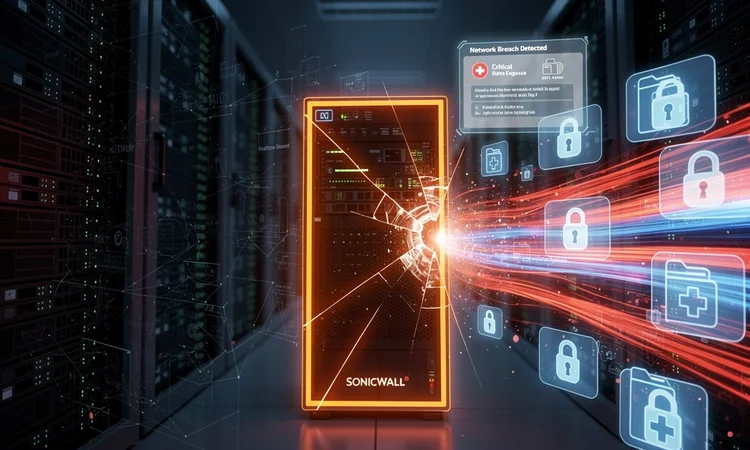
When Marquis, a prominent provider of behavioral health and human services solutions, disclosed a significant data breach affecting thousands of clients, the company pointed directly at a compromised SonicWall firewall as the entry point for malicious actors. The incident, which unfolded over several months before detection, has reignited concerns about the security of network perimeter defenses and raised critical questions about vendor accountability in an era where third-party vulnerabilities increasingly drive successful cyberattacks.
According to TechRadar , Marquis confirmed that unauthorized parties gained access to its systems through a vulnerability in its SonicWall firewall infrastructure. The breach, which the company detected during routine security monitoring, potentially exposed sensitive client information including names, dates of birth, Social Security numbers, and medical records. The organization serves vulnerable populations across mental health and addiction treatment programs, making the exposure particularly concerning from both privacy and safety perspectives.
The Marquis incident represents more than an isolated security failure. It exemplifies a broader pattern of exploitation targeting enterprise-grade security appliances that organizations rely upon as their first line of defense. SonicWall products, widely deployed across corporate networks globally, have faced increasing scrutiny following multiple vulnerability disclosures over the past two years. Security researchers have repeatedly warned that network appliances, often positioned at the network edge with broad access privileges, present attractive targets for sophisticated threat actors seeking initial access to corporate environments.
The Anatomy of Firewall-Based Intrusions
Firewall compromises differ fundamentally from traditional malware infections or phishing campaigns. When attackers successfully exploit vulnerabilities in perimeter security devices, they often gain privileged access to internal networks while bypassing many traditional security controls. These devices typically maintain persistent connections, possess elevated privileges, and often escape the scrutiny applied to endpoint devices. The strategic positioning of firewalls makes them particularly valuable to attackers: successful compromise can provide sustained access to monitor traffic, pivot to internal systems, and exfiltrate data while remaining difficult to detect.
The SonicWall vulnerabilities that have emerged in recent years demonstrate various attack vectors. Some exploits target the administrative interface, while others leverage flaws in VPN functionality or deep packet inspection capabilities. Once compromised, these devices can serve as command-and-control infrastructure, data collection points, or launching pads for lateral movement within the target network. The persistence mechanisms available on network appliances often allow attackers to maintain access even after organizations apply security updates, requiring complete device reimaging to ensure remediation.
SonicWall’s Troubled Security History
The Marquis breach occurs against a backdrop of mounting security concerns surrounding SonicWall products. The company has issued multiple critical security advisories over the past 24 months, addressing vulnerabilities ranging from authentication bypasses to remote code execution flaws. Several of these vulnerabilities have been actively exploited in the wild before patches became available, placing organizations in the difficult position of defending against attacks targeting zero-day vulnerabilities in their security infrastructure.
Industry observers note that SonicWall’s challenges reflect broader issues affecting the network security appliance market. These specialized devices often run customized operating systems with proprietary code, making them difficult to audit independently. The complexity of modern firewall functionality—encompassing VPN services, intrusion prevention, content filtering, and application control—creates an expansive attack surface. Additionally, the operational requirements for these devices, which must process network traffic with minimal latency, sometimes conflict with security best practices that might introduce performance overhead.
The Vendor Responsibility Question
Marquis’s decision to explicitly attribute the breach to its SonicWall firewall raises important questions about vendor liability and customer responsibility in the security ecosystem. While organizations bear ultimate responsibility for protecting the data they collect and maintain, the relationship between security product vendors and their customers involves implicit trust that the protective technologies will function as intended. When those technologies become the attack vector rather than the defense mechanism, the traditional allocation of responsibility becomes murky.
Legal and regulatory frameworks have not kept pace with the realities of modern supply chain security. Most software and hardware vendors operate under license agreements that explicitly disclaim liability for security failures, even when those failures stem from defects in the vendor’s products. Customers typically cannot negotiate these terms, particularly for commodity security products where alternatives face similar limitations. The result is a system where organizations invest heavily in security technologies but retain full liability when those technologies fail, creating misaligned incentives that may undermine overall security outcomes.
Operational Implications for Healthcare Organizations
For healthcare and behavioral health providers like Marquis, data breaches carry consequences that extend beyond financial and reputational damage. The Health Insurance Portability and Accountability Act (HIPAA) imposes strict requirements for protecting patient information, with substantial penalties for violations. When breaches occur through third-party technology failures, covered entities must still demonstrate that they implemented appropriate safeguards and conducted adequate vendor risk assessments. The regulatory burden falls on the healthcare organization regardless of whether the vulnerability originated in vendor-supplied technology.
The sensitive nature of behavioral health records amplifies the potential harm from unauthorized disclosure. Mental health and substance abuse treatment records carry particular stigma, and their exposure can affect employment, relationships, and personal safety. Federal regulations provide additional protections for substance abuse treatment records under 42 CFR Part 2, recognizing the heightened privacy interests in this information. Breaches affecting these records may trigger multiple regulatory reporting obligations and expose organizations to civil litigation from affected individuals.
Detection and Response Challenges
The timeline of the Marquis breach—with unauthorized access occurring over an extended period before detection—highlights persistent challenges in identifying compromises of network infrastructure devices. Traditional endpoint detection and response tools do not monitor network appliances, which typically lack the instrumentation and logging capabilities of general-purpose computing systems. Organizations often rely on the appliances themselves to generate security logs, creating a circular dependency where compromised devices may suppress evidence of their own compromise.
Security teams face additional obstacles when investigating potential firewall compromises. Network appliances typically require specialized expertise to analyze, and many organizations lack personnel with deep knowledge of these systems’ internals. Forensic examination may require taking devices offline, disrupting network connectivity and business operations. The firmware and configuration complexity of modern firewalls creates numerous locations where attackers might establish persistence, and standard incident response playbooks may not adequately address appliance-specific attack techniques.
Industry-Wide Implications and Mitigation Strategies
The Marquis incident should prompt security leaders across industries to reevaluate their approach to network perimeter security. The traditional model of deploying a hardened firewall at the network edge and treating internal networks as relatively trusted zones has eroded as attackers have demonstrated consistent ability to breach perimeter defenses. Zero-trust architecture principles, which assume breach and require continuous verification, offer a more resilient alternative but require substantial investment and organizational change to implement effectively.
Organizations can take several concrete steps to reduce risks associated with network security appliances. Implementing network segmentation limits the potential impact of a compromised perimeter device by restricting lateral movement. Deploying security appliances in high-availability configurations with diverse vendors reduces single points of failure. Establishing independent monitoring of network appliance behavior through network traffic analysis and external log collection can improve detection capabilities. Regular security assessments should specifically evaluate the configuration and patch status of network infrastructure devices, which sometimes receive less attention than endpoint systems.
The Path Forward for Enterprise Security
As organizations process the implications of incidents like the Marquis breach, the security industry must confront uncomfortable realities about the reliability of defensive technologies. The concentration of security functionality in specialized appliances creates attractive targets and single points of failure. The proprietary nature of much security technology limits independent security research and creates information asymmetries between vendors and customers. The liability structures governing security products do not create adequate incentives for vendors to prioritize security in product development and maintenance.
Addressing these systemic issues will require changes at multiple levels. Industry standards organizations should develop more rigorous security requirements for network security appliances, including mandatory security testing and vulnerability disclosure processes. Regulatory frameworks may need updating to ensure appropriate allocation of liability when security product failures enable data breaches. Organizations should demand greater transparency from security vendors regarding vulnerability management practices and consider security track records when making procurement decisions. The Marquis breach, while unfortunate for the affected individuals and the organization, provides an opportunity to advance these necessary conversations about building more resilient security architectures for an increasingly hostile threat environment.






Leave a Reply
Your email address will not be published.