






Finland Recruits Burned-Out US AI and Tech Talent with Visas, Better Balance

Finland Recruits Burned-Out US AI and Tech Talent with Visas, Better Balance

Finland is actively recruiting disillusioned U.S. tech professionals in AI and software by offering superior work-life balance, fast-track visas, and a high quality of life, aiming to attract talent by 2026 amid American burnout. This strategy challenges global tech dynamics, positioning Finland as an innovative haven.

Posted on: by Vivian Stewart
India’s AI Workforce Strategy Emerges as Model for Developing Nations Seeking Technology Leadership

India’s AI Workforce Strategy Emerges as Model for Developing Nations Seeking Technology Leadership

India's deliberate strategy to cultivate AI talent at scale offers emerging economies a practical blueprint for technological transformation. By leveraging educational infrastructure, fostering industry partnerships, and implementing supportive policies, India has become the world's second-largest source of AI specialists without massive infrastructure investments.

Posted on: by Elena Brooks
Apple’s Chip Crunch: iPhone Boom Meets AI Supply Squeeze

Apple’s Chip Crunch: iPhone Boom Meets AI Supply Squeeze

Apple's iPhone demand surges past supply limits as TSMC prioritizes AI chips and memory prices soar from data-center hunger, forcing strategic shifts and potential margin pressure in 2026.

Posted on: by Vivian Stewart
AI’s Payroll Power Play: ISG Ranks Leaders Reshaping Employee Value

AI’s Payroll Power Play: ISG Ranks Leaders Reshaping Employee Value

ISG's 2025 Buyers Guides crown ADP, Oracle, and UKG as payroll leaders, with AI driving error detection, compliance, and employee financial tools. By 2028, half of firms will use AI to preempt payroll issues, boosting resilience.

Posted on: by Samuel Johnson
Remote Jobs Defy RTO Mandates: Demand Surges 19.8% in Late 2025

Remote Jobs Defy RTO Mandates: Demand Surges 19.8% in Late 2025

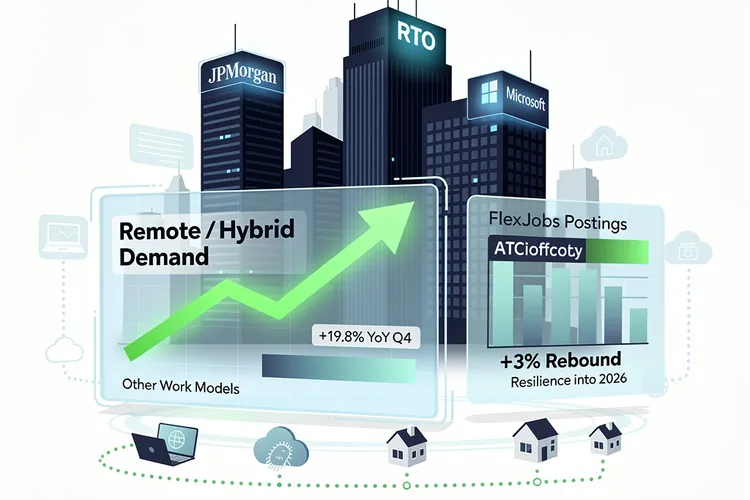
Despite 2025's RTO mandates at JPMorgan, Microsoft, and others, Toptal reports 19.8% YoY growth in remote/hybrid demand for Q4, outpacing all models. FlexJobs notes a 3% rebound in postings, signaling resilience into 2026.

Posted on: by Amelia Keller
The IMF’s Stark Warning: How Trade Wars and Central Bank Independence Threaten Global Recovery

The IMF’s Stark Warning: How Trade Wars and Central Bank Independence Threaten Global Recovery

The IMF warns that escalating trade tensions and threats to central bank independence could derail global economic recovery, with growth projected to slow to 3.2% in 2025 amid mounting policy uncertainties and fragile post-pandemic conditions.

Posted on: by Samuel Johnson
Warsh’s Fed Nomination: Trump’s Bid to Reshape Monetary Policy

Warsh’s Fed Nomination: Trump’s Bid to Reshape Monetary Policy

President Trump nominated former Fed governor Kevin Warsh to replace Jerome Powell, sparking debates on policy shifts, Senate confirmation risks, and market impacts amid inflation and independence concerns.

Posted on: by Amelia Keller
AI Agents Reshape Procurement: McKinsey’s Blueprint for 25-40% Gains

AI Agents Reshape Procurement: McKinsey’s Blueprint for 25-40% Gains

McKinsey reveals AI agents could boost procurement productivity 25-40%, creating new roles and strategic clout amid tariffs and disruptions. Surveys show 40% piloting GenAI, with case studies proving multimillion savings.

Posted on: by Leo Rossi
DC Metro Sees Hybrid Work Boom: Half Adopt 3.2 Office Days Weekly

DC Metro Sees Hybrid Work Boom: Half Adopt 3.2 Office Days Weekly

In the D.C. metro area, nearly half the workforce has adopted hybrid schedules, averaging 3.2 office days per week, per a recent report. This post-pandemic shift reshapes commutes, real estate, and work-life balance, fostering productivity and retention amid challenges like traffic and equity issues. It signals a new normal for flexible work.

Posted on: by Jack Chen
AI’s Productivity Chasm: Execs Claim Days Saved, Workers See ‘Tax’ on Time

AI’s Productivity Chasm: Execs Claim Days Saved, Workers See ‘Tax’ on Time

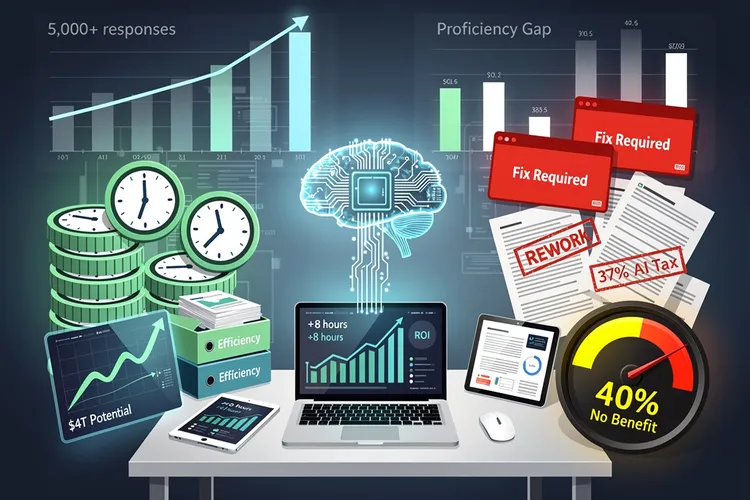
Executives report AI saving over eight hours weekly, but 40% of workers see no benefit, with gains eroded by a 37% 'AI tax' of error fixes. Surveys of 5,000+ reveal a proficiency gap stalling ROI amid $4 trillion promises.

Posted on: by Emily Chen

India’s Bold 7.2% Growth Wager Amid Global Trade Storms

Zoe Wright | 2026-02-17
India’s Bold 7.2% Growth Wager Amid Global Trade Storms

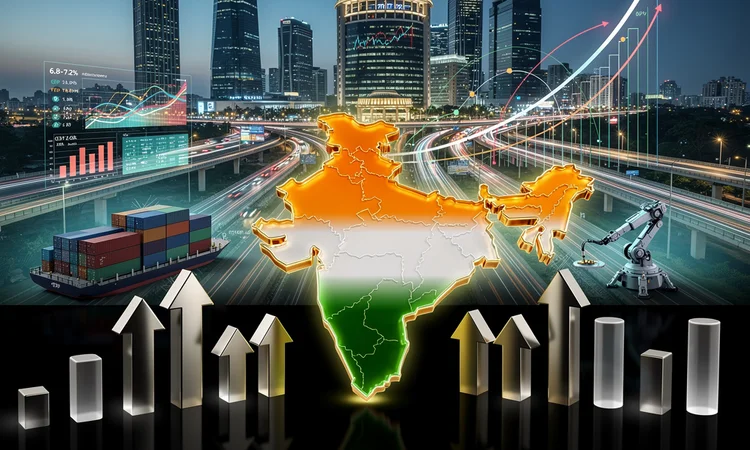
NEW DELHI—India’s finance ministry forecast economic expansion of 6.8% to 7.2% for fiscal year 2027, positioning the world’s fourth-largest economy to outstrip most peers despite U.S. tariffs and global headwinds. The projection, detailed in the Economic Survey 2026 tabled by Finance Minister Nirmala Sitharaman, underscores resilience driven by domestic demand and policy reforms. Chief Economic Adviser V. Anantha Nageswaran stated, “Given the strong growth performance and the foundation laid for sustained growth into the second half of this decade, we are projecting FY27 growth at between 6.8% and 7.2%.”

The survey aligns with upbeat assessments from international bodies, though some temper expectations. The International Monetary Fund pegged India’s growth at 6.4% for both 2026 and 2027, while expecting global output to rise just 3.3% in 2026 and dip to 3.2% in 2027. Major economies like Germany, the U.K., and Japan face low single-digit gains, per CNBC .

For the current fiscal year ending March 2026, first advance estimates point to 7.4% growth, surpassing the prior year’s 6.5%, fueled by robust private consumption at 7% and government spending up 5.2%, according to Reuters .

Domestic Engines Power Through Tariffs

India’s growth accelerated despite over 50% U.S. tariffs on key exports like textiles, marine products, gems, jewelry, auto components, and leather since August 2025. The survey notes redirection to markets such as China, Malaysia, and the UAE mitigated impacts. Merchandise exports rose 2.4% in April-December 2025, with services exports up 6.5%, as reported by Business Standard .

Structural reforms bolstered momentum: September 2025 GST rate cuts spurred consumption, alongside new trade pacts diversifying outlets. The Reserve Bank of India upgraded its FY26 forecast to 7.3% from 6.8%, citing benign inflation at 2.0%, per Reuters . Second-quarter FY26 GDP hit 8.2%, with manufacturing and services both near 9%.

Private final consumption expenditure grew 7.9%, gross fixed capital formation 7.3%, reflecting balanced demand, according to EY India .

Global Forecasts Vary on Trade Risks

Optimism spans forecasters: World Bank lifted FY26 to 7.2%, seeing limited U.S. tariff drag; Asian Development Bank matched at 7.2%; IMF raised FY26 to 7.3% on strong Q3 momentum. United Nations projects 6.6% in 2026, citing resilient consumption offsetting tariffs comprising 18% of exports, via Business Today .

Deloitte eyes 7.5%-7.8% for FY26 in its upbeat scenario, crediting GST tweaks and cooling inflation. Yet risks loom: prolonged U.S. tariffs could weigh if unresolved, though services and remittances keep current account deficit at 0.8% of GDP in H1 FY26.

The survey describes the outlook as “steady growth amid global uncertainty, requiring caution, but not pessimism.” Forex reserves cover over 11 months of imports, per Business Standard .

Rupee Woes and Capital Flight Pressures

India’s goods trade deficit persists, offset partially by services surplus and remittances, but foreign capital is crucial for balance of payments. The rupee weakened as Asia’s worst performer in 2025 amid record outflows. Anubhuti Sahay of Standard Chartered Bank noted, “If an investor can make 4%-4.5% in the U.S. without currency risk,” inflows stall despite growth allure.

Sahay urged easing business setup to counter eroded returns from delays, as covered by CNBC . Medium-term potential growth rose to 7% from 6.5%, buoyed by reforms.

On X, users hailed resilience: @MeghUpdates posted, “First advance estimate predicts that India’s GDP growth in FY26 will stand at 7.4%.” @Mrsinha affirmed, “India’s GDP is pegged to grow by 7.4% in FY26.”

Sectoral Surge and Reform Momentum

Agriculture stabilized, manufacturing strengthened, services dominated supply-side gains. Electronics manufacturing drew ₹41,863 crore investments under schemes, creating 33,791 jobs by January 2026. Public capex at 3.4% of GDP targeted infrastructure and renewables.

Fiscal deficit aims at 4.4% of GDP, down from pandemic peaks. Ahead of February 1 Budget, the survey signals continuity in consolidation, per Deloitte . India eyes U.S. trade deal closure in 2026 to ease uncertainties.

Chris Garroway, UN economist, called India “the bright spot in a challenging global economy,” powered by demand and investment, via United Nations in India .

Path Forward: Stability Meets Ambition

India’s trajectory reflects post-COVID rebound averaging 7.8% from FY23-FY25, double global 3.5%. Potential hinges on sustaining capex, exports, and ease of business. As Nageswaran emphasized, momentum “remains intact” via domestic accomplishments. With GDP poised at $7.3 trillion by 2030, per IMF, India cements its role as growth engine.


Subscribe Newsletter

Subscribe to our newsletter and stay up to date with the latest news, updates, and exclusive offers. Join our community today!

Comments

Join the discussion and share your thoughts.

No comments yet. Be the first to comment.

Leave a Reply

Your email address will not be published.

Join Us

Share your perspective with confidence. Your experience could inform, inspire, and help someone live better.

Archives

Authors

More ...

Search NexaPress



