







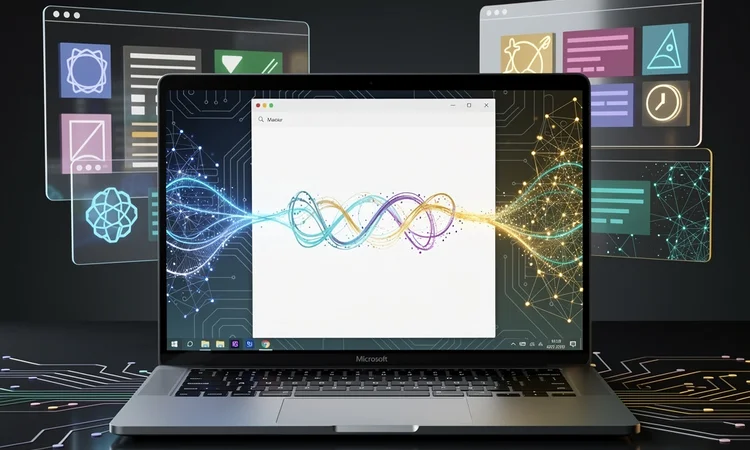
In a move that signals a profound shift in how enterprise software giants approach artificial intelligence integration, Microsoft has embedded Anthropic’s Claude AI assistant directly into one of its most ubiquitous developer tools: Notepad. This partnership represents far more than a simple feature addition—it marks a strategic recalibration in the ongoing AI arms race, where even titans like Microsoft are acknowledging that building everything in-house may not be the optimal path forward.
According to reporting by The Verge , Microsoft’s integration of Claude into Notepad represents a departure from the company’s traditional reliance on its partnership with OpenAI. The decision to incorporate a competing AI model into a core Windows application—one that has existed since 1983—underscores the growing recognition that AI capabilities need to be diversified across multiple providers to meet varying enterprise needs.
The technical implementation reveals Microsoft’s pragmatic approach to AI deployment. Rather than forcing users into a single AI paradigm, the company is creating an ecosystem where different models can coexist and serve distinct purposes. Claude’s integration into Notepad specifically targets developers and technical writers who require precise, context-aware assistance with code generation, documentation, and technical content creation—areas where Anthropic’s model has demonstrated particular strength.
The Strategic Architecture Behind Multi-Model Integration
Microsoft’s decision to incorporate Claude alongside its existing OpenAI-powered tools reflects a broader industry trend toward what analysts are calling “model-agnostic infrastructure.” This approach allows organizations to leverage the specific strengths of different AI systems rather than committing exclusively to a single provider. For Microsoft, this means Copilot—powered by OpenAI’s GPT models—can handle general productivity tasks while Claude addresses more specialized coding and technical documentation requirements.
The partnership also highlights Anthropic’s growing influence in enterprise AI markets. Founded by former OpenAI executives including siblings Dario and Daniela Amodei, Anthropic has positioned Claude as a safer, more reliable alternative for businesses concerned about AI alignment and accuracy. The company’s Constitutional AI approach, which trains models to be helpful, harmless, and honest, has resonated particularly well with enterprises handling sensitive code and proprietary information.
Financial Implications and Market Positioning
The Microsoft-Anthropic collaboration carries significant financial implications for both companies. While Microsoft has invested over $13 billion in OpenAI, the company’s willingness to integrate competing AI models suggests a hedge against over-reliance on any single partner. This strategy mirrors approaches taken by other tech giants: Amazon has invested $4 billion in Anthropic, while Google has backed the startup with $2 billion, according to previous reporting from multiple financial outlets.
For Anthropic, gaining distribution through Microsoft’s ecosystem represents a major validation of its technology and business model. Notepad, despite its simplicity, is installed on hundreds of millions of Windows machines worldwide. Even modest adoption rates for Claude-powered features could translate into substantial usage metrics and market credibility. Industry analysts suggest this partnership could accelerate Anthropic’s path to profitability by providing a massive built-in user base for its API services.
Technical Differentiation in Code Generation
The choice to integrate Claude specifically into Notepad—rather than Word, Excel, or other Microsoft applications—reveals careful strategic thinking about where Anthropic’s model offers genuine advantages. Claude has earned particular recognition among developers for its ability to generate clean, well-documented code with fewer hallucinations than competing models. This reputation makes it an ideal fit for a text editor frequently used by programmers for quick scripting, configuration file editing, and code snippet creation.
The integration reportedly includes features that allow users to highlight code or text and invoke Claude for explanations, refactoring suggestions, or documentation generation. This contextual assistance model represents a more nuanced approach than simply adding a chatbot interface. By embedding AI capabilities directly into the editing workflow, Microsoft is reducing friction and making advanced AI assistance feel native rather than bolted-on.
Competitive Dynamics and Industry Implications
Microsoft’s embrace of multiple AI providers creates interesting competitive dynamics in the enterprise software market. The company’s primary competitor, Google, has taken a more vertically integrated approach with its Gemini models, while Apple has partnered with OpenAI for Apple Intelligence features. Microsoft’s multi-model strategy could provide greater flexibility and resilience, particularly if any single AI provider faces technical issues, regulatory challenges, or competitive disadvantages.
The move also puts pressure on other enterprise software vendors to clarify their AI strategies. Companies that have committed exclusively to single AI providers may find themselves at a disadvantage if customer demands shift toward platforms offering choice and specialization. This could accelerate partnerships between traditional software companies and multiple AI providers, fundamentally reshaping vendor relationships across the technology sector.
Developer Community Response and Adoption Challenges
Early reactions from the developer community have been mixed but generally positive. Many developers appreciate having access to Claude’s capabilities without needing to switch applications or manage separate API keys. However, some users have expressed concerns about privacy and data handling, particularly regarding whether code snippets sent to Claude for analysis might be used for model training or stored on external servers.
Microsoft has reportedly addressed these concerns by implementing strict data handling protocols that prevent code processed through the Notepad-Claude integration from being retained or used for training purposes. This privacy-first approach aligns with enterprise requirements and regulatory frameworks like GDPR, but the company will need to maintain transparency and trust as adoption scales.
Broader Implications for AI Partnerships
The Microsoft-Anthropic integration in Notepad may represent a template for future AI partnerships across the industry. Rather than exclusive, all-encompassing agreements, we may see more targeted collaborations where specific AI models are deployed for particular use cases based on their demonstrated strengths. This specialization could lead to better user experiences and more efficient resource allocation.
The partnership also highlights the maturing AI market’s shift from pure research and development toward practical implementation and distribution. Anthropic’s technology gains value through Microsoft’s distribution channels, while Microsoft enhances its product portfolio without bearing the full cost and risk of developing every AI capability internally. This symbiotic relationship model could become increasingly common as the AI industry consolidates around a few major model providers and numerous distribution partners.
Regulatory Considerations and Future Outlook
As AI integration deepens across enterprise software, regulatory scrutiny is intensifying. Microsoft’s multi-provider strategy may offer advantages in navigating antitrust concerns, as it demonstrates the company isn’t attempting to monopolize AI capabilities through exclusive partnerships. However, the complexity of managing multiple AI relationships also creates new compliance challenges, particularly around data governance and algorithmic transparency.
Looking ahead, the success of the Claude-Notepad integration will likely influence Microsoft’s approach to AI across its entire product portfolio. If users respond positively and adoption metrics prove strong, we could see Claude integrated into Visual Studio Code, Azure DevOps, and other developer-focused tools. Conversely, lukewarm reception might cause Microsoft to consolidate around fewer AI providers, simplifying its technology stack at the cost of reduced specialization.
The partnership ultimately represents a pragmatic acknowledgment that the AI revolution will be won not by any single company or model, but through strategic combinations of capabilities tailored to specific user needs. As enterprises increasingly demand AI tools that are both powerful and trustworthy, Microsoft’s willingness to incorporate best-in-class solutions—regardless of origin—may prove to be its most significant competitive advantage in the evolving AI era.






Leave a Reply
Your email address will not be published.