







Finland Recruits Burned-Out US AI and Tech Talent with Visas, Better Balance

Finland Recruits Burned-Out US AI and Tech Talent with Visas, Better Balance

Finland is actively recruiting disillusioned U.S. tech professionals in AI and software by offering superior work-life balance, fast-track visas, and a high quality of life, aiming to attract talent by 2026 amid American burnout. This strategy challenges global tech dynamics, positioning Finland as an innovative haven.

Posted on: by Vivian Stewart
India’s AI Workforce Strategy Emerges as Model for Developing Nations Seeking Technology Leadership

India’s AI Workforce Strategy Emerges as Model for Developing Nations Seeking Technology Leadership

India's deliberate strategy to cultivate AI talent at scale offers emerging economies a practical blueprint for technological transformation. By leveraging educational infrastructure, fostering industry partnerships, and implementing supportive policies, India has become the world's second-largest source of AI specialists without massive infrastructure investments.

Posted on: by Elena Brooks
Apple’s Chip Crunch: iPhone Boom Meets AI Supply Squeeze

Apple’s Chip Crunch: iPhone Boom Meets AI Supply Squeeze

Apple's iPhone demand surges past supply limits as TSMC prioritizes AI chips and memory prices soar from data-center hunger, forcing strategic shifts and potential margin pressure in 2026.

Posted on: by Vivian Stewart
AI’s Payroll Power Play: ISG Ranks Leaders Reshaping Employee Value

AI’s Payroll Power Play: ISG Ranks Leaders Reshaping Employee Value

ISG's 2025 Buyers Guides crown ADP, Oracle, and UKG as payroll leaders, with AI driving error detection, compliance, and employee financial tools. By 2028, half of firms will use AI to preempt payroll issues, boosting resilience.

Posted on: by Samuel Johnson
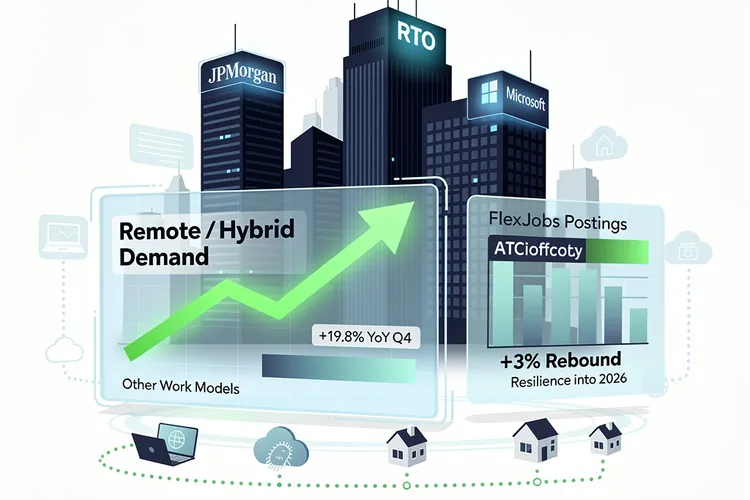
Remote Jobs Defy RTO Mandates: Demand Surges 19.8% in Late 2025

Remote Jobs Defy RTO Mandates: Demand Surges 19.8% in Late 2025

Despite 2025's RTO mandates at JPMorgan, Microsoft, and others, Toptal reports 19.8% YoY growth in remote/hybrid demand for Q4, outpacing all models. FlexJobs notes a 3% rebound in postings, signaling resilience into 2026.

Posted on: by Amelia Keller
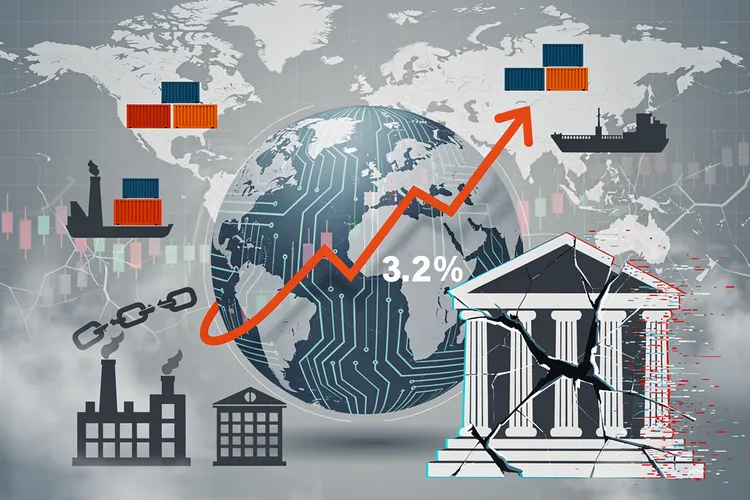
The IMF’s Stark Warning: How Trade Wars and Central Bank Independence Threaten Global Recovery

The IMF’s Stark Warning: How Trade Wars and Central Bank Independence Threaten Global Recovery

The IMF warns that escalating trade tensions and threats to central bank independence could derail global economic recovery, with growth projected to slow to 3.2% in 2025 amid mounting policy uncertainties and fragile post-pandemic conditions.

Posted on: by Samuel Johnson
Warsh’s Fed Nomination: Trump’s Bid to Reshape Monetary Policy

Warsh’s Fed Nomination: Trump’s Bid to Reshape Monetary Policy

President Trump nominated former Fed governor Kevin Warsh to replace Jerome Powell, sparking debates on policy shifts, Senate confirmation risks, and market impacts amid inflation and independence concerns.

Posted on: by Amelia Keller
AI Agents Reshape Procurement: McKinsey’s Blueprint for 25-40% Gains

AI Agents Reshape Procurement: McKinsey’s Blueprint for 25-40% Gains

McKinsey reveals AI agents could boost procurement productivity 25-40%, creating new roles and strategic clout amid tariffs and disruptions. Surveys show 40% piloting GenAI, with case studies proving multimillion savings.

Posted on: by Leo Rossi
DC Metro Sees Hybrid Work Boom: Half Adopt 3.2 Office Days Weekly

DC Metro Sees Hybrid Work Boom: Half Adopt 3.2 Office Days Weekly

In the D.C. metro area, nearly half the workforce has adopted hybrid schedules, averaging 3.2 office days per week, per a recent report. This post-pandemic shift reshapes commutes, real estate, and work-life balance, fostering productivity and retention amid challenges like traffic and equity issues. It signals a new normal for flexible work.

Posted on: by Jack Chen
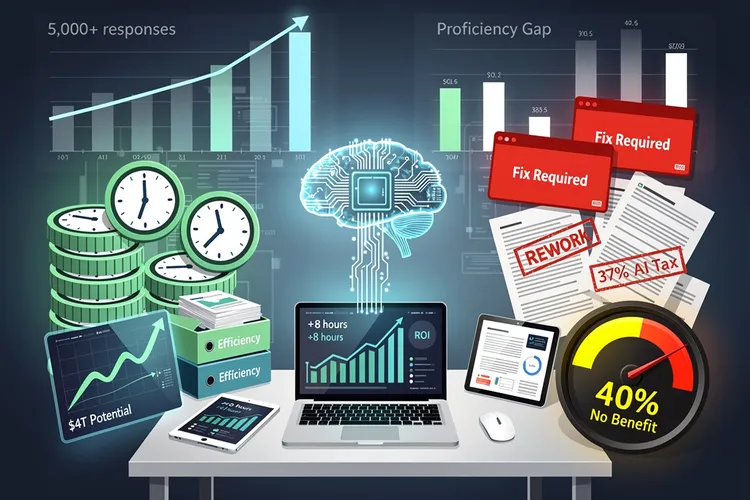
AI’s Productivity Chasm: Execs Claim Days Saved, Workers See ‘Tax’ on Time

AI’s Productivity Chasm: Execs Claim Days Saved, Workers See ‘Tax’ on Time

Executives report AI saving over eight hours weekly, but 40% of workers see no benefit, with gains eroded by a 37% 'AI tax' of error fixes. Surveys of 5,000+ reveal a proficiency gap stalling ROI amid $4 trillion promises.

Posted on: by Emily Chen

Internal Comms’ 20% Connection Crisis: Fixing the Employee Disconnect

Emily Scott | 2026-02-26
Internal Comms’ 20% Connection Crisis: Fixing the Employee Disconnect

Amid stagnant workforce engagement, a stark revelation from the Achievers Workforce Institute’s 2026 Engagement and Retention Report underscores a critical shortfall: only 20% of employees report that company communicators help them feel informed and connected to their work. This figure, drawn from a survey of over 2,500 employees and 1,500 HR professionals, highlights pervasive gaps in access to essential people, resources, and managerial bonds, as detailed in Ragan Communications .

Just 21% of respondents indicated they could access the people needed for productivity, while 23% had the resources required to succeed. Even more telling, only 19% felt connected to their manager. These metrics paint a picture of fragmented employee experiences where information silos breed anxiety, erode trust, and undermine organizational culture, according to the report analyzed by Ragan.

Yet, internal communications teams stand uniquely equipped to bridge these divides. By shifting from mere message dissemination to providing contextual tools—like contact points for queries and clarifications on processes—comms pros can foster belonging and role clarity, the report suggests.

Gaps Exposed in Core Connections

The Achievers data reveals employees grappling with locating key personnel and vital resources, fueling frustrations that ripple into lower morale. Managers emerge as pivotal interpreters of communications, yet many fail to convey the ‘why’ behind directives, leaving teams adrift.

Internal comms can intervene by equipping leaders with FAQs, message prompts, and dialogue frameworks to transform broadcasts into conversations. Proactive ambiguity reduction in messaging reinforces priorities, builds confidence, and aligns workers with company goals, as outlined in the Ragan summary of the institute’s findings.

Broader industry surveys echo this disconnect. PoliteMail’s Internal Communication Trends for Success in 2025, surveying over 200 professionals, found 63% dissatisfied with measuring employee sentiment, pushing teams toward pulse surveys over annual checks, per Ragan Communications .

AI and Tools Reshape Measurement

In 2026, AI adoption surges for sentiment analysis (25% usage) and content tasks (75%), but leaders demand deeper metrics like time spent on messages and drop-off points to link comms to performance, Ragan reports from PoliteMail data. Only 22% of communicators avoid AI entirely.

Staffbase’s 2025 International Employee Communication Impact Study of 3,574 workers across six countries shows non-desk employees rate manager info at 48% positive versus 65% for desk workers, with 24% feeling excluded from changes, via Staffbase .

Axios HQ’s 2025 report notes 55% of workers waste 30 minutes to two hours daily clarifying tasks, costing thousands per employee annually, emphasizing targeted channels, as in Axios HQ .

Manager Role in Bridging Divides

Managers amplify comms impact: Achievers finds weekly recognition from them makes employees 2.8 times more organizationally connected. Yet only 19-21% report peer or manager bonds, with highly connected peers 3x more likely for long careers, 4.7x engaged, per Achievers .

Shallot Communications’ survey of 500 leaders reveals measurement preferences scattered at 20-30% each, signaling no consensus amid rising demands from dispersed teams, cited in Ragan .

PoliteMail notes 43% prioritize fighting info overload in 2025, with successes like intranet launches boosting engagement via concise messaging.

Actionable Shifts for Comms Teams

Recommendations urge easier info access, culture reinforcement, need anticipation, and listening. Add context and contacts to messages; support managers for two-way dialogue. HR tech priorities: relationships (25%), manager empowerment (23%), per Achievers.

ContactMonkey’s benchmarks from 195,000 campaigns stress mobile-first, pulse surveys for feedback, aligning with Ragan’s trends where 79% prioritize engagement.

In hybrid setups, Gallup notes U.S. engagement at 31%, managers at 27%, costing $438 billion, urging comms to combat disengagement via transparency.

Global Echoes and Future Bets

APAC sees 18% feeling appreciated, 17% values-connected. EMEA lags similarly. Staffbase data: employee apps boost crisis comms to 68% positive.

2026 trends per Ragan/PoliteMail: AI beyond drafting, sentiment via interactions, trust-building content like Q&As. Workshop’s survey: 79% eye engagement, 33% invest in tools.

Fast Company observes tool abundance yet rising disconnects, calling for relational focus over tracking. Comms must evolve to deliver measurable belonging amid hybrid realities.


Subscribe Newsletter

Subscribe to our newsletter and stay up to date with the latest news, updates, and exclusive offers. Join our community today!

Comments

Join the discussion and share your thoughts.

No comments yet. Be the first to comment.

Leave a Reply

Your email address will not be published.

Join Us

Share your perspective with confidence. Your experience could inform, inspire, and help someone live better.

Archives

Authors

More ...

Search NexaPress