






India’s AI Classroom Revolution: Google’s Gemini Scales Where Silicon Valley Stumbles

India’s AI Classroom Revolution: Google’s Gemini Scales Where Silicon Valley Stumbles

India leads global Gemini usage for learning, teaching Google to scale AI amid 247 million students, state curricula, and access gaps. Partnerships and tools like JEE mocks position it as a worldwide proving ground.

Posted on: by Micah Shaw
DeepSeek’s Bold Push: AI Search and Agents Challenge Google, OpenAI

DeepSeek’s Bold Push: AI Search and Agents Challenge Google, OpenAI

DeepSeek's January job postings reveal plans for a multilingual, multimodal AI search engine and persistent agents, intensifying rivalry with Google and OpenAI. Building on cost-efficient models like R1, the startup targets phone-first queries and autonomous task execution.

Posted on: by Vivian Stewart
Poetiq’s Lean Squad Outsmarts AI Giants on Reasoning Frontier

Poetiq’s Lean Squad Outsmarts AI Giants on Reasoning Frontier

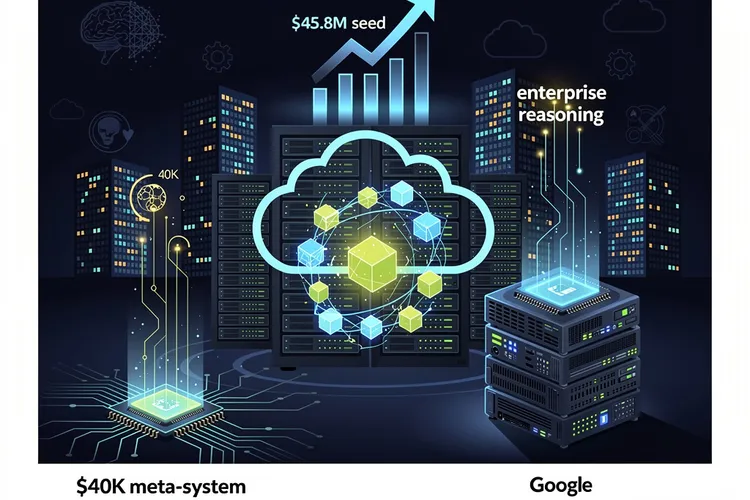
Poetiq's six-person team topped ARC-AGI-2 with a $40K meta-system, beating Google at half cost, then raised $45.8M seed to scale recursive agents enhancing any LLM for enterprise reasoning.

Posted on: by Elena Brooks
NASA’s Artemis Fuel System Failures Expose Critical Vulnerabilities in America’s Return to Lunar Exploration

NASA’s Artemis Fuel System Failures Expose Critical Vulnerabilities in America’s Return to Lunar Exploration

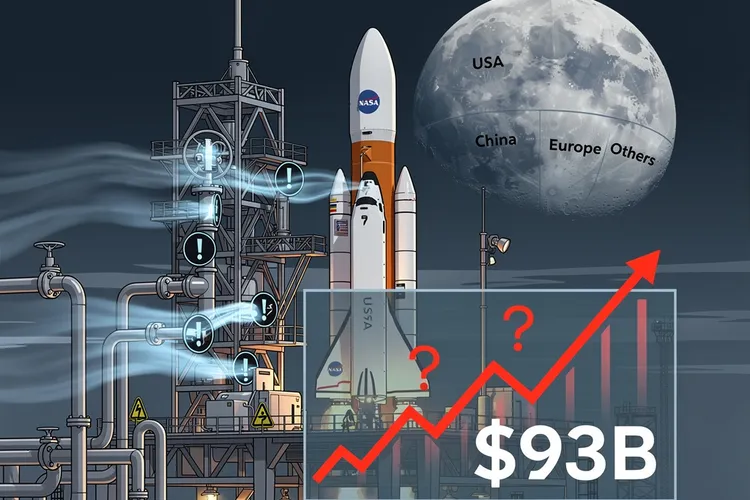
NASA's Space Launch System faces persistent hydrogen fuel leaks that have delayed the Artemis moon program, exposing critical gaps in expertise and raising questions about the $93 billion program's sustainability amid rising costs and international competition in lunar exploration.

Posted on: by Aria Brooks
AI Agents Shatter Compliance Foundations, Forcing CISOs to the Front Lines

AI Agents Shatter Compliance Foundations, Forcing CISOs to the Front Lines

AI agents are upending SOX, GDPR, PCI DSS, and HIPAA by autonomously executing regulated tasks, thrusting CISOs into accountability for compliance via identity and access controls. New governance treats AI as non-human identities amid rising regulatory demands.

Posted on: by Emily Scott
How One Company’s Radical AI Profit-Sharing Plan Is Rewriting the Productivity Playbook

How One Company’s Radical AI Profit-Sharing Plan Is Rewriting the Productivity Playbook

A company's innovative profit-sharing program ties employee compensation directly to AI tool usage and productivity gains, creating financial incentives that drive adoption rates far beyond industry norms while addressing worker concerns about automation and job security.

Posted on: by Samuel Johnson
Musk’s Abundance Dream vs. Amodei’s Job Apocalypse: AI’s Economic Reckoning

Musk’s Abundance Dream vs. Amodei’s Job Apocalypse: AI’s Economic Reckoning

Elon Musk predicts AI-driven abundance will render retirement savings irrelevant by 2030, while Anthropic's Dario Amodei warns of massive job losses and inequality demanding urgent fixes. Their visions clash on the path to AI's economic transformation.

Posted on: by Zoe Wright
The Agent-Native Revolution: How AI Agents Are Rewriting the Rules of Software Development

The Agent-Native Revolution: How AI Agents Are Rewriting the Rules of Software Development

The software industry is undergoing a fundamental transformation as agent-native architecture emerges, where AI agents rather than humans become the primary users of digital systems. This shift demands new approaches to development, security, and business operations.

Posted on: by Jack Chen
Uber’s Calculated Return to Greater China: Why Macau Marks a Pivotal Strategic Shift

Uber’s Calculated Return to Greater China: Why Macau Marks a Pivotal Strategic Shift

Uber's expansion into Macau marks its first new Asian market in years, representing a calculated test of whether the ride-hailing giant can succeed in Greater China after its costly 2016 retreat. The tourism-dependent territory offers unique advantages that could inform future regional strategy.

Posted on: by Zoe Wright
How Anthropic’s AI Is Driving NASA’s Mars Rover Through Uncharted Terrain

How Anthropic’s AI Is Driving NASA’s Mars Rover Through Uncharted Terrain

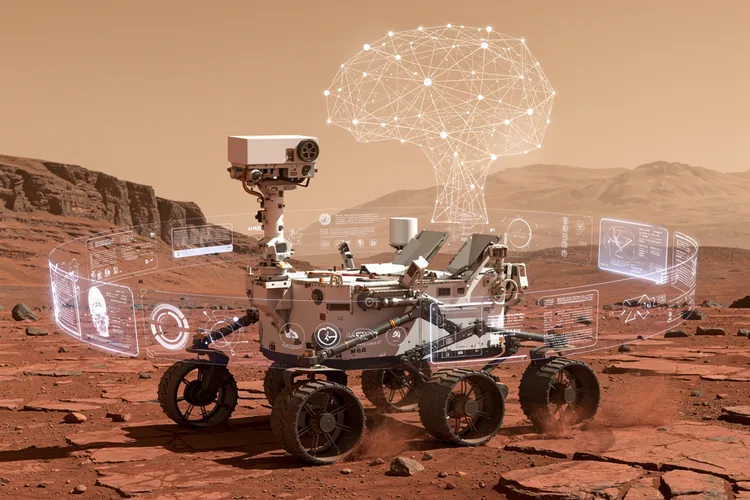
NASA's deployment of Anthropic's Claude AI to navigate the Perseverance rover on Mars marks a pivotal shift in space exploration, demonstrating how artificial intelligence can augment human decision-making in extraterrestrial missions and accelerate scientific discovery millions of miles from Earth.

Posted on: by Leo Rossi

Musk’s Cosmic IPO: SpaceX Eyes $1.5 Trillion Debut Under Aligned Planets

Isabella Reed | 2026-02-22
Musk’s Cosmic IPO: SpaceX Eyes $1.5 Trillion Debut Under Aligned Planets

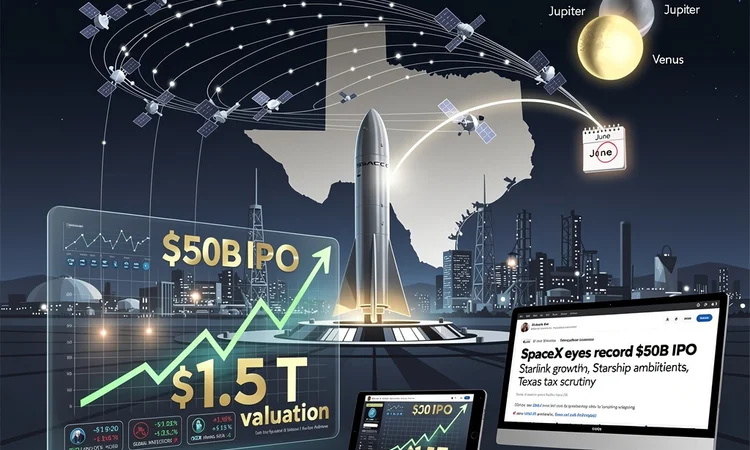
Elon Musk, the world’s richest man, is blending astronomy and ambition as SpaceX targets a mid-June initial public offering timed to a rare conjunction of Jupiter and Venus, coinciding with his 55th birthday on June 28. The rocket company aims to raise as much as $50 billion at a staggering $1.5 trillion valuation, eclipsing Saudi Aramco’s $29 billion record from 2019, according to five people familiar with the matter cited by the Financial Times .

SpaceX Chief Financial Officer Bret Johnsen has held talks and Zoom calls with existing private investors since mid-December to explore this mid-2026 listing, the Guardian reported, drawing from the same FT sources. The planetary alignment on June 8-9 marks the closest approach of the two planets in over three years, a symbolic nod fitting Musk’s penchant for blending whimsy with business—Musk famously tweeted about taking Tesla private at $420 a share in 2018, a nod to cannabis culture.

The Bloomberg article echoed the FT, noting the timing’s surreal logic for most firms but alignment with Musk’s symbolic style. SpaceX generates revenue from reusable Falcon rockets for satellite launches and NASA missions, plus its Starlink constellation of over 9,400 satellites providing high-speed internet.

Valuation Surge Fuels Mega-Listing Ambitions

SpaceX’s valuation has doubled from nearly $400 billion in recent private rounds to this proposed $1.5 trillion peak, driven by Starlink’s commercial traction and Starship development, per Reuters reporting on the FT details. The company reported $15.5 billion in annual revenue last year, including $1.1 billion from NASA, positioning it to fund ambitious projects like space-based data centers linked to Musk’s xAI efforts against rivals like Google and OpenAI.

Analyst Neil Wilson of Saxo Capital Markets described the $1.5 trillion tag as a “monster premium,” telling the Guardian : “A valuation that big reflects not just a tech and AI premium but Elon Musk’s stardust and a frothy market, plus a heck of a lot of media narrative around this. It is to some degree a kind of bet on the future space economy.” Musk owns 42% of SpaceX, per the Guardian.

Musk long resisted public markets, citing Tesla’s scrutiny and conflicts with his Mars colonization vision, but Starlink’s success has softened that stance. Recent private talks valued shares at $800 billion, with employees selling $2 billion worth at $420 per share.

Texas Tax Breaks Amid Expansion Push

As IPO buzz builds, SpaceX seeks Texas tax incentives under the Enterprise Zone program for low-income areas, targeting refunds for its Starbase Gigabay facility—a 700,000-square-foot site for 1,000 annual Starship rockets—and launch infrastructure, the Texas Tribune reported. The governor’s office granted preliminary approval in September for Gigabay, started in April 2025.

Critics like Kasia Tarczynska of Good Jobs First question eligibility, arguing: “By already having this company within that town, and then retroactively giving it subsidies, it doesn’t meet the definition of an incentive,” per the Texas Tribune. SpaceX promises 500 new jobs, 25% for locals, with $506 million investment qualifying for up to $3.75 million refunds as a “triple jumbo project.”

The firm eyes reinvesting refunds into Starship operations. Past incentives include a 10-year Cameron County tax abatement ending this year and state funds, underscoring Texas’s role in SpaceX’s growth near impoverished Brownsville.

Starlink and Starship Drive Revenue Rocket

Starlink’s expansion underpins the valuation, with SpaceX launching a record 3,200 satellites in 2025, up 60% year-over-year, and 971 low-Earth orbit missions in Q4 alone, per X posts citing CNBC. Revenue projections hit $22-24 billion in 2026 from $15 billion in 2025, fueled by satellite internet and AI data center ambitions.

Investors like Ron Baron, with a quarter of his portfolio in SpaceX, and Cathie Wood’s ARK Venture Fund see massive upside, projecting $2.5 trillion by 2030. X discussions highlight orbital data centers as key, with Musk racing OpenAI and Anthropic to market by July.

The IPO could trigger ETF rebalances, pressuring rivals like Rocket Lab, as SpaceX leads a wave including Anthropic and OpenAI listings, per Reuters.

Market Ripples from Historic Float

Risk remains: Starship tests must succeed amid regulatory hurdles. China eyes space-based AI data centers, challenging Musk’s vision. Yet, with flawless Falcon cadence and Starlink dominance, SpaceX positions as infrastructure superpower.

On X, users like @DavidDTawil noted the planetary-Musk birthday sync, while @StockSavvyShay predicted ecosystem boosts for peers. Chamath Palihapitiya speculated a Tesla reverse-merger, though unconfirmed.

The float would dwarf Aramco’s $1.7 trillion cap, injecting $1.5 trillion liquidity and validating space as core to global economy, as analysts bet on Musk’s orbit-conquering conglomerate.


Subscribe Newsletter

Subscribe to our newsletter and stay up to date with the latest news, updates, and exclusive offers. Join our community today!

Comments

Join the discussion and share your thoughts.

No comments yet. Be the first to comment.

Leave a Reply

Your email address will not be published.

Join Us

Share your perspective with confidence. Your experience could inform, inspire, and help someone live better.

Archives

Authors

More ...

Search NexaPress



