







Finland Recruits Burned-Out US AI and Tech Talent with Visas, Better Balance

Finland Recruits Burned-Out US AI and Tech Talent with Visas, Better Balance

Finland is actively recruiting disillusioned U.S. tech professionals in AI and software by offering superior work-life balance, fast-track visas, and a high quality of life, aiming to attract talent by 2026 amid American burnout. This strategy challenges global tech dynamics, positioning Finland as an innovative haven.

Posted on: by Vivian Stewart
India’s AI Workforce Strategy Emerges as Model for Developing Nations Seeking Technology Leadership

India’s AI Workforce Strategy Emerges as Model for Developing Nations Seeking Technology Leadership

India's deliberate strategy to cultivate AI talent at scale offers emerging economies a practical blueprint for technological transformation. By leveraging educational infrastructure, fostering industry partnerships, and implementing supportive policies, India has become the world's second-largest source of AI specialists without massive infrastructure investments.

Posted on: by Elena Brooks
Apple’s Chip Crunch: iPhone Boom Meets AI Supply Squeeze

Apple’s Chip Crunch: iPhone Boom Meets AI Supply Squeeze

Apple's iPhone demand surges past supply limits as TSMC prioritizes AI chips and memory prices soar from data-center hunger, forcing strategic shifts and potential margin pressure in 2026.

Posted on: by Vivian Stewart
AI’s Payroll Power Play: ISG Ranks Leaders Reshaping Employee Value

AI’s Payroll Power Play: ISG Ranks Leaders Reshaping Employee Value

ISG's 2025 Buyers Guides crown ADP, Oracle, and UKG as payroll leaders, with AI driving error detection, compliance, and employee financial tools. By 2028, half of firms will use AI to preempt payroll issues, boosting resilience.

Posted on: by Samuel Johnson
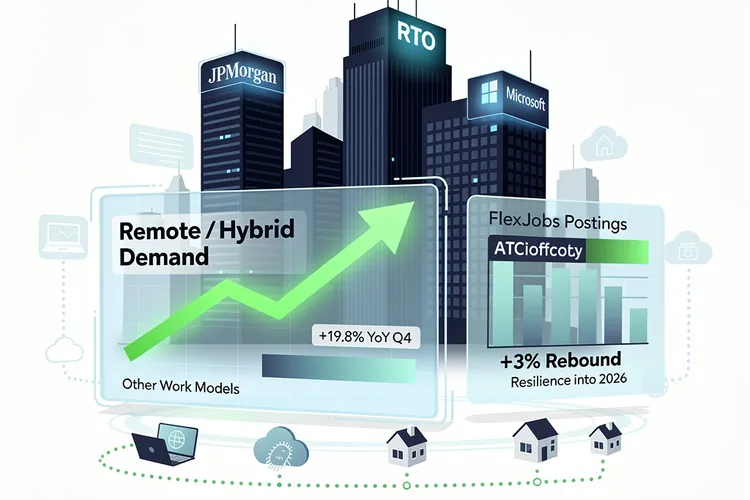
Remote Jobs Defy RTO Mandates: Demand Surges 19.8% in Late 2025

Remote Jobs Defy RTO Mandates: Demand Surges 19.8% in Late 2025

Despite 2025's RTO mandates at JPMorgan, Microsoft, and others, Toptal reports 19.8% YoY growth in remote/hybrid demand for Q4, outpacing all models. FlexJobs notes a 3% rebound in postings, signaling resilience into 2026.

Posted on: by Amelia Keller
The IMF’s Stark Warning: How Trade Wars and Central Bank Independence Threaten Global Recovery

The IMF’s Stark Warning: How Trade Wars and Central Bank Independence Threaten Global Recovery

The IMF warns that escalating trade tensions and threats to central bank independence could derail global economic recovery, with growth projected to slow to 3.2% in 2025 amid mounting policy uncertainties and fragile post-pandemic conditions.

Posted on: by Samuel Johnson
Warsh’s Fed Nomination: Trump’s Bid to Reshape Monetary Policy

Warsh’s Fed Nomination: Trump’s Bid to Reshape Monetary Policy

President Trump nominated former Fed governor Kevin Warsh to replace Jerome Powell, sparking debates on policy shifts, Senate confirmation risks, and market impacts amid inflation and independence concerns.

Posted on: by Amelia Keller
AI Agents Reshape Procurement: McKinsey’s Blueprint for 25-40% Gains

AI Agents Reshape Procurement: McKinsey’s Blueprint for 25-40% Gains

McKinsey reveals AI agents could boost procurement productivity 25-40%, creating new roles and strategic clout amid tariffs and disruptions. Surveys show 40% piloting GenAI, with case studies proving multimillion savings.

Posted on: by Leo Rossi
DC Metro Sees Hybrid Work Boom: Half Adopt 3.2 Office Days Weekly

DC Metro Sees Hybrid Work Boom: Half Adopt 3.2 Office Days Weekly

In the D.C. metro area, nearly half the workforce has adopted hybrid schedules, averaging 3.2 office days per week, per a recent report. This post-pandemic shift reshapes commutes, real estate, and work-life balance, fostering productivity and retention amid challenges like traffic and equity issues. It signals a new normal for flexible work.

Posted on: by Jack Chen
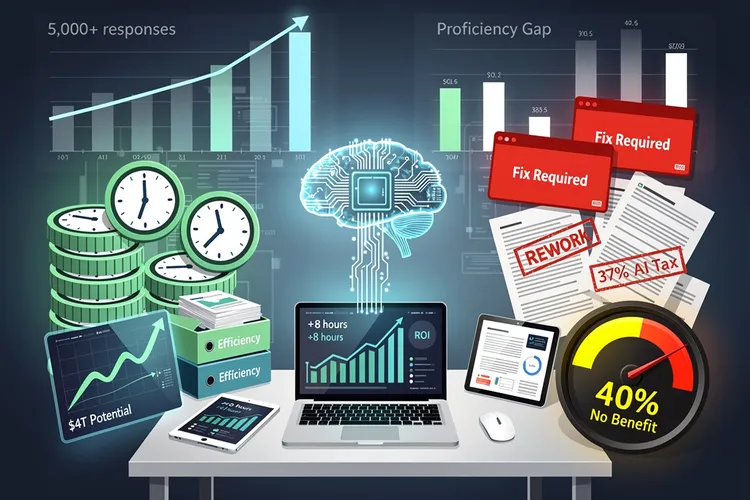
AI’s Productivity Chasm: Execs Claim Days Saved, Workers See ‘Tax’ on Time

AI’s Productivity Chasm: Execs Claim Days Saved, Workers See ‘Tax’ on Time

Executives report AI saving over eight hours weekly, but 40% of workers see no benefit, with gains eroded by a 37% 'AI tax' of error fixes. Surveys of 5,000+ reveal a proficiency gap stalling ROI amid $4 trillion promises.

Posted on: by Emily Chen

Paychecks Plateau: Why 2026 Salary Budgets Signal a New Era of Precision Compensation

Vivian Stewart | 2026-02-04
Paychecks Plateau: Why 2026 Salary Budgets Signal a New Era of Precision Compensation

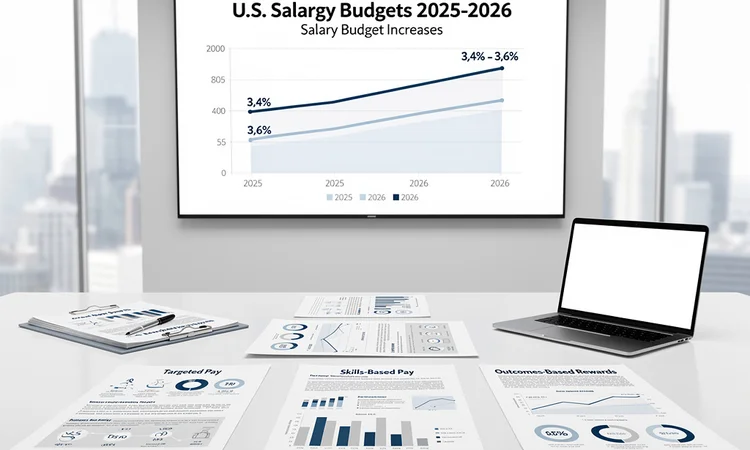
Amid economic steadiness and cooling labor pressures, U.S. employers are locking in salary budgets for 2026 at levels mirroring 2025 actuals, averaging around 3.4% to 3.6%. This plateau marks a departure from post-pandemic surges, as companies pivot from broad raises to targeted investments in high-impact talent. WTW’s latest Salary Budget Planning Survey, drawing from 1,876 U.S. organizations among 36,960 global responses collected September to November 2025, pegs the figure at 3.4%, unchanged from last year’s outlay ( TechRseries ).

The Conference Board’s 40th annual survey of over 460 compensation leaders echoes this, projecting 3.4% averages and 3.5% medians for both years, with firms diversifying beyond base pay amid uncertainty ( The Conference Board ). WorldatWork’s poll of 4,250 total rewards leaders from 1,774 organizations forecasts a mean 3.6%, down slightly from 2025’s 3.7% actuals, signaling caution ( WorldatWork ).

Consensus Emerges Across Surveys

Payscale’s 10th annual survey of 1,551 firms shows 3.5% planned, a tick below 2025’s 3.6% actuals, with technology seeing a 0.5-point drop ( Payscale ). Mercer’s July poll of 1,157 leaders holds total increases at 3.5%, merit at 3.2%, matching 2025, though 83% plan equal distribution despite skill priorities ( Mercer ). Gallagher eyes 3.2%-3.3%, emphasizing moderation.

Heather Ryan, WTW’s Rewards Data Intelligence Head of Product, captures the shift: “The traditional approach of spreading around available budget to most employees is being replaced with strategic use of each dollar. Those employees that are growing their skills, contributing to financial outcomes and demonstrating contributions that impact market impressions are poised to receive the larger share of the budget.” This precision reflects voluntary turnover dipping to 10.1%, easing broad retention spends.

Lori Wisper, WTW managing director of Work & Rewards, adds: “The labor market has reached a sort of equilibrium… Since salary increase budgets are a direct reflection of this dynamic, we can expect a period of relative stability for salary increases for the foreseeable future” ( HR Dive ).

Strategic Shifts Reshape Allocation

Discipline defines planning: WTW notes 62% of employers held mid-year projections steady, 6% raised, 21% cut—driven by cost controls (36%), recession fears (36%), labor tightness (32%), inflation (25%). Firms target pay compression and key talent, boosting governance, market data use, and equity focus. Lauren Mason, Mercer’s U.S. Workforce Solutions Leader, urges: “Employers have a significant opportunity to strategically shape their spending to better align with critical talent goals.”

Retention tactics diversify: 50% enhance experience, 43% training, 42% wellness tweaks, 35% flexibility, 32% comp changes. Promotions slip to 9% of headcount from 10%, averaging 8.7% bumps. “Other” base-pay hikes rise to 59% usage, per Conference Board, blending merit, equity, promotions.

Sixty-one percent anticipate economic drag on decisions, yet prioritize skills (34%), competitiveness (31%), adjustments (24%). Healthcare and retail lag at 2.9%-3.4%; tech holds firmer in some views.

Sector Variations Highlight Pressures

Banking/financial services merits 3.1% but totals 3.7% via variables. Construction eyes gains; tech risks cuts. Salary.com’s 738-firm poll aligns at 3.6%, with 3.3% merit, 1.7% general, 0.7% equity. Pearl Meyer sees 3.3%-3.4% across levels, medians at 3%-3.4%.

Grant Thornton pegs consensus 3.2%-3.5%, above decade norms but contracting. BLS data shows private wages up 3.6% through September 2025, benefits steady. X discussions, like TraderMike’s post on Payscale’s 3.5%, underscore worker calls for more amid stability.

Global echoes: India’s 8.8% leads, but most flatline. U.S. firms balance competitiveness with fiscal restraint, eyeing productivity, capex for growth.

Implications for Talent and Boards

Employers recalibrate: 24% face attraction/retention hurdles. Targeted off-cycles for hot skills, variables (30.5% of exec base), spots rise. Pay equity investments dip slightly but persist at 57% focus. Boards demand alignment: outcomes over inputs.

Inflation’s tame—PCE forecasts 2.6%—preserves real gains. Policies like no-tax tips/overtime loom as boosters. As Wisper notes, equilibrium favors planning over reaction, promising sustained stability if executed sharply.

For insiders, 2026 tests precision: Will equal spreads yield to surgical strikes? Surveys converge on hold-steady budgets, but execution separates winners.


Subscribe Newsletter

Subscribe to our newsletter and stay up to date with the latest news, updates, and exclusive offers. Join our community today!

Comments

Join the discussion and share your thoughts.

No comments yet. Be the first to comment.

Leave a Reply

Your email address will not be published.

Join Us

Share your perspective with confidence. Your experience could inform, inspire, and help someone live better.

Archives

Authors

More ...

Search NexaPress