






In the high-stakes arena of modern business, where deadlines clash with shifting priorities and budgets teeter on the edge, project managers stand as the linchpins holding chaos at bay. Yet beneath the Gantt charts and status reports lies a profound, often overlooked benefit: robust project management practices serve as a bulwark against mental health erosion. Johannes Heinlein, drawing from his tenure leading initiatives at Harvard and the Project Management Institute, argues that “strong project management is a powerful, yet often overlooked, way to build psychological safety and improve mental wellbeing at work.” This structure doesn’t merely deliver projects; it fosters environments where teams thrive amid pressure.
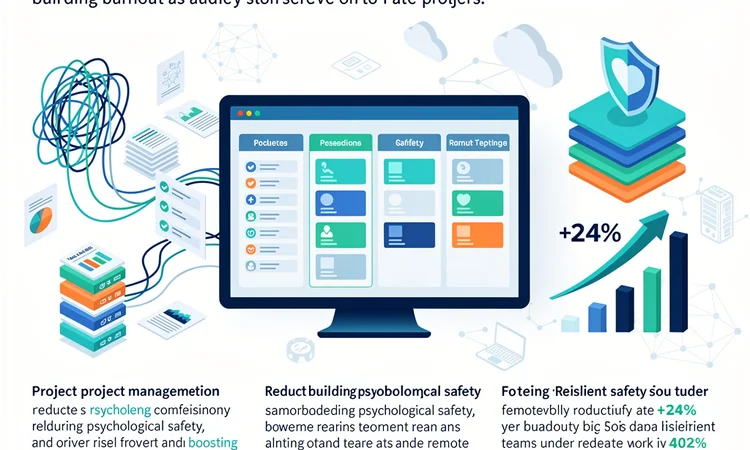
The World Health Organization identifies low job control and insecurity as key contributors to poor mental health, stressors rampant in unstructured work settings. A well-crafted project plan counters this by defining goals, roles, and timelines with precision, stripping away the fog of uncertainty. Heinlein notes, “Project management delivers structure and guidelines for people… It removes confusion and creates a calmer, more predictable work setting.” Such clarity transforms potential panic into purposeful action, as evidenced by Yale School of Medicine research showing workplace mental health programs—bolstered by structured approaches—yield a 24% productivity surge, 25% fewer absent days, and sharper retention.
PMI’s own insights echo this, with experts like Valerie Carmel Dorsainvil, LCSW, declaring, “Mental health really is risk management.” Project managers, trained to anticipate pitfalls, apply the same foresight to human factors, mitigating burnout before it spirals.
Clarity as the First Defense
Confusion breeds anxiety; ambiguity invites overload. When objectives drift—a phenomenon Heinlein dubs “project creep”—teams grapple with unclear roles and mounting tensions. Proactive planning dissects these risks, turning vague threats into actionable contingencies. “Thinking ahead with proactive risk management means foreseeing potential problems and having backup plans in place. This builds resilience within the team,” Heinlein writes in Management Issues .
Regular check-ins further cement this stability, sustaining momentum through small victories. McKinsey research underscores that a positive team climate, where individuals feel valued, drives psychological safety—the bedrock for innovation and peak performance. Harvard professor Amy Edmondson defines it as “a belief that one will not be punished or humiliated for speaking up with ideas, questions, concerns, or mistakes.” In project settings, this manifests as open forums where errors become lessons, not liabilities.
Remote and AI-driven work amplifies these needs. Post-pandemic isolation compounds with algorithmic uncertainties, but structured cadences—weekly stand-ups, collaborative tools—restore rhythm and connection, as Heinlein observes.
Leadership’s Pivotal Role
Project success hinges on people, and leadership is the fulcrum. “The true effectiveness of any project blueprint, and therefore the team’s wellbeing, fundamentally comes down to a leadership that prioritises its people,” per Heinlein. Empathetic communication, active listening, and modeling balance—encouraging breaks and mental health dialogues—set the tone. Forbes reports managers rival spouses in mental health influence, with 70% of employees craving more support from them, according to the Workforce Institute.
APM advocates practical steps: mindfulness to stay present, volunteering for purpose, and hobbies to recharge. Their blog highlights how viewing stress as an enhancer, per Stanford’s Alia Crum, boosts engagement and vitality. “Employees who viewed stress as enhancing were more engaged, satisfied and productive,” the study finds in APM .
Tools like JIRA and Asana streamline workflows, easing cognitive load. ProjectManagement.com urges self-care fundamentals—sleep, diet, exercise—for managers first, as personal strain cascades to teams.
Quantifying the Gains
Evidence mounts: structured management slashes distress. A ScienceDirect study on psychological distress in projects reveals resilience and mindfulness moderate its impact on success, urging firms to build these resources. Yale’s metrics—24% productivity lift—align with PMI findings where mental health integration prevents the overload plaguing project economies.
Forbes notes 60% of global workers cite jobs as their top mental health factor, outpacing therapists. Proactive PMs flip this script, using earned value management and WBS to allocate resources fairly, curbing burnout. “Mental health awareness has come a long way… In many cases, we’re seeing progress in accessing benefits,” writes Bruce McIntyre in ProjectManagement.com .
In distributed teams, frameworks provide cohesion. Heinlein’s call to embed wellbeing in methodologies resonates amid X discussions, where users like @reuben_dicksonE stress reducing uncertainty via plans that illuminate trade-offs.
Navigating Remote and AI Pressures
Hybrid work demands evolved tactics. Institute of Project Management emphasizes awareness training for burnout signs, workload tweaks, and counseling access. “Leaders who are proactive in recognising the signs of burnout can implement changes,” they note in Institute Project Management .
AI introduces job flux, yet PM rhythms counter disorientation. Regular feedback loops and ERGs, as Forbes EQ suggests, measure initiative efficacy, fostering resilience. X threads from @LORWEN108 cite 85% burnout drops via such practices.
Provek advises spotting withdrawal or irritability early, advocating one-on-ones and capacity planning to prevent overload. “Project management planning and control means… mapping out how a project’s activities will be distributed,” reducing anxiety.
Building Resilient Cultures
Cultures prioritizing wellbeing retain talent. APM’s toolkit targets PM stressors like frenetic paces, promoting work breakdown structures and purposeful meetings. X’s @sxicex outlines five Time Management pillars: defined plans, stakeholder engagement, flexibility, WBS, and agenda-driven huddles.
Forbes Councils push boundaries and prioritization for PMs, warning severe burnout warrants therapy. Replicon highlights post-project surveys to calibrate schedules, ensuring morale holds. “One of the best ways to raise employee morale… is to get constant employee feedback,” says Pareen Mhatre.
Ultimately, as Heinlein concludes, “Work should not, and does not have to, be a major source of mental distress.” By weaving mental health into project DNA, leaders not only deliver but elevate human potential.






Leave a Reply
Your email address will not be published.