








In an era where talent wars rage and operational costs bite, remote work has emerged as a strategic powerhouse for businesses. Far from the fleeting pandemic experiment, data from 2026 reveals it drives talent acquisition, slashes expenses, and bolsters retention. A Business.com analysis highlights how offering remote options attracts global expertise, fosters loyalty, and enriches team dynamics, with 98% of U.S. workers craving at least part-time flexibility per the 2023 State of Remote Work report, a trend holding firm into 2026.
Executives like Sam Naficy, CEO of Prodoscore, underscore the morale boost: “To keep remote workers engaged, employers must ensure that they are given the autonomy and freedom to work in a way that makes sense for them.” This autonomy translates to tangible gains, as remote setups enhance engagement and performance metrics, according to two decades of studies cited by Business.com.
Cost Savings Reshape Bottom Lines
Financial prudence stands out as remote work’s sharpest blade. Companies shed burdens of real estate and utilities; Global Workplace Analytics estimates $700 billion in annual U.S. savings if remote-capable roles go half-remote. Firms like Facebook adjust executive pay by locality, pocketing millions while curbing environmental footprints, as noted in Business.com. IBM saved $50 million on offices, redirecting funds to innovation, per EasyStaff .
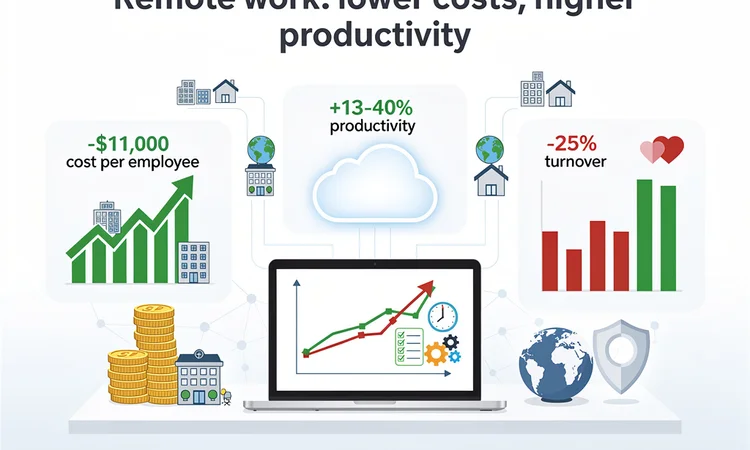
Nortel Networks trimmed $100,000 per employee by nixing relocations, boosting retention without quality dips. Yomly’s 2026 stats peg employer savings at $11,000 per remote worker yearly, fueling profit margins amid economic caution.
Talent Pools Expand Globally
Geographic barriers crumble, unlocking elite hires. Rosi Bremec, COO at Game Lounge, told Business.com: “We can hire amazing talent from anywhere without being limited by office locations.” Remote postings draw 2.6 times more applications, per Vena Solutions, with 80%+ of employers affirming it aids retention and attraction, as in Archieapp.co’s findings.
Robert Half’s 2026 trends show hybrid roles preferred by 70% of seekers, widening pools for skilled applicants. Startups thrive here, gaining productivity and hiring edges over incumbents struggling with retention, according to SSRN research shared on X.
Productivity Myths Debunked by Data
Skeptics question output, yet evidence mounts in favor. Remote workers outperform by 13-40%, per Yomly, with 77% self-reporting higher productivity via fewer distractions. Stanford studies confirm 13% gains from quieter settings; HubSpot logs 51 extra productive minutes daily for remote staff, as cited by Internago.
Gallup notes steady productivity despite fewer hours, positioning flexibility as a retention perk—76% of hybrid workers cite better balance. Fortune 100 firms (97 with remote/hybrid) boast 42% higher output, per Great Place to Work.
Loyalty and Retention Surge
Turnover plummets, a boon in high-replacement-cost sectors. Remote firms see 25% lower rates, with workers 24% more satisfied, Yomly reports. Business.com’s Alex Li of StudyX.AI advises: “Clearly demarcating the work and life areas is the foundation for ensuring productivity.” Flexibility retains executives, curbing talent drains among women and minorities.
FlexJobs finds 79% more loyal with options; 76% would quit sans hybrid, Gallup adds. Paul Lewis on X highlighted UK research: hybrid cuts sick days, stress, while lifting productivity and trimming costs.
Diversification Through Broader Hiring
Remote policies infuse fresh perspectives. Listings attract 15% more women, 33% from underrepresented groups, Second Talent notes. Game Lounge’s international hires exemplify cultural enrichment without offices. Zapier, per Penn LPS Online, taps global pools pre-pandemic, enhancing innovation.
This inclusivity strengthens organizations; Business.com posits: improve the team, elevate the enterprise.
Implementation Blueprints for Success
Success demands structure. Business.com outlines assessing roles, crafting policies, tech investments like VPNs, and outcome-focused metrics. Tools such as Asana track progress; regular reviews adapt to feedback. Dovilė Gelčinskaitė of Omnisend stresses: “Remote employees are more likely to struggle with feelings of isolation… managers [must foster] connection.”
HubSpot’s annual-switch model (@office, @flex, @home) exemplifies adaptability, balancing needs.
Navigating 2026 Headwinds
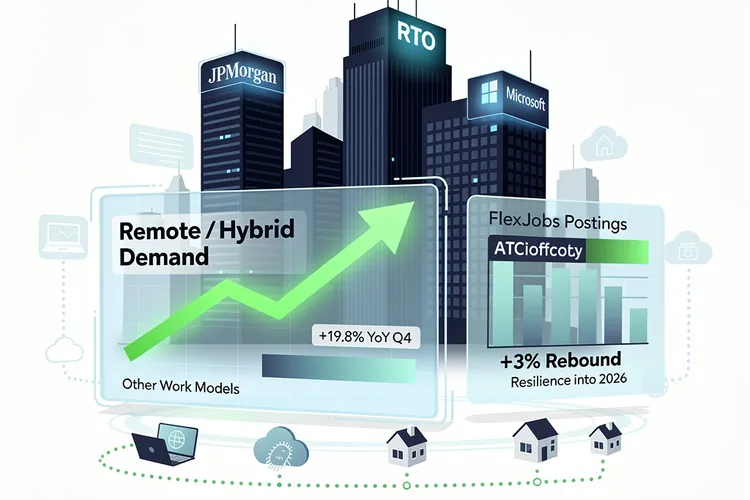
Amid RTO pushes—Microsoft’s three-day mandate, Amazon’s in-office advocacy—data favors flexibility. X users like @mert note remote’s upsides: clear comms, 24/7 operations, global talent. @SMB_Attorney urges skilled firms to embrace it for recruitment edges over RTO-tied rivals.
Gini Talent predicts hybrid dominance, with 83% feeling more productive remotely. Firms investing in tools and culture will dominate.
Future-Proofing Operations
Continuity shines in crises; remote ensures operations amid disruptions. BLS data links remote rises to productivity without turnover spikes. As 30% of postings stay remote, per Vena, businesses prioritizing it gain resilience, diversity, and efficiency in 2026’s volatile markets.






Leave a Reply
Your email address will not be published.