





Finland Recruits Burned-Out US AI and Tech Talent with Visas, Better Balance

Finland Recruits Burned-Out US AI and Tech Talent with Visas, Better Balance

Finland is actively recruiting disillusioned U.S. tech professionals in AI and software by offering superior work-life balance, fast-track visas, and a high quality of life, aiming to attract talent by 2026 amid American burnout. This strategy challenges global tech dynamics, positioning Finland as an innovative haven.

Posted on: by Vivian Stewart
India’s AI Workforce Strategy Emerges as Model for Developing Nations Seeking Technology Leadership

India’s AI Workforce Strategy Emerges as Model for Developing Nations Seeking Technology Leadership

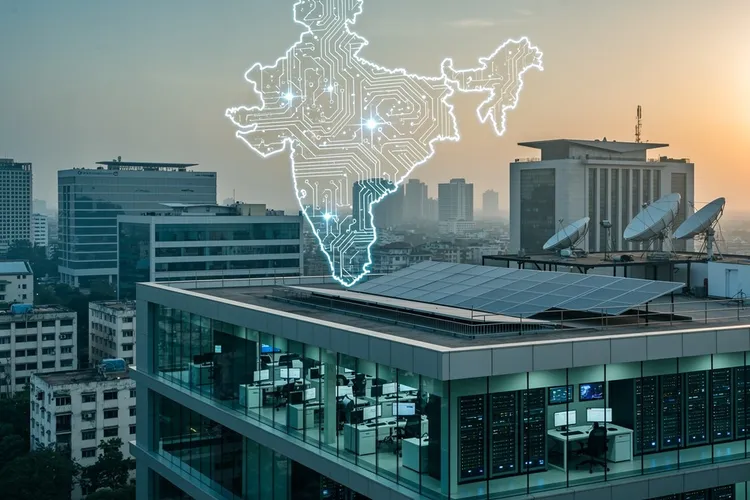
India's deliberate strategy to cultivate AI talent at scale offers emerging economies a practical blueprint for technological transformation. By leveraging educational infrastructure, fostering industry partnerships, and implementing supportive policies, India has become the world's second-largest source of AI specialists without massive infrastructure investments.

Posted on: by Elena Brooks
Apple’s Chip Crunch: iPhone Boom Meets AI Supply Squeeze

Apple’s Chip Crunch: iPhone Boom Meets AI Supply Squeeze

Apple's iPhone demand surges past supply limits as TSMC prioritizes AI chips and memory prices soar from data-center hunger, forcing strategic shifts and potential margin pressure in 2026.

Posted on: by Vivian Stewart
AI’s Payroll Power Play: ISG Ranks Leaders Reshaping Employee Value

AI’s Payroll Power Play: ISG Ranks Leaders Reshaping Employee Value

ISG's 2025 Buyers Guides crown ADP, Oracle, and UKG as payroll leaders, with AI driving error detection, compliance, and employee financial tools. By 2028, half of firms will use AI to preempt payroll issues, boosting resilience.

Posted on: by Samuel Johnson
Remote Jobs Defy RTO Mandates: Demand Surges 19.8% in Late 2025

Remote Jobs Defy RTO Mandates: Demand Surges 19.8% in Late 2025

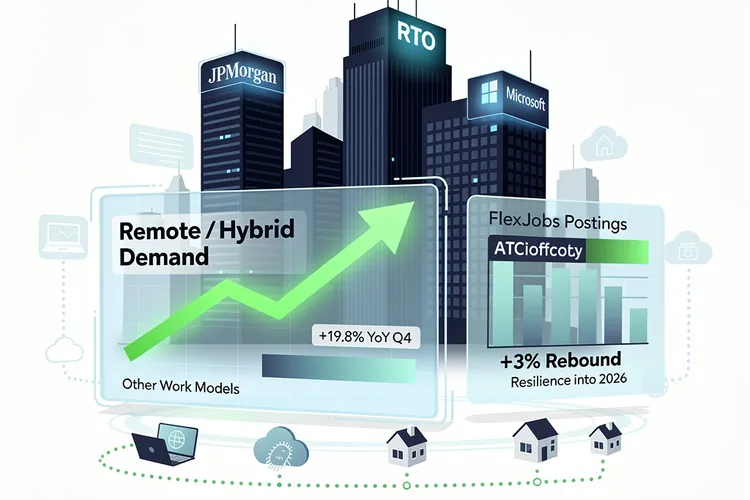
Despite 2025's RTO mandates at JPMorgan, Microsoft, and others, Toptal reports 19.8% YoY growth in remote/hybrid demand for Q4, outpacing all models. FlexJobs notes a 3% rebound in postings, signaling resilience into 2026.

Posted on: by Amelia Keller
The IMF’s Stark Warning: How Trade Wars and Central Bank Independence Threaten Global Recovery

The IMF’s Stark Warning: How Trade Wars and Central Bank Independence Threaten Global Recovery

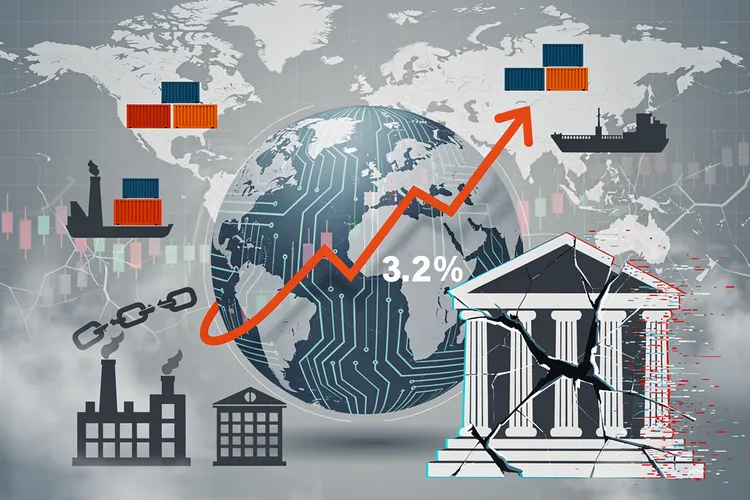
The IMF warns that escalating trade tensions and threats to central bank independence could derail global economic recovery, with growth projected to slow to 3.2% in 2025 amid mounting policy uncertainties and fragile post-pandemic conditions.

Posted on: by Samuel Johnson
Warsh’s Fed Nomination: Trump’s Bid to Reshape Monetary Policy

Warsh’s Fed Nomination: Trump’s Bid to Reshape Monetary Policy

President Trump nominated former Fed governor Kevin Warsh to replace Jerome Powell, sparking debates on policy shifts, Senate confirmation risks, and market impacts amid inflation and independence concerns.

Posted on: by Amelia Keller
AI Agents Reshape Procurement: McKinsey’s Blueprint for 25-40% Gains

AI Agents Reshape Procurement: McKinsey’s Blueprint for 25-40% Gains

McKinsey reveals AI agents could boost procurement productivity 25-40%, creating new roles and strategic clout amid tariffs and disruptions. Surveys show 40% piloting GenAI, with case studies proving multimillion savings.

Posted on: by Leo Rossi
DC Metro Sees Hybrid Work Boom: Half Adopt 3.2 Office Days Weekly

DC Metro Sees Hybrid Work Boom: Half Adopt 3.2 Office Days Weekly

In the D.C. metro area, nearly half the workforce has adopted hybrid schedules, averaging 3.2 office days per week, per a recent report. This post-pandemic shift reshapes commutes, real estate, and work-life balance, fostering productivity and retention amid challenges like traffic and equity issues. It signals a new normal for flexible work.

Posted on: by Jack Chen
AI’s Productivity Chasm: Execs Claim Days Saved, Workers See ‘Tax’ on Time

AI’s Productivity Chasm: Execs Claim Days Saved, Workers See ‘Tax’ on Time

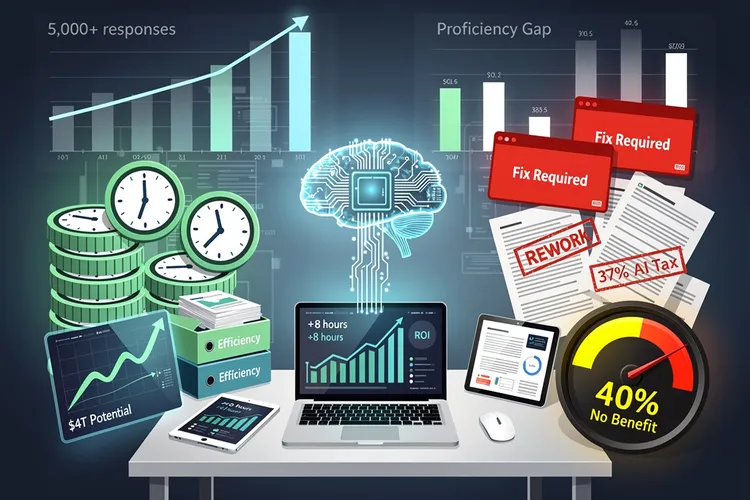
Executives report AI saving over eight hours weekly, but 40% of workers see no benefit, with gains eroded by a 37% 'AI tax' of error fixes. Surveys of 5,000+ reveal a proficiency gap stalling ROI amid $4 trillion promises.

Posted on: by Emily Chen

Samsung’s AI Memory Gold Rush: Profits Triple Amid Chip Crunch

Emily Scott | 2026-02-19
Samsung’s AI Memory Gold Rush: Profits Triple Amid Chip Crunch

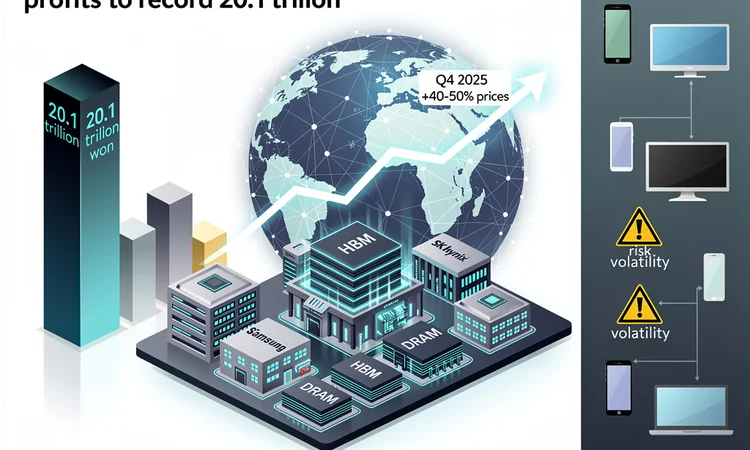
Samsung Electronics Co. unveiled staggering fourth-quarter results for 2025, with operating profit soaring more than threefold to a record 20.1 trillion Korean won ($14 billion), eclipsing analyst forecasts and the company’s own guidance. Revenue climbed 24% year-over-year to 93.8 trillion won ($65.58 billion), marking a fresh quarterly high. This windfall stems from explosive demand for high-bandwidth memory chips powering AI data centers, which has triggered widespread shortages and skyrocketed prices across memory types.

The semiconductor division, Samsung’s powerhouse, notched all-time highs in revenue and profit, propelled by a market-wide price surge, robust sales of high-value HBM products, and other premium offerings. Makers like Nvidia Corp. are vying for scant HBM supplies, with demand far exceeding availability. As producers such as Samsung reroute capacity to these high-margin AI essentials, supplies of standard DRAM and NAND for PCs and mobiles have tightened, boosting prices 40%-50% in the quarter, according to CNBC .

Record Breaker Shatters 2018 Peak

This performance vaults past Samsung’s prior benchmark of 17.6 trillion won from Q3 2018, during the last memory boom. Full-year 2025 operating profit hit 43.53 trillion won, up 33% from 2024, with sales rising 10.6% to 332.77 trillion won. Counterpoint Research dubbed the phase a ‘Hyper-Bull’ market, outstripping 2018 peaks, with supplier leverage at historic highs from AI and server hunger.

Samsung trails rival SK Hynix Inc. in HBM supremacy but dominates NAND and leverages conventional DRAM strength. SK Hynix, reporting record earnings earlier, saw FY2025 revenue of 97.1467 trillion won and Q4 operating profit of 19.1696 trillion won, fueled by HBM leadership. Samsung’s HBM shipments are poised to triple in 2026 as HBM4 ramps up, per analysts cited in Yahoo Finance .

HBM Frenzy Squeezes Broader Supplies

AI hyperscalers like Meta Platforms Inc. and Amazon.com Inc. are snapping up DRAM at premiums, as noted by CLSA’s Sanjeev Rana: “Hyperscalers and cloud providers are buying a lot of DRAM and they are willing to pay a price premium.” DDR5 contract prices leaped 313% year-over-year, per TrendForce data referenced in Reuters . Spot prices for mainstream DRAM surged 18-23% in Q4 alone.

Makers are diverting factories from consumer chips to AI-grade HBM, exacerbating shortages. Micron Technology Inc. CEO Sanjay Mehrotra warned markets will stay tight beyond 2026, meeting only half to two-thirds of key customer needs. Samsung plans aggressive HBM4 expansion for Nvidia’s Rubin platform, with CEO Jun Young-hyun noting customer praise: “Samsung is back.”

Rivals Ride the Wave, Foundry Edges Up

SK Hynix’s blockbuster results underscore the sector surge, with 58% operating margins and 2026 demand forecasts of +20% for DRAM and +18% for NAND, as shared by Counterpoint Research VP Neil Shah on X. Samsung’s non-memory units, including foundry and system LSI, narrowed losses to about 800 billion won in Q4 from mid-2 trillion won earlier in 2025, aided by a weaker won.

The mobile division held profitability at 2-3 trillion won despite rising component costs pinching margins. Display profits grew on Apple Inc.’s iPhone 17 sales. Samsung eyes Qualcomm for 2nm chip contracts and Intel for 8nm foundry work, per KED Global .

2026 Horizons: Capacity Race Accelerates

Memory prices could rise another 40-50% in Q1 2026, then 20% in Q2, with DDR5 RDIMMs potentially doubling by year-end. Samsung warns shortages will hike prices industry-wide, impacting its own gadgets. HBM orders secure visibility into 2026, with capex rising for U.S. expansion and MLCC/FC-BGA amid AI server demand, as Citi noted for Samsung Electro-Mechanics.

Analysts like DB Securities’ Seo Seung-yeon flag risks: soaring prices may curb PC/smartphone demand, while AI data centers lean on debt. Yet, AI server shipments could grow 80% in 2026, per reports, sustaining tightness. Samsung’s scale positions it to capture gains as factories, power grids, and packaging like TSMC’s CoWoS hit full utilization.

Investor Calculus in Volatile Boom

Shares jumped 125% in 2025, the best in 26 years, but dipped post-earnings on profit-taking. Valuation concerns linger amid potential demand slowdowns, as BNK’s Lee Min-hee cautioned on PC/smartphone pressures and AI financing risks. Still, with Nvidia’s Rubin on track and custom TPUs boosting HBM, Samsung’s dual exposure to conventional and advanced memory fortifies its stance in this protracted upcycle.


Subscribe Newsletter

Subscribe to our newsletter and stay up to date with the latest news, updates, and exclusive offers. Join our community today!

Comments

Join the discussion and share your thoughts.

No comments yet. Be the first to comment.

Leave a Reply

Your email address will not be published.

Join Us

Share your perspective with confidence. Your experience could inform, inspire, and help someone live better.

Archives

Authors

More ...

Search NexaPress



