


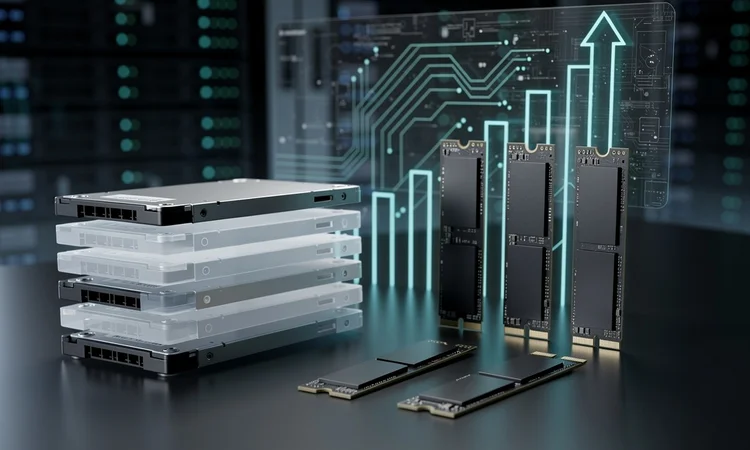
In the fast-evolving world of data storage, a seismic shift is underway as Samsung Electronics Co., one of the giants in semiconductor manufacturing, prepares to phase out production of its SATA solid-state drives. This move, set to begin in early 2026, signals the end of an era for budget-friendly storage options that have long powered entry-level PCs, legacy systems, and cost-conscious upgrades. Industry insiders are bracing for a ripple effect that could drive up prices across the board, exacerbating existing pressures in the memory market. Leaks and reports from multiple sources paint a picture of supply constraints that may last up to 18 months, drawing comparisons to recent disruptions caused by other major players.
The decision comes at a time when demand for high-performance storage is surging, fueled by the artificial intelligence boom and expanding cloud infrastructure. Samsung, which has dominated the SATA SSD segment with products like the 870 EVO series, is reportedly redirecting resources toward more lucrative areas such as NVMe drives and AI-optimized memory solutions. This strategic pivot isn’t isolated; it’s part of a broader industry trend where manufacturers are prioritizing enterprise-grade products over consumer staples. As a result, consumers and small businesses relying on affordable SATA drives for everyday computing needs may soon face sticker shock.
Details of the phase-out emerged from hardware leaker “Moore’s Law Is Dead,” who cited industry sources indicating that Samsung will fulfill existing orders but cease new production lines for SATA SSDs. This isn’t just a minor adjustment—it’s a full retreat from a market segment that, while mature, still commands significant retail volume. According to reports, the halt could lead to a supply shortfall, pushing prices higher as remaining inventories dwindle and competitors struggle to fill the gap.
Shifting Priorities in Semiconductor Strategy
Samsung’s move aligns with its broader business realignment, focusing on high-margin products amid intensifying competition. The company has been investing heavily in advanced NAND flash technology, essential for next-generation storage that supports AI workloads and data centers. By exiting the SATA arena, Samsung aims to streamline operations and capitalize on the explosive growth in enterprise demand, where profit margins are substantially higher than in the consumer space.
This isn’t the first time a major player has pulled back from legacy storage. Earlier this year, Micron Technology Inc. announced the discontinuation of its Crucial RAM lineup for consumers, a decision that sent shockwaves through the PC building community and contributed to rising memory costs. Analysts suggest Samsung’s SATA exit could have an even more pronounced impact, given the company’s market share in budget SSDs. As noted in a report from NotebookCheck.net , the fallout might mirror or exceed the price pressures seen after Micron’s RAM pivot, with potential disruptions lasting well into 2027.
Industry observers point out that SATA SSDs, while slower than their NVMe counterparts, remain vital for older hardware and budget builds. Their affordability has made them a go-to choice for upgrading laptops, desktops, and even some servers that don’t require cutting-edge speeds. With Samsung bowing out, the onus falls on remaining manufacturers like Western Digital, Seagate, and smaller players to ramp up production—a task complicated by their own shifts toward premium offerings.
Market Reactions and Price Projections
The announcement has sparked immediate reactions across tech forums and social media, with users on platforms like X expressing concerns over impending shortages. Posts from hardware enthusiasts highlight fears of a “storage crisis,” echoing earlier warnings about NAND flash undersupply driven by AI demands. One prominent thread discussed backlogged orders for high-capacity SSDs, underscoring how cloud service providers are hoarding supplies, leaving retail markets underserved.
Price forecasts are grim. Experts predict a 20% to 30% increase in SSD costs in the short term, with SATA models potentially seeing the steepest hikes due to reduced availability. A piece from Gizmochina details how Samsung’s decision, despite its strong retail presence, could tighten the market starting January 2026. This comes on the heels of similar pressures in the DRAM sector, where supply chain bottlenecks have already inflated costs for PC components.
For consumers, the timing couldn’t be worse. Holiday shopping seasons often see deals on storage upgrades, but with inventories expected to thin out, bargain hunters are advised to act swiftly. Retailers like Amazon and Best Buy may stockpile remaining units, but once gone, alternatives could command premium prices. This scenario is particularly challenging for emerging markets and educational institutions that rely on low-cost tech to bridge digital divides.
Broader Implications for the Storage Ecosystem
Beyond immediate price impacts, Samsung’s exit raises questions about the future viability of SATA technology. Introduced in the early 2000s, SATA has been overshadowed by faster interfaces like PCIe-based NVMe, which offer superior performance for modern applications. However, its compatibility with a vast array of existing hardware ensures ongoing demand. As Samsung steps away, the industry might accelerate the transition to NVMe, but not without leaving behind users stuck with incompatible systems.
Competitors are already positioning themselves to capitalize on the void. SK Hynix and Kioxia, for instance, continue to produce SATA drives, but their focus is increasingly on enterprise solutions. This could lead to a consolidation where fewer players dominate, potentially stifling innovation in the budget segment. Insights from Digit explain how this halt signals the end of an affordable storage golden age, urging builders to consider future-proof options like M.2 NVMe drives despite higher upfront costs.
Moreover, the move underscores the influence of AI on semiconductor priorities. Data centers for AI training require massive, high-speed storage arrays, diverting resources from consumer products. Samsung’s investments in AI memory, including high-bandwidth solutions, reflect this trend, as do similar strategies by peers. This realignment could foster advancements in storage tech but at the expense of accessibility for average users.
Consumer Strategies Amid Rising Costs
For those in the market for storage, proactive measures are essential. Experts recommend assessing needs immediately: if a SATA SSD is required for an older machine, purchasing now could avoid inflated prices later. Transitioning to NVMe where possible offers long-term benefits, though it may necessitate hardware upgrades. Budget-conscious buyers might explore refurbished or secondary markets, but caution is advised to ensure reliability.
Industry analysts, including those cited in TechRadar , emphasize that SSD price rises will hit budget drives hardest, advising against delay. This sentiment is echoed in recent X posts, where users share tips on stockpiling drives or switching to alternatives like external HDDs for bulk storage.
Looking ahead, the storage sector’s evolution will likely involve hybrid solutions that blend affordability with performance. Innovations in flash memory density could eventually lower costs, but the interim period promises volatility. Samsung’s decision, while strategically sound for the company, highlights the tension between corporate profitability and consumer needs in a tech-driven economy.
Navigating Supply Chain Disruptions
The global supply chain for semiconductors remains fragile, with geopolitical tensions and raw material shortages adding layers of complexity. Samsung’s South Korea-based operations are not immune, and any further disruptions could amplify the SATA shortfall. Reports from GameGPU suggest a phased exit, with market adjustments potentially extending to NVMe prices as demand shifts.
Enterprise clients, meanwhile, may benefit from prioritized allocations, leaving retail channels underserved. This disparity could widen the gap between high-end and budget computing, affecting everything from gaming rigs to home offices. As one X user noted in a widely viewed post, the custom PC building era faces headwinds from component scarcity and escalating costs.
To mitigate risks, manufacturers might increase production of entry-level NVMe drives, bridging the gap left by SATA. However, scaling up requires time and investment, during which prices will likely remain elevated. Policymakers and industry groups could intervene to encourage diversified supply, but such efforts are nascent.
Long-Term Outlook for Storage Innovation
In the longer term, Samsung’s pivot could spur innovation in cost-effective storage alternatives. Emerging technologies like QLC NAND, which offers higher capacities at lower costs, might gain traction as replacements for traditional SATA. Yet, quality concerns with cheaper NAND variants persist, as highlighted in discussions on X about component reliability in budget SSDs.
The market’s response will also depend on consumer adaptation. As awareness grows—fueled by articles like this and leaks from sources such as Deal N Tech —demand for SATA might wane organically, accelerating the shift to modern standards. This transition, while painful, could ultimately lead to more efficient, faster storage ecosystems.
For industry insiders, the key takeaway is vigilance. Monitoring supply trends, diversifying suppliers, and investing in scalable tech will be crucial. Samsung’s SATA sunset isn’t just a product discontinuation; it’s a harbinger of deeper changes in how storage is produced, priced, and consumed in an increasingly data-centric world.
Economic Ripples and Strategic Responses
Economically, the price pressure could influence broader tech spending. Small businesses upgrading IT infrastructure might delay projects, while PC manufacturers could pass costs onto consumers, inflating laptop and desktop prices. A report from SamMobile claims this could create shortages, jacking up prices significantly.
Strategic responses from competitors include potential acquisitions or partnerships to bolster SATA production. However, with AI dominating investment priorities, such moves seem unlikely. Instead, the focus remains on high-value segments, as evidenced by Samsung’s emphasis on AI memory.
Ultimately, this development tests the resilience of the storage market. While challenges loom, it also presents opportunities for innovation and adaptation, ensuring that the sector continues to evolve amid shifting demands.






Leave a Reply
Your email address will not be published.