






Inside Huawei Cloud’s Bold 2026 Partner Strategy: How Data Centers Become the Cornerstone of AI Infrastructure Expansion

Inside Huawei Cloud’s Bold 2026 Partner Strategy: How Data Centers Become the Cornerstone of AI Infrastructure Expansion

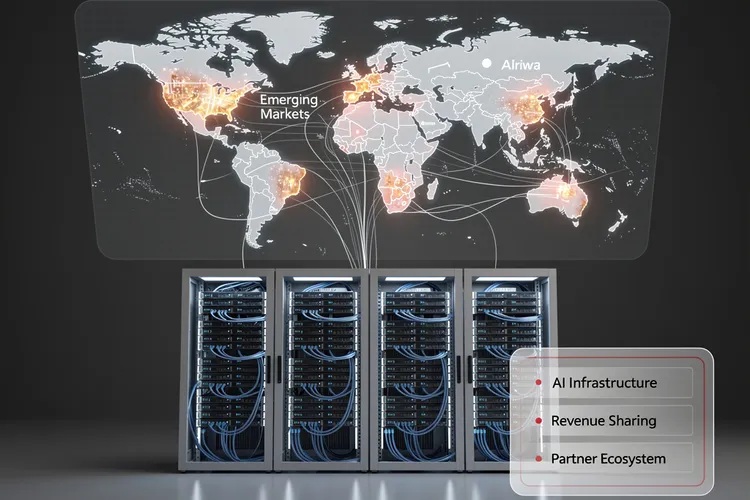
Huawei Cloud's 2026 partner strategy positions data centers as strategic allies in AI infrastructure expansion, offering unprecedented revenue-sharing models and technical integration. The approach targets emerging markets with generous incentives while navigating geopolitical constraints and semiconductor restrictions.

Posted on: by Samuel Johnson
Upwind’s Runtime Revolution: $250M Fuels $1.5B Cloud Security Unicorn

Upwind’s Runtime Revolution: $250M Fuels $1.5B Cloud Security Unicorn

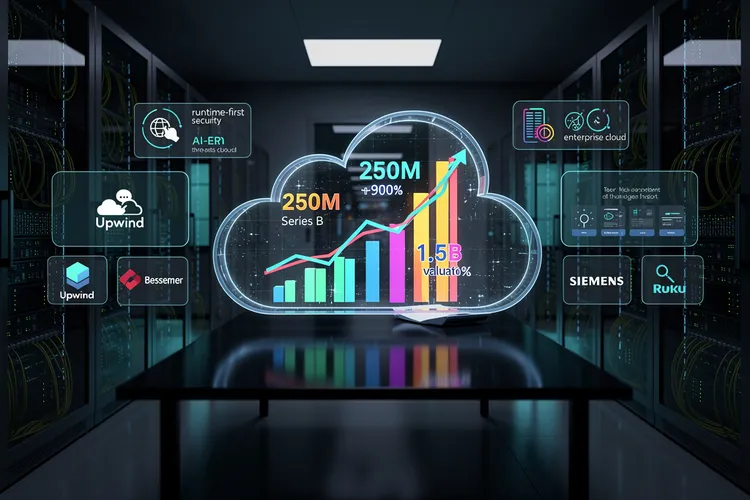
Upwind's $250 million Series B catapults it to $1.5 billion valuation, powering runtime-first cloud security amid 900% revenue surge. Backed by Bessemer and all-stars, the ex-Spot.io team targets AI-era threats for giants like Siemens and Roku.

Posted on: by Ivy Bailey
Pentagon’s New Technology Chiefs Signal Major Shift in Defense Innovation Strategy

Pentagon’s New Technology Chiefs Signal Major Shift in Defense Innovation Strategy

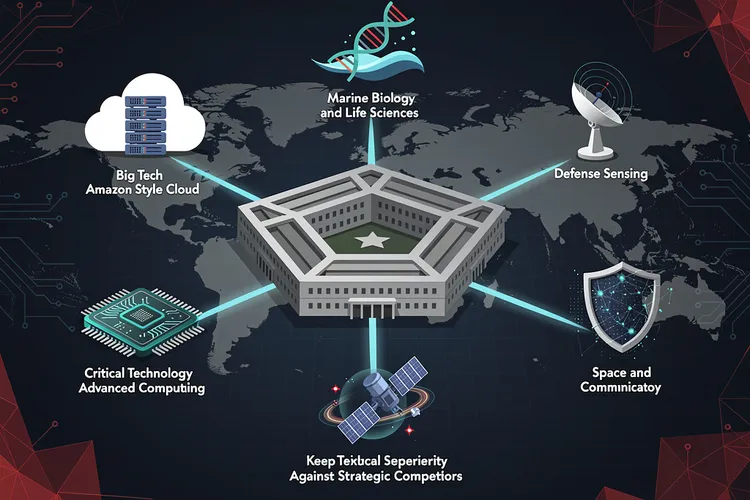
The Pentagon's Chief Technology Officer has selected six defense technology veterans with diverse backgrounds—from Amazon executives to marine biologists—to lead Critical Technology Areas, signaling a major shift in how the Defense Department approaches innovation and maintains technological superiority against strategic competitors.

Posted on: by Emily Chen
Inside Elon Musk’s Audacious Plan to Fuse Rockets and AI: The SpaceX-xAI Megamerger

Inside Elon Musk’s Audacious Plan to Fuse Rockets and AI: The SpaceX-xAI Megamerger

Elon Musk is merging SpaceX and xAI in a deal combining an $800 billion rocket manufacturer with a $230 billion AI startup, advancing his vision of space-based data centers while consolidating his technological empire ahead of a planned summer IPO.

Posted on: by Emily Chen
Verizon’s Subscriber Surge Signals Schulman’s Turnaround Triumph

Verizon’s Subscriber Surge Signals Schulman’s Turnaround Triumph

Verizon crushed Q4 2025 expectations with 616,000 postpaid phone adds under CEO Dan Schulman, issuing bullish 2026 guidance post-Frontier acquisition. Revenue hit $36.4 billion, signaling a strategic revival amid fierce competition.

Posted on: by Liam Murphy
Nevada’s Urgent Hunt for a Cyber Sentinel After Ransomware Chaos

Nevada’s Urgent Hunt for a Cyber Sentinel After Ransomware Chaos

Nevada seeks a permanent CISO after 2025 ransomware chaos disrupted 60 agencies, stole data, and exposed gaps. The role demands strategy, response leadership amid SOC buildup and federal aid, signaling a hardened push for resilience.

Posted on: by Ivy Bailey
How a Startup’s Unsecured Database Exposed the Fragility of AI Agent Platforms

How a Startup’s Unsecured Database Exposed the Fragility of AI Agent Platforms

Moltbook's completely exposed database allowed anyone to hijack AI agents on the platform, revealing how rapid AI deployment is outpacing basic cybersecurity practices. The incident highlights growing security debt in the AI startup ecosystem and regulatory gaps in governing autonomous agent platforms.

Posted on: by Roman Grant
DevSecOps Arsenal: Pentagon’s Push for Warfighter Code at Warp Speed

DevSecOps Arsenal: Pentagon’s Push for Warfighter Code at Warp Speed

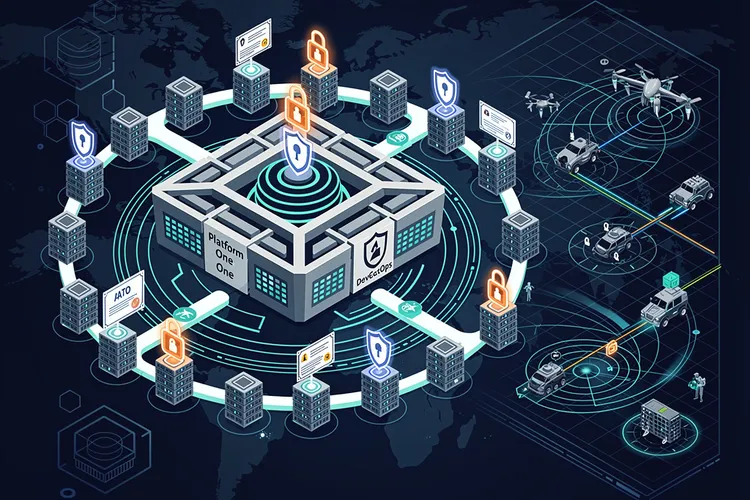
The Pentagon's DevSecOps revolution integrates security into rapid software delivery, powering over 50 factories and slashing deployment times. From Platform One's secure pipelines to cATO approvals, it equips warfighters with resilient digital edge against evolving threats.

Posted on: by Jack Chen
The Invisible Shield: Why Industrial Cybersecurity Still Can’t Quantify Its Worth to the Boardroom

The Invisible Shield: Why Industrial Cybersecurity Still Can’t Quantify Its Worth to the Boardroom

Despite mounting threats to industrial control systems, OT cybersecurity teams face a persistent challenge: proving their value to executives when success means incidents that never happen. The struggle to quantify risk reduction in business terms leaves critical infrastructure chronically underprotected.

Posted on: by Claire Bell
Data Scientist’s Trek: From Paris Courts to Australian Mineshafts

Data Scientist’s Trek: From Paris Courts to Australian Mineshafts

Simon Barres bridges labs and mines at QuantumBlack, deploying AI to optimize mining yields with sensor data and real-time models. His journey from Guadeloupe basketball to Amsterdam AI leadership highlights multidisciplinary impact in heavy industry.

Posted on: by Zoe Patel

Security Chiefs Gear Up for AI Agents and Poly-Threats in 2026

Emily Chen | 2026-03-12
Security Chiefs Gear Up for AI Agents and Poly-Threats in 2026

As 2026 unfolds, security leaders confront a surge in multifaceted threats where artificial intelligence blurs lines between human and machine actors, demanding new governance models and resilient strategies. Experts from Security Magazine outline expectations ranging from poly-risk environments to AI-driven identity challenges, while broader industry forecasts highlight agentic AI’s dual role in attacks and defenses.

Colin Daugherty, program manager at Convergint, warns of the ‘evolving depth and range of the already complicated poly-risk and poly-threat environments,’ encompassing cyber, privacy, physical, and supply chain risks across global scales. He questions the value of emerging technologies amid endless ‘shiny and fancy stuff,’ urging focus on people with ‘grit and resilience, curiosity, creativity, and courage.’

Kristen Devitt, director of campus safety at Oak Park River Forest High School, flags cybersecurity in schools overshadowed by active assailant focus: ‘We’ve been so focused on active assailants that we have failed to properly address other types of threats.’

AI Agents Reshape Accountability

Rosario Mastrogiacomo, CSO at SPHERE, predicts AI as ‘no longer a feature — it’s an actor,’ with challenges in accountability for non-human decisions and ‘invisible privilege escalation’ from AI identities. He advocates frameworks like RAISE—Reveal, Assign, Interpret, Secure, Evaluate—for governing adaptive AI agents, blending identity governance with AI risk.

‘The challenges in 2026 won’t be about the volume of threats — we’ve lived with that for years. The challenge will be accountability in environments where not every decision was made by a human,’ Mastrogiacomo states. Security teams must adopt ‘architectural discipline’ with least privilege and ‘operational humility’ for systems behaving like coworkers.

Frédéric Rivain, CTO at Dashline, foresees the ‘traditional network perimeter will continue its collapse,’ shifting to browser-based controls against phishing and AI agent vulnerabilities. He anticipates Fortune 500 password eliminations and passkey adoption amid credential-stuffing attacks.

Cloud and Quantum Pressures Mount

ISACA’s report on cybersecurity trends shaping 2026 emphasizes cloud-native architectures with continuous authentication, as organizations migrate amid AI’s offensive and defensive roles. Data privacy gains visibility, driving tighter governance around consumer data.

Check Point’s Cyber Security Report 2026 reveals record attacks, with AI infrastructure targeted—40% of 10,000 Model Context Protocol servers vulnerable. Attacks combine AI, identity abuse, ransomware, and social engineering faster than defenses.

IBM predicts a ‘surge in identity-focused attacks’ exploiting AI agents, urging quantum-safe algorithms as crypto-agility separates agile firms from exposed ones, per their 2026 trends .

Nation-State and Resilience Demands

Google’s Mandiant and Threat Intelligence Group warn in ZDNet that ‘threat actor use of AI is expected to transition decisively from the exception to the norm,’ enhancing operations with adaptive payloads and AI-enhanced social engineering by groups like ShinyHunters.

The World Economic Forum’s Global Cybersecurity Outlook 2026 identifies AI as the top change driver per 94% of respondents, with 64% assessing AI tool security—up from 37%—amid geopolitical fragmentation and cyber inequity.

RightCrowd’s guide for physical security leaders highlights AI, cloud, and identity governance proving compliance at global scale with lean teams, per their 2026 trends .

Leadership Amid Fragmentation

Security Industry Association’s 2026 Security Megatrends crowns AI’s software influence as paramount, disrupting alarm monitoring and SOCs based on 2025 surveys from leaders.

SecurityWeek’s CISO insights, like Pierre Mouallem of Delinea, note fading AI wariness: ‘CISOs now recognize rapid support of emerging technologies is essential not just for security, but for business competitiveness,’ from their Cyber Insights 2026 .

Dr. Khulood Almani on X predicts AI-driven autonomous defense, quantum risks, and regulatory pressures like NIS2, emphasizing ‘how fast you can sense, decide, and adapt.’

Path to Trusted Operations

Leaders prioritize supply chain resilience, AI governance, and simplification over hype, per SecurityWeek’s 2026 priorities . Gartner forecasts via GovTech warn of deepfakes, IoT expansion, and cybercrime professionalization.

Pinkerton anticipates Zero Trust Architecture convergence of physical and cyber signals, requiring coordinated policies. VikingCloud sees consolidation as fragmentation causes breaches, with PCI DSS v4.x demanding continuous controls.

Securiti on X underscores trusted data and sovereignty: ‘By 2026, leaders will be defined by trusted data, identity-driven controls, autonomous AI risk, and data sovereignty.’


Subscribe Newsletter

Subscribe to our newsletter and stay up to date with the latest news, updates, and exclusive offers. Join our community today!

Comments

Join the discussion and share your thoughts.

No comments yet. Be the first to comment.

Leave a Reply

Your email address will not be published.

Join Us

Share your perspective with confidence. Your experience could inform, inspire, and help someone live better.

Archives

Authors

More ...

Search NexaPress