





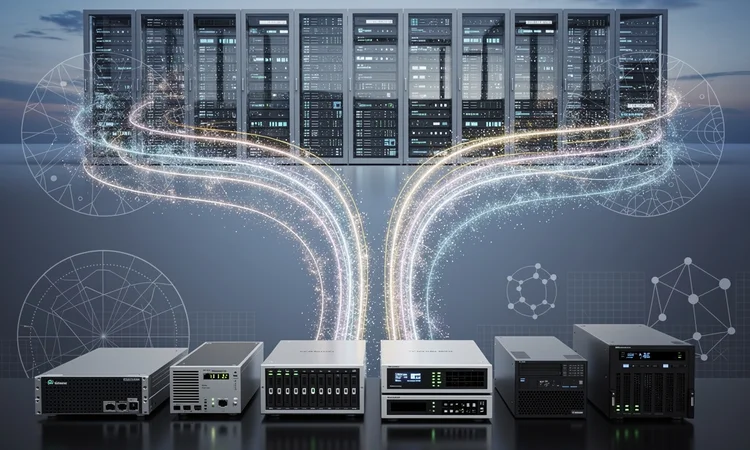
Enterprise IT departments face a pivotal shift in AI deployment as inference workloads eclipse training in scale and spend. No longer confined to cloud hyperscalers or isolated edge devices, AI inference now demands hybrid architectures that partition tasks across distributed environments. Amir Khan, president, CEO and founder of Alkira, argues in Edge Industry Review that success hinges on “running the right model in the right place, supported by a secure, deterministic, hyper-agile, elastic, and simple network fabric that makes split inference feel local.”
Split inference divides model execution: lightweight tasks like wake-word detection or local summarization run on device neural processing units (NPUs), while complex operations such as multi-agent coordination or retrieval-augmented generation escalate to cloud GPU clusters. This policy-driven approach, Khan explains, follows the principle to “do what you can on the device, escalate securely when you must.” Gartner projects 50% of computing at the edge by 2029, underscoring the migration’s momentum.
Deloitte reports inference workloads will claim two-thirds of AI compute by 2026, up from half in 2025, as enterprises move from experimentation to production. Costs have plunged 280-fold in two years, yet usage surges, pushing IT leaders to optimize across hybrid setups. SDxCentral notes AI inference “breaks the old cloud model” by mandating distributed architectures spanning edge, core and cloud.
Cloud’s Enduring Pull
Cloud providers dominate heavy inference due to unmatched scalability. High-bandwidth memory (HBM), pooled resources and high-speed interconnects handle massive models infeasible on edge hardware. Fleet-wide updates deploy in hours with rollback and auditing, vital for governance. Predictable token-based pricing simplifies economics via batching, quantization and scheduling.
Cisco’s Jeremy Foster, SVP and GM of Cisco Compute, told SDxCentral that distributed infrastructure requires software to “abstract out all the hardware complexity… to give very simple cloud-like constructs, but under enterprise IT’s control.” Cisco’s Unified Edge platform merges compute, GPUs, networking and SD-WAN for inference near data sources in retail, hospitals and manufacturing.
VAST Data’s Renen Hallak emphasizes inference as a “production workload” needing 100% uptime, unlike tolerant training. Ciena’s Vimal Pindoria pushes adaptive networks scaling to 100 Gb/s for AI traffic from enterprise to cloud aggregation points.
Edge’s Rising Momentum
Real-time sectors like manufacturing robotics, retail point-of-sale and healthcare demand sub-millisecond responses and data residency, tilting 70% toward edge for privacy and latency. As NPUs proliferate, cost efficiency will drive mundane tasks off cloud within 24 months. Computerworld reports at CES 2026 that inference will overtake training revenue, with enterprises boosting hybrid and edge deployments.
Lenovo’s Ashley Gorakhpurwalla noted enterprises start small with inference like chatbots, scaling gradually unlike upfront training investments. Privacy, security and sovereignty concerns favor on-premises inference, keeping data in-house. Futurum analyst Nick Patience affirms, “Inference workloads are set to overtake training revenue by 2026.”
AMD unveiled the Instinct MI440X GPU for on-premises enterprise inference, while Dell pushes distributed data centers in retail backrooms and factory floors for localized AI clusters with enterprise-grade reliability despite limited IT staff.
Networks as the Decisive Fabric
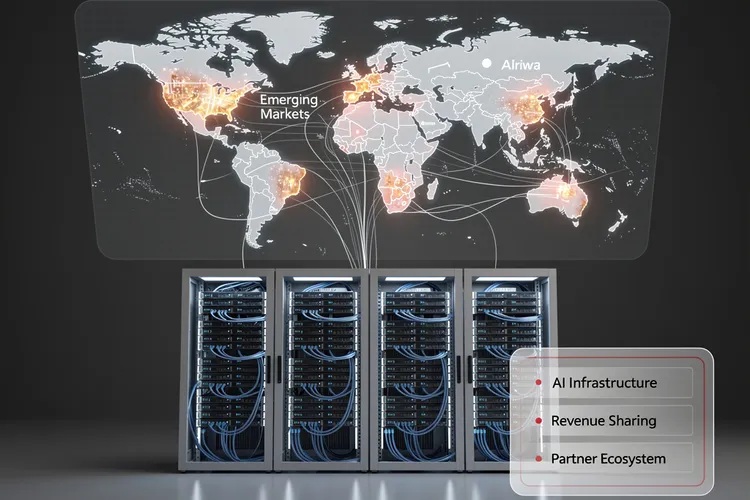
The linchpin is networking: zero-trust segmentation, predictable latency, workload-following policies and AI-driven management. Akamai’s blog calls distributed inferencing a “fundamental reimagining,” leveraging global networks and inference-optimized GPUs for performance and cost efficiency. RDWorldOnline predicts 2026 networks will enable edge-to-cloud for agentic workflows.
Forrester forecasts private AI factories at 20% adoption with on-premises servers capturing 50% share, via Dell and HPE’s NVIDIA-partnered stacks for local inferencing. Ciena warns AI inference is the “next network stress test,” demanding resilient connectivity as inference data centers proliferate globally.
Deloitte highlights agentic AI’s continuous inference spiraling token costs, urging chipsets, networking and orchestration advances. BetaNews cites data silos across on-premises, clouds and edge complicating unification for training and inference, amplifying security needs.
Split Inference in Action
Devices manage defaults, splitting on constraints like memory limits. Alkira’s fabric ensures escalation feels seamless. VentureBeat details Nvidia’s push into edge inference for low-latency robotics and IoT, with model distillation shrinking models for efficiency. CIO.com analyzes edge vs. cloud TCO, favoring edge for speed/privacy/outages and cloud for scale.
MARA leverages low-cost energy for edge inference, cutting data exposure risks. Unified AI Hub notes networks as the new limiter, not GPUs, demanding intelligent data movement across regions. Red Hat explores confidential computing for secure inference with proprietary LLMs via encrypted containers.
SemiEngineering predicts matured blended cloud-owned compute strategies for inference and agents, balancing latency, memory and cost in heterogeneous environments.
Vendor Strategies and Enterprise Plays
Cisco targets agentic AI in regulated sectors; Akamai’s Inference Cloud pairs NVIDIA RTX PRO with its edge network across 4,200 locations. Lenovo expands inference servers for hybrid AI. TCS and AMD collaborate on hybrid cloud-edge AI, integrating EPYC CPUs and Instinct GPUs.
Forbes notes 2026 cloud nuances with AI inferencing demanding security and resilience; distributed data centers rise for localized processing. DatacenterKnowledge predicts AI-driven networking constraints intensifying, spurring upgrades for bandwidth and edge integration.
BentoML guides vetting inference platforms prioritizing KV cache management, speculative decoding and distributed inference for SLAs at lower cost, with BYOC for security.






Leave a Reply
Your email address will not be published.