




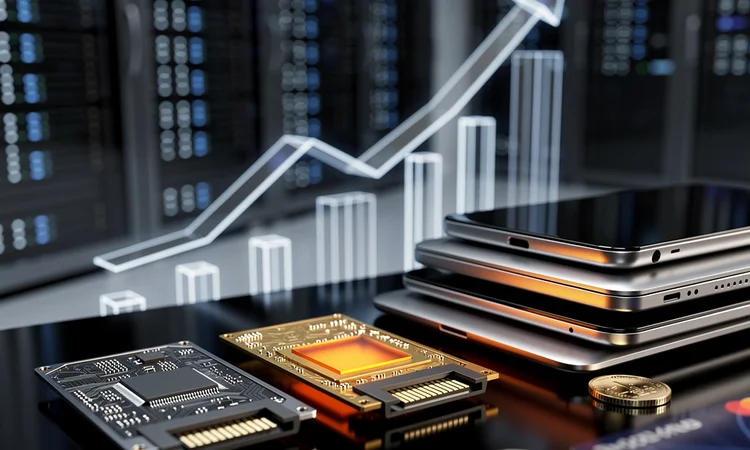
In the ever-evolving world of technology, where advancements often promise cheaper and more efficient hardware, a countertrend is emerging that could hit consumers and businesses hard in the wallet. Reports from industry analysts indicate that storage costs, particularly for solid-state drives (SSDs) and other NAND flash-based products, are poised for significant increases in 2026. This shift comes on the heels of similar price hikes in RAM, driven by surging demand from artificial intelligence applications and strategic production adjustments by major manufacturers. As data centers gobble up more high-end memory and storage components to fuel AI workloads, everyday users might find themselves paying a premium for basic upgrades like laptop storage or smartphone capacity.
The catalyst for this potential price surge traces back to decisions by key players in the semiconductor industry. Samsung and SK Hynix, two giants in NAND flash production, have reportedly scaled back output to stabilize market conditions amid fluctuating demand. This move, while aimed at preventing oversupply, could tighten availability and drive up costs for end-users. According to a recent analysis, these production cuts are already influencing wholesale prices, with ripple effects expected to reach retail markets soon. Industry observers note that NAND flash, the backbone of modern storage devices, has seen its supply chain strained by competing priorities, including the explosive growth in AI infrastructure.
Beyond production decisions, the broader context involves a mismatch between supply and escalating demand. Data from market research firms highlights how AI-driven applications are reshaping priorities in the tech sector. Enterprises are investing heavily in high-performance storage to support machine learning models and large-scale data processing, leaving less capacity for consumer-grade products. This dynamic has led to predictions of double-digit percentage increases in storage prices, potentially making high-capacity SSDs a luxury item for budget-conscious buyers.
The AI Boom’s Hidden Toll on Storage Supply
At the heart of this issue is the insatiable appetite of AI technologies for vast amounts of fast, reliable storage. Gartner forecasts, as cited in various industry reports, suggest that by 2026, over 80% of enterprises will integrate AI into their core operations, demanding specialized storage architectures. This pivot to AI-centric systems requires not just more storage but higher-performance variants, such as those optimized for retrieval-augmented generation workloads. Sources like TechTarget emphasize how this trend is accelerating enterprise transformation, with storage vendors rushing to adapt.
Compounding the problem is a global memory shortage that began with AI infrastructure needs but is now spilling over into consumer markets. An IDC analysis warns of a “global memory shortage crisis,” projecting higher costs and altered product roadmaps for smartphones and PCs throughout 2026. The report, available at IDC’s resource center , details how supply constraints are forcing manufacturers to prioritize high-margin AI components over commoditized storage for personal devices. This reallocation means that the era of abundant, inexpensive memory may be ending, at least temporarily.
Posts on X (formerly Twitter) from tech analysts and investors reflect growing sentiment about this crunch. Users have noted sharp price jumps in DRAM and NAND flash, with some estimating 2026 average pricing increases of up to 75% for NAND, driven by AI demand outpacing supply growth. These discussions underscore a consensus that data centers could consume nearly 70% of all memory chips produced this year, sidelining production for consumer electronics like cars, TVs, and smartphones.
Production Cuts and Market Repercussions
Delving deeper, the production cuts by Samsung and SK Hynix are not isolated actions but part of a strategic response to market volatility. A report from Digital Trends highlights how these companies are reducing NAND output to balance inventories, following a pattern seen in RAM markets where prices have already spiked. This could lead to SSD prices rising by 20-30% or more, affecting everything from gaming PCs to enterprise servers. The article points out that while short-term pain might stabilize the industry, long-term effects could include delayed product launches and higher costs passed on to consumers.
In parallel, forecasts from firms like Morgan Stanley, echoed in X posts, project dramatic price escalations: DRAM up 62% and NAND up 75% on average for 2026. This tightening is attributed to manufacturing constraints clashing with robust AI-driven demand, particularly for high-bandwidth memory (HBM) variants. Industry insiders on platforms like X have shared anecdotes, such as building a high-end PC where over 75% of the cost now stems from memory components alone, illustrating the disproportionate impact on power users.
The enterprise sector feels this pinch acutely. Blogs from Data Centre Solutions outline how AI workloads are necessitating pivots to higher-performance storage solutions, including AI overlays on existing infrastructure. Eric Herzog, Chief Marketing Officer at Infinidat, writing in that publication, predicts continued exponential growth in AI deployments, urging businesses to prepare for costlier storage blueprints. This includes adopting tools for cost governance, such as automated rules to migrate unused data to cheaper tiers, to mitigate rising expenses.
Impacts on Consumers and Emerging Alternatives
For individual consumers, the implications are stark. Smartphones and laptops, which have enjoyed years of declining storage costs, might see price tags inflate by 15-30% due to component shortages. An X post from a tech enthusiast warned that the democratization of high-spec devices—bringing flagship features to affordable models—is reversing, as per IDC insights. This could slow innovation in mid-range markets, where manufacturers might opt for reduced memory capacities or older tech to control costs.
Meanwhile, the automotive and consumer electronics industries are bracing for disruptions. Reports indicate that auto production lines could face halts if memory shortages worsen, given the reliance on NAND for infotainment systems and autonomous features. On X, discussions highlight risks to sectors beyond tech, with one analyst noting that memory packaging and testing fees have risen 30%, signaling broader supply chain pressures.
Looking ahead, some experts see potential relief in alternative storage technologies. A Forbes piece on digital storage projections for 2026 explores optical and even DNA-based storage as contenders for archiving needs, potentially alleviating pressure on NAND for long-term data retention. While these innovations are nascent, they could diversify the market and reduce dependency on traditional flash memory.
Strategic Adjustments by Industry Giants
Major storage chip manufacturers are adapting by focusing on next-generation products like third-generation high-bandwidth memory (HBM3E). A report from 36Kr describes how this shift is expanding storage applications from consumer devices to space exploration, driven by AI’s iterative demands. The convergence of these trends is reshaping global supply and demand, with enterprises urged to forecast spending more accurately using native storage tools.
Security and digital sovereignty also play roles in this evolving scenario. TechTarget’s predictions note that 2026 will see heightened focus on secure storage amid rising cyber threats, potentially adding layers of cost for compliance. Hybrid and multicloud strategies, as discussed in another TechTarget article , offer ways to optimize, but they require upfront investments that could exacerbate short-term budget strains.
X sentiment further amplifies concerns, with posts from investors like those tracking Micron Technology ($MU) pointing to sold-out inventories through 2028 for key players like SK Hynix and Samsung. This backlog suggests prolonged tightness, pushing companies to explore survival modes, such as discontinuing low-end models to conserve resources.
Navigating the New Reality of Storage Economics
As 2026 unfolds, businesses and consumers alike must recalibrate expectations. Infinidat’s blog on storage trends provides a blueprint for leveraging AI without breaking the bank, emphasizing efficient use of existing assets. Analysts like Brien Posey, a veteran in IT, stress the importance of proactive measures, such as setting alerts for spending thresholds.
The global PC market, per a Cyprus Mail report on shipment trends , saw growth in 2025 but faces clouds in 2026 due to these supply risks. Omdia’s research in that piece indicates resilient demand for devices, yet mounting pressures could temper volume growth.
Emerging markets, including business storage units, are projected to expand significantly, with PR Newswire forecasting a reach of USD 1.46 billion by 2035, driven by e-commerce and SMEs needing flexible solutions. This growth, detailed in their release , highlights opportunities amid challenges, as demand for commercial storage surges.
Broader Implications for Tech Innovation
The storage cost uptick could inadvertently spur innovation in efficiency. Digitalisation World’s take on trends mirrors this, advocating for AI overlays to maximize investments. For insiders, this means rethinking procurement strategies, perhaps shifting toward subscription-based storage models to spread costs.
In the consumer space, GlobeNewswire’s analysis of the supermarket barcode locker market —projected to hit USD 2.48 billion by 2035—shows how niche applications are adapting to higher component costs by emphasizing durability and scalability.
Ultimately, while the road ahead looks pricier, it may foster a more sustainable approach to storage technology. As AI continues to dominate, balancing innovation with affordability will be key for the industry’s resilience.






Leave a Reply
Your email address will not be published.