



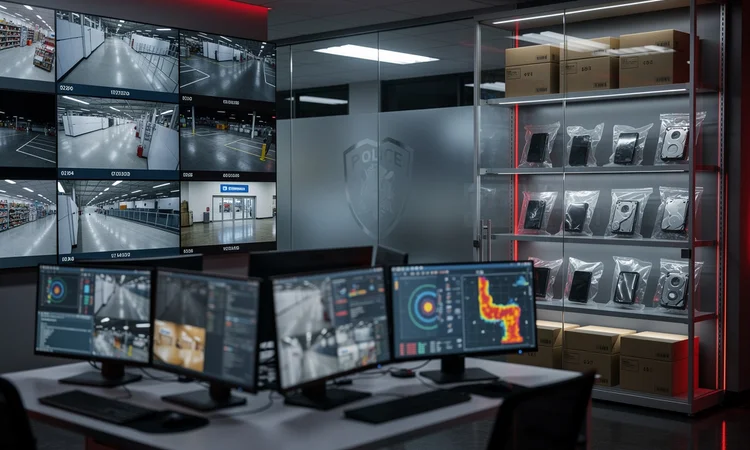
In the shadowy world of retail security, where billions in merchandise vanish annually due to theft, one corporation has built an unlikely fortress of forensic expertise. Target Corp., the Minneapolis-based retail giant, operates a state-of-the-art forensics laboratory that rivals those of major law enforcement agencies. Established in 2003, this facility has evolved into a critical tool not just for combating shoplifting within its stores but also for assisting external investigations on everything from homicides to organized crime. Drawing on advanced techniques like video enhancement, fingerprint analysis, and digital evidence recovery, the lab processes thousands of cases each year, often providing pro bono support to police departments overwhelmed by backlogs.
The lab’s origins trace back to Target’s need to stem escalating losses from retail theft. According to a feature in The Horizon Sun , the company faced nearly a billion dollars in stolen goods in 2023 alone, prompting innovative countermeasures. Housed in nondescript facilities in Minneapolis and Las Vegas, the lab employs a team of certified forensic scientists who use cutting-edge tools to dissect evidence. For instance, they deploy latent print development to lift fingerprints from packaging or employ image restoration software to clarify blurry surveillance footage, turning grainy clips into courtroom-ready exhibits.
This internal capability sets Target apart from peers like Walmart, which also maintains forensics operations but on a reportedly smaller scale. Industry insiders note that Target’s lab is one of only a handful accredited by the American Society of Crime Laboratory Directors, placing it in the same league as FBI facilities. Over the years, it has handled over 10,000 forensic examinations, with a focus on efficiency—cases that might languish for months in public labs are often resolved in weeks here.
Unveiling the Tech Arsenal Behind Retail Justice
At the heart of Target’s forensics operation is a suite of specialized technologies that blend retail pragmatism with investigative rigor. Video forensics, for example, involves proprietary algorithms to enhance low-light footage from in-store cameras, revealing details like license plates or facial features that standard systems might miss. The lab also excels in digital forensics, extracting data from seized devices to trace theft rings operating across state lines. Posts on X from digital forensics enthusiasts, such as those discussing metadata extraction from images, highlight how similar techniques—analyzing GPS coordinates, timestamps, and device serial numbers—can reconstruct criminal activities, a method Target reportedly employs in tracking organized retail crime.
Collaboration with law enforcement amplifies the lab’s impact. As detailed in a 2011 report from MPR News , Target’s team has assisted in high-profile cases beyond retail theft, including arson investigations and even national security matters. One notable instance involved enhancing audio from a surveillance tape to identify a suspect in a non-retail crime, demonstrating the lab’s versatility. This partnership model allows resource-strapped police departments to leverage Target’s expertise without cost, fostering a symbiotic relationship where retailers gain better protection and authorities access top-tier analysis.
However, this integration raises questions about corporate influence in public policing. A 2025 podcast episode on KPFA explored Target’s history of “racialized surveillance,” suggesting that its technologies might disproportionately target certain communities. Freelance journalist Marjaan MJ Sirdar, interviewed in the episode, pointed to Minneapolis as a hotspot where Target’s surveillance data has fueled broader law enforcement strategies, sometimes sparking controversy amid social justice debates.
From Shoplifting Busts to Broader Crime-Fighting Alliances
Target’s forensics lab doesn’t operate in isolation; it’s part of a larger ecosystem of retail-driven crime prevention. A 2012 article on Target’s corporate site , updated in 2022, describes the lab’s team as comprising experts with backgrounds in chemistry, biology, and computer science—many drawn from law enforcement or academia. These professionals handle everything from chemical analysis of counterfeit goods to ballistic comparisons, though the lab steers clear of firearms testing to avoid regulatory entanglements.
Recent developments underscore the lab’s growing role in digital realms. With the rise of e-commerce fraud, Target has expanded into cyber forensics, analyzing hacked accounts and phishing attempts. A Reddit thread from 2020, echoed in various X posts, praises the lab’s advanced capabilities, noting how it aids police in cases involving digital evidence like Bitcoin transactions or drone data leaks. For instance, techniques for reconstructing timelines from compromised devices, as shared in X discussions on digital forensics investigations, mirror Target’s reported methods for tracing online theft networks.
The lab’s efficiency is particularly vital amid national forensics backlogs. A December 2025 update from Forensic Focus highlighted global delays in processing digital samples, with some labs handling only 41% of backlogs in six months, as seen in South African police reports. Target’s in-house model offers a faster alternative, processing retail-related evidence swiftly and sharing insights that accelerate external probes.
Navigating Ethical Quandaries in Corporate Forensics
Critics argue that Target’s forensics prowess blurs lines between private enterprise and public justice. A 2017 piece in The Atlantic compared such corporate labs to those of banks and tech firms, questioning whether profit motives could skew investigative priorities. In Target’s case, while assistance is free, the company benefits from reduced theft and stronger ties with police, potentially influencing policy on issues like bail reform or surveillance laws.
Real-world applications reveal both triumphs and tensions. In a 2020 X post thread, users discussed Target’s role in Minneapolis during social unrest, where its surveillance footage reportedly aided investigations but also fueled accusations of overreach. More recently, a January 2026 X post from a retail innovation account emphasized how Target’s lab combats “shrink”—industry jargon for inventory loss—through data-driven forensics, integrating AI for predictive theft modeling.
Training and accreditation ensure the lab’s credibility. Team members undergo rigorous certification, and the facility adheres to international standards, as noted in various industry sources. This professionalism has led to invitations for Target experts to train law enforcement, extending the retailer’s influence into public sector practices.
Evolving Threats and Future Horizons in Retail Security
As retail crime evolves, so does Target’s forensics strategy. Organized theft rings, often linked to online resale markets, demand sophisticated responses like network forensics to trace digital footprints. X posts from 2025, including one detailing a cyberattack investigation using tools like Autopsy for timeline reconstruction, illustrate the kind of advanced digital sleuthing Target employs to counter these threats.
The lab’s expansion into emerging technologies, such as drone forensics for monitoring warehouse perimeters, positions it at the forefront of retail security innovation. A 2017 Steemit article on Steemit whimsically dubbed these facilities “Bat Caves,” hidden within stores for rapid response, though Target officially denies such secrecy.
Looking ahead, industry observers predict greater integration of AI and machine learning in forensics. Target’s lab could pioneer predictive analytics, forecasting theft patterns from data trends. Yet, this raises privacy concerns, especially as digital evidence from personal devices becomes central to investigations, as highlighted in a 2026 X tip on evaluating law enforcement-collected data.
Balancing Innovation with Accountability in Forensics
Target’s collaborations extend beyond U.S. borders, occasionally aiding international cases through shared expertise. A 2024 X post noted police outsourcing to Target for fingerprint and video analysis, underscoring its reputation. This global reach amplifies the lab’s impact but invites scrutiny over data handling and potential biases.
Employee perspectives add depth to the narrative. Former staff, in anonymous X discussions, praise competitive wages and career growth, contrasting with criticisms of other retailers. Target’s lab not only deters crime but also cultivates talent, with many alumni moving to government roles.
Ultimately, Target’s forensics lab exemplifies how corporations are stepping into voids left by underfunded public systems. By blending retail acumen with scientific precision, it tackles theft while contributing to broader justice efforts. As threats like cyber-enabled crime intensify, such private-public hybrids may become the norm, demanding vigilant oversight to ensure fairness. Recent news, including a cold case resolution in Lexington tied to advanced forensics, as reported on WSILTV , underscores the transformative power of these technologies in solving long-standing mysteries. Similarly, a tragic shooting at a Savannah Target, detailed in a WJCL report just hours ago, highlights the real-world stakes, where forensics could play a pivotal role in piecing together events.





Leave a Reply
Your email address will not be published.