







LONDON—In a move that signals a significant strategic pivot, the British Broadcasting Corporation has begun uploading full-length episodes of its popular programming, including reality shows like The Traitors US and This is My House , directly onto YouTube. The initiative, seemingly a straightforward attempt to capture the attention of younger, digitally-native audiences, has instead ignited a fierce debate among industry analysts, politicians, and the British public, striking at the very heart of the BBC’s century-old funding model: the compulsory TV licence fee.
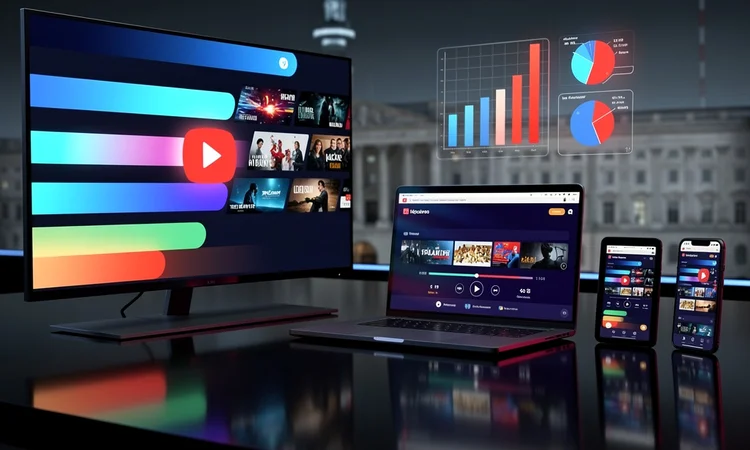
The corporation’s public rationale is clear and strategically sound. By placing select content on the world’s largest video platform, the BBC aims to reach so-called “light” viewers—those who rarely engage with its traditional broadcast channels or its own iPlayer streaming service. The goal is to use YouTube not as a final destination, but as a marketing funnel, a digital breadcrumb trail designed to lead a new generation of consumers back to the BBC’s ecosystem. This is a direct response to immense pressure from global streaming giants like Netflix and Amazon Prime Video, which have steadily eroded the national broadcaster’s audience share, particularly among the under-35 demographic.
This digital-first approach is a core tenet of Director-General Tim Davie’s vision for a modern BBC. The corporation is acutely aware that its long-term survival depends on its ability to prove its relevance in a fragmented, on-demand media environment. The YouTube experiment is the latest in a series of moves to meet audiences where they are, but it is also the most perilous, as it inadvertently provides powerful ammunition to a growing chorus of critics who argue the mandatory licence fee is an anachronism in the age of choice.
A Calculated Risk to a Fragile Funding Model
The central conflict lies in the perceived value proposition of the licence fee. For decades, the £169.50 annual charge (as of April 2024) has been justified as the price of admission to a vast, ad-free emporium of high-quality public service content. However, by offering complete shows for free on a commercial, ad-supported platform like YouTube, the BBC complicates its own argument. The question being asked in households across the U.K. is a simple one: If the BBC’s content is available for free elsewhere, why should we be legally compelled to pay for it?
Under current regulations, a TV licence is required to watch any live broadcast television or to watch and download any programs on the BBC iPlayer. Crucially, as TechRadar highlights , watching this specific, archived content on the BBC’s YouTube channels does not legally require a TV licence. This creates a two-tier system where some BBC content is behind a mandatory paywall while other, similar content is freely accessible. For licence fee opponents, this is not a savvy digital strategy but a concession that the universal fee is no longer tenable.
This strategic gamble comes at a time of immense financial strain for the broadcaster. After a two-year freeze, the government sanctioned a below-inflation increase to the licence fee, a move the BBC’s own governing board described as creating a “challenging” financial picture that would require “further savings.” The push onto YouTube can therefore be seen as both an offensive move to capture new audiences and a defensive one to demonstrate public value to a government actively reviewing its funding model ahead of the Royal Charter renewal in 2027.
The Battle for the Next Generation of Viewers
The data driving the BBC’s decision is stark and undeniable. A recent report from UK media regulator Ofcom revealed that for the first time, a majority of UK adults are turning to online services for their news, with platforms like TikTok seeing a dramatic rise as a news source for 16-24 year olds. This demographic is also far more likely to watch video on YouTube than on any traditional broadcast channel. For the BBC, ignoring this seismic shift in media consumption is not an option; it is an existential threat.
The strategy is to use popular, easily digestible formats like reality television to serve as a gateway to the BBC’s wider portfolio of drama, documentary, and news programming available on iPlayer. “This is a brilliant way to give viewers a flavour of the great new shows,” said the BBC’s Director of Digital, Pushpinder Dhillon, in a statement announcing the move, framing it as a “taster” to entice viewers. The hope is that a viewer who enjoys The Traitors US on YouTube may be more inclined to seek out the original, critically acclaimed UK version on iPlayer, thus entering the licence fee-funded walled garden.
However, this conversion is far from guaranteed. YouTube’s powerful algorithm is designed to keep users on its own platform, not to send them to a competitor’s app. The BBC is essentially competing against its own content, hoping its brand is strong enough to persuade a user to switch platforms. It’s a high-stakes bet that the BBC brand can still command that level of loyalty in a world saturated with content choices.
A Political Minefield and an Uncertain Future
The timing of this experiment is politically charged. The UK government, led by Culture Secretary Lucy Frazer, has been explicit in its desire to reform the BBC’s funding. In a speech earlier this year, Frazer stated that the licence fee model “is facing major challenges” and that a government review would look at “alternative funding models” that could be implemented after the current charter expires at the end of 2027. These alternatives range from a voluntary subscription model similar to Netflix, to a universal household levy disconnected from television ownership, to a hybrid model with increased commercial activity.
The BBC’s YouTube foray will be scrutinized by all sides of this debate. Proponents will see it as a necessary evolution, proving the BBC is innovating to serve all audiences. Yet, as The Guardian reported , critics within the government see the rise of streaming services as definitive proof that the licence fee’s days are numbered. They will undoubtedly point to the free availability of BBC shows on YouTube as evidence that the corporation can and should embrace a more commercial future, lessening its reliance on a mandatory public fee.
This move also tests the boundaries of the BBC’s public service remit, which is to provide distinct, high-quality content that informs, educates, and entertains, separate from commercial pressures. While the shows on YouTube are not directly monetized by the BBC (YouTube places ads around them), the strategy of using commercial platforms to promote its core service blurs the lines that have traditionally defined the corporation’s non-commercial identity.
The Tightrope Walk Towards 2028
The BBC is walking a precarious tightrope. On one side is the urgent need to remain relevant to a generation that has little memory of or loyalty to linear broadcasting. On the other is the fundamental principle of its funding, which demands a clear and compelling justification for its universal, compulsory nature. The YouTube strategy is a bold attempt to bridge this divide, but it risks widening the very chasm it seeks to cross.
Ultimately, the success of this initiative will not be measured in YouTube’s view counts or subscriber numbers. The true metric of success will be whether it can reverse the tide of audience decline and, more importantly, whether it can strengthen the case for public funding in the eyes of both the public and the politicians who will decide its fate. The episodes now streaming for free on YouTube are more than just a content experiment; they are a live test case in the larger, generational struggle over the future of public service media.
As the 2027 charter renewal deadline approaches, every strategic decision the BBC makes will be intensely analyzed. This calculated foray into the world of Big Tech is a clear signal that the corporation will not stand still. Whether it is seen as a masterful adaptation to a new era or a fatal crack in the foundation of its funding model will determine the shape of the British media for decades to come.






Leave a Reply
Your email address will not be published.