









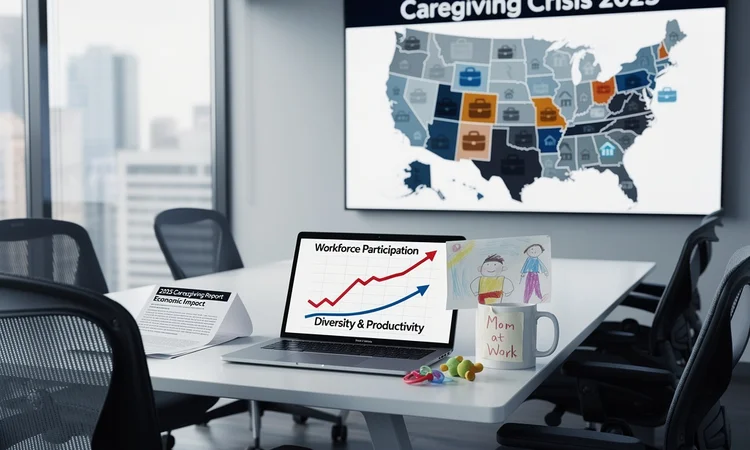
The American workforce is hemorrhaging female talent at an unprecedented rate, and the culprit isn’t what many economists expected. New research from Catalyst reveals that caregiving responsibilities have emerged as the primary driver forcing women out of their careers in 2025, eclipsing traditional factors like compensation disparities and advancement opportunities. This exodus represents not just a gender equity issue, but a looming economic crisis that threatens to undermine decades of progress in workplace diversity and economic productivity.
According to CNBC’s analysis of the Catalyst data , caregiving demands now account for the majority of workforce departures among women, marking a significant shift from pre-pandemic patterns. The research indicates that women are leaving their positions to care for aging parents, children with special needs, and other family members at rates that far exceed their male counterparts. This trend has accelerated dramatically since 2020, but the 2025 data shows the problem has reached critical mass, with implications that extend far beyond individual households.
The economic ramifications are staggering. When experienced professionals exit the workforce, companies lose institutional knowledge, productivity suffers, and the cost of recruiting and training replacements mounts. More critically, women who leave the workforce for caregiving often face significant challenges re-entering at comparable salary levels and seniority, creating a long-term earnings gap that affects retirement security and lifetime wealth accumulation. The ripple effects touch everything from corporate succession planning to Social Security solvency.
The Structural Failures Behind the Exodus
The caregiving crisis isn’t occurring in a vacuum—it’s the predictable result of America’s failure to build adequate support infrastructure for families. Unlike virtually every other developed nation, the United States lacks comprehensive paid family leave policies, affordable childcare systems, and robust elder care options. This policy vacuum forces families, and disproportionately women, to make impossible choices between career advancement and family responsibilities.
The childcare sector remains in a state of crisis, with costs in many metropolitan areas exceeding college tuition. For families with multiple children or special needs dependents, the mathematics of workforce participation simply don’t compute. When one parent’s entire salary—or more—would go toward care costs, the decision to leave employment becomes economically rational, even if it’s devastating for long-term career prospects. The Catalyst research underscores how this calculation overwhelmingly impacts women, who continue to shoulder the majority of caregiving responsibilities across demographic groups.
Simultaneously, America’s aging population is creating unprecedented demand for elder care. The sandwich generation—professionals caring for both children and aging parents—faces particularly acute pressures. With the oldest Baby Boomers now in their late seventies and early eighties, millions of middle-aged professionals are confronting care decisions for parents with chronic conditions, dementia, or mobility limitations. The fragmented, expensive nature of elder care services in the United States means that family members often provide care themselves, requiring workforce exits or dramatic reductions in hours.
Corporate America’s Inadequate Response
While many corporations have introduced flexibility measures and enhanced benefits packages in recent years, the Catalyst data suggests these efforts are failing to stem the tide of departures. Remote work options, which surged during the pandemic, have provided some relief but haven’t addressed the fundamental time and energy demands of caregiving. A video call from home doesn’t change diapers, attend medical appointments, or provide companionship to an isolated elderly parent.
Some forward-thinking companies have begun experimenting with more comprehensive solutions. These include on-site or subsidized childcare, elder care navigation services, expanded paid leave policies, and truly flexible scheduling that accommodates caregiving demands. However, these remain exceptions rather than the rule, concentrated among large corporations with substantial resources. Small and medium-sized businesses, which employ the majority of American workers, rarely offer such benefits, creating a two-tiered system where access to caregiving support depends on employer size and industry.
The return-on-investment case for robust caregiving benefits is compelling. Studies consistently show that companies with strong family support policies experience lower turnover, higher employee engagement, and better recruitment outcomes—particularly for diverse talent. Yet implementation remains spotty, suggesting that awareness of the problem hasn’t translated into widespread action. The gap between recognition and response may reflect short-term financial pressures, lack of expertise in designing effective programs, or persistent cultural assumptions about caregiving as a private rather than workplace concern.
The Gender Equity Implications
The caregiving exodus is fundamentally a gender equity issue, threatening to reverse gains women have made in professional advancement. When talented, experienced women leave the workforce in their prime earning years, the pipeline for female leadership narrows. This affects not just individual careers but organizational diversity, decision-making quality, and corporate performance. Research has repeatedly demonstrated that diverse leadership teams produce better business outcomes, making the caregiving crisis a strategic concern for any organization serious about competitiveness.
The impact extends across socioeconomic strata but manifests differently. High-earning professional women may have more resources to purchase care services, but they also face intense workplace demands that make juggling responsibilities particularly difficult. Middle-income women often face the worst squeeze—earning too much to qualify for subsidized services but too little to afford private care at market rates. Low-income women may already be working in caregiving roles themselves, facing impossible choices when their own family members need care.
The intersectional dimensions deserve particular attention. Women of color, who already face compounded barriers to advancement and wage equity, are disproportionately affected by caregiving demands. Cultural expectations, extended family structures, and economic necessity can intensify caregiving responsibilities. Similarly, single mothers face unique pressures, lacking a partner to share caregiving duties or provide income stability if workforce exit becomes necessary.
Policy Solutions Remain Elusive
Despite broad recognition of the caregiving crisis, comprehensive policy solutions remain politically elusive at the federal level. Proposals for national paid leave programs, childcare subsidies, and elder care support have repeatedly stalled in Congress, victims of partisan gridlock and competing budget priorities. Some states have implemented their own programs—California, New York, and Washington among them—but the patchwork nature of these efforts means most American families lack access to meaningful public support.
The economic argument for public investment in caregiving infrastructure is robust. Enabling more women to remain in the workforce increases tax revenue, reduces dependence on public assistance programs, and boosts economic growth. The Federal Reserve has identified caregiving constraints as a significant factor limiting labor force participation, with implications for productivity and inflation. Yet translating economic logic into legislative action has proven extraordinarily difficult.
International comparisons highlight what’s possible. Countries like Sweden, Germany, and Canada have implemented comprehensive systems that combine paid leave, subsidized care services, and workplace protections. These nations maintain higher female labor force participation rates and report better outcomes for both children and elderly citizens. While cultural and structural differences complicate direct comparisons, the evidence suggests that policy choices matter enormously in determining whether caregiving responsibilities force workforce exits.
The Path Forward Requires Collective Action
Addressing the caregiving crisis demands action from multiple stakeholders simultaneously. Employers must move beyond symbolic gestures to implement substantive policies that genuinely support caregiving employees. This means not just offering benefits but creating cultures where using them doesn’t derail careers. Managers need training to support team members with caregiving responsibilities, and performance evaluation systems must account for the reality that productivity isn’t solely a function of face time or constant availability.
Policymakers at all levels need to prioritize caregiving infrastructure as economic and social policy, not merely a niche concern. This includes not just paid leave and care subsidies but also workforce development for care providers, quality standards for care facilities, and support for family caregivers who provide unpaid labor. The scale of investment required is substantial, but so is the cost of inaction—both in lost economic productivity and human suffering.
Individuals and families, meanwhile, need better information and support for navigating caregiving challenges. This includes financial planning tools, care coordination services, and peer networks. Normalizing conversations about caregiving demands—making them routine rather than taboo—can help reduce the isolation many caregivers experience and build momentum for systemic solutions.
The Catalyst data on women leaving the workforce for caregiving responsibilities should serve as a wake-up call. This isn’t a problem that will resolve itself through individual resilience or minor policy tweaks. It requires fundamental rethinking of how American society supports families, values care work, and structures employment. The question isn’t whether we can afford to make these changes—it’s whether we can afford not to, as the costs of the current system mount for individuals, employers, and the broader economy alike.






Leave a Reply
Your email address will not be published.