




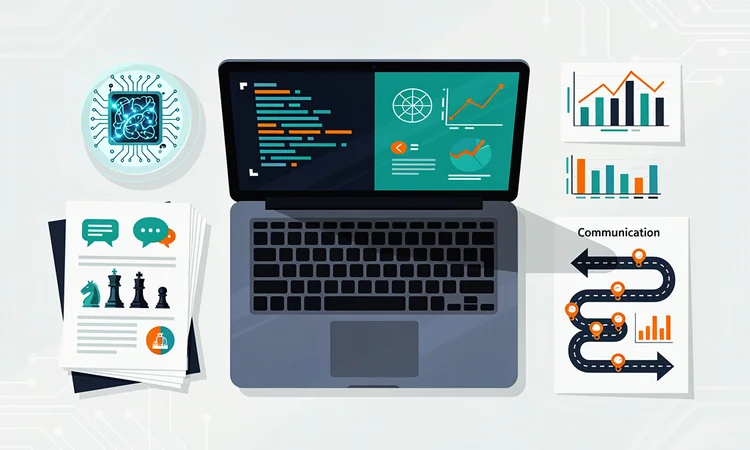
The software development profession stands at an inflection point. For decades, mastering programming languages, algorithms, and system architectures represented the golden ticket to a lucrative and stable career. Today, that formula has fundamentally changed. As artificial intelligence reshapes workflows, business expectations evolve, and competition intensifies, developers face an uncomfortable reality: technical excellence alone no longer suffices for career advancement or even job security.
According to SaaSyKit , the traditional developer role has undergone a seismic transformation. The article argues that while coding skills remain foundational, they’ve become merely table stakes in an increasingly complex professional environment. Developers who limit themselves to writing code risk becoming commoditized, especially as AI-powered tools like GitHub Copilot and ChatGPT democratize basic programming tasks. The message is stark: evolve beyond pure technical work or face obsolescence.
This shift reflects broader economic forces reshaping technology employment. The tech industry’s recent turbulence—marked by widespread layoffs at companies from Meta to Amazon—has exposed vulnerabilities in the purely technical career path. Companies increasingly value developers who understand business context, communicate effectively with non-technical stakeholders, and contribute to strategic decision-making. The developer who can translate technical possibilities into business opportunities has become far more valuable than one who simply executes assigned tickets, however expertly.
The Business Acumen Imperative: Understanding Value Beyond Code
Modern software development demands fluency in business fundamentals that previous generations of programmers could safely ignore. Today’s successful developers must understand unit economics, customer acquisition costs, and how their technical decisions impact company profitability. This business orientation transforms developers from cost centers into strategic partners who actively shape product direction and company growth.
The SaaSyKit analysis emphasizes that developers need to grasp why they’re building specific features, not just how to implement them. This requires asking probing questions about user needs, market positioning, and competitive dynamics. A developer who recognizes that a requested feature might not serve actual customer needs—and articulates that concern effectively—delivers far more value than one who blindly implements specifications. This business awareness separates senior engineers from junior ones, regardless of technical prowess.
Communication Skills: The Undervalued Technical Differentiator
Perhaps no skill gap proves more consequential than communication. Developers traditionally gravitated toward programming precisely because it involved more machine interaction than human conversation. That luxury has evaporated. Modern development happens in cross-functional teams where engineers must articulate technical constraints to product managers, explain architectural decisions to executives, and collaborate with designers, marketers, and customer success teams.
The ability to translate complex technical concepts into accessible language has become a career multiplier. Developers who write clear documentation, present compelling arguments in meetings, and build consensus around technical approaches advance faster than peers with superior coding skills but poor communication. This communication requirement extends to written forms—from pull request descriptions to architectural decision records—where clarity and persuasiveness directly impact team efficiency and decision quality.
Product Thinking: From Feature Factory to Strategic Partner
The most successful developers today think like product managers. They understand user journeys, identify pain points, and propose solutions that balance technical feasibility with user needs and business constraints. This product orientation requires cultivating empathy for end users and curiosity about how people actually use software in real-world contexts.
Developers with product sense anticipate edge cases not from a technical perspective but from understanding user behavior. They question requirements not to be difficult but because they’ve considered implications that others missed. They suggest features proactively based on user feedback patterns and market trends. This proactive, user-centered approach transforms developers from order-takers into innovation drivers who shape product strategy rather than merely implementing it.
The AI Disruption: Automation as Catalyst for Evolution
Artificial intelligence has accelerated the obsolescence of pure coding skills. Tools like GitHub Copilot generate boilerplate code, suggest implementations, and even debug errors with increasing sophistication. While these tools enhance developer productivity, they also raise uncomfortable questions about which development tasks will remain human responsibilities and which will be automated away.
The developers most vulnerable to AI disruption are those performing routine, well-defined coding tasks—precisely the work that junior developers traditionally used to build experience. As AI handles more implementation details, human developers must focus on higher-order skills: system design, architectural decisions, cross-system integration, and problems requiring creative solutions to ambiguous challenges. The premium shifts toward judgment, taste, and strategic thinking—capabilities that currently resist automation.
Cross-Functional Collaboration: Breaking Down Silos
Modern software development rarely happens in isolation. Agile methodologies, DevOps practices, and product-led growth strategies all demand tight collaboration across traditional organizational boundaries. Developers must work effectively with diverse personalities, navigate organizational politics, and build relationships that facilitate their work.
This collaborative imperative requires emotional intelligence and interpersonal skills that many developers find uncomfortable. Understanding team dynamics, managing conflicts constructively, and building trust with colleagues from different backgrounds and perspectives become essential competencies. Developers who excel at collaboration multiply their impact by enabling others, sharing knowledge generously, and creating environments where teams perform at their best.
Marketing and Personal Brand: Visibility as Career Strategy
In an increasingly competitive market, technical excellence that nobody knows about delivers limited career value. Developers who build personal brands—through blogging, conference speaking, open-source contributions, or social media presence—create opportunities that purely heads-down coders miss. This visibility isn’t vanity; it’s strategic career management in an environment where reputation and network increasingly determine opportunities.
Building in public, sharing learnings, and contributing to technical communities establish credibility that transcends any single employer. Developers with strong personal brands attract better job opportunities, command higher compensation, and enjoy more career optionality. While this self-promotion feels uncomfortable for many engineers, it’s become an essential skill for career advancement and professional security.
The Entrepreneurial Mindset: Ownership Beyond Code
The most successful developers increasingly think like entrepreneurs, even within traditional employment. They identify problems worth solving, assess market opportunities, and take ownership of outcomes rather than just outputs. This entrepreneurial orientation means caring about whether features drive user adoption and business results, not just whether code passes tests and deploys successfully.
Developers with entrepreneurial mindsets seek understanding of the full business model, from how the company acquires customers to how it monetizes products. They think about scalability not just technically but commercially. They consider whether technical investments will generate sufficient return. This business orientation transforms developers from fungible resources into strategic assets who drive company success.
Continuous Learning: Adapting to Accelerating Change
The half-life of technical knowledge continues shrinking as frameworks, tools, and best practices evolve at accelerating rates. Developers must commit to perpetual learning across expanding domains—not just new programming languages and frameworks but also business strategy, design thinking, data analysis, and emerging technologies from AI to blockchain to quantum computing.
This learning requirement extends beyond technical domains. Understanding psychology helps build better user experiences. Studying economics clarifies business decisions. Learning about organizational behavior improves team effectiveness. The most adaptable developers cultivate intellectual curiosity across disciplines, recognizing that narrow technical specialization offers diminishing returns in a rapidly changing environment. The developers who thrive will be those who embrace discomfort, continuously expand their capabilities, and view their careers as perpetual evolution rather than stable mastery of fixed skills.
The transformation of software development from purely technical craft to multidisciplinary profession creates both threat and opportunity. Developers who cling to coding as their sole value proposition face increasing vulnerability. Those who embrace the expanded role—combining technical expertise with business acumen, communication skills, product thinking, and entrepreneurial orientation—position themselves for sustained success regardless of how technology and markets evolve. The question facing every developer is simple but consequential: Will you evolve with the profession, or will you be left behind?






Leave a Reply
Your email address will not be published.