






The unified cloud vision that dominated enterprise computing for the past decade is fracturing into something far more complex and potentially transformative. As organizations grapple with artificial intelligence workloads, data sovereignty requirements, and edge computing demands, a new architectural paradigm called distributed cloud networking is emerging to address the limitations of traditional centralized cloud models.
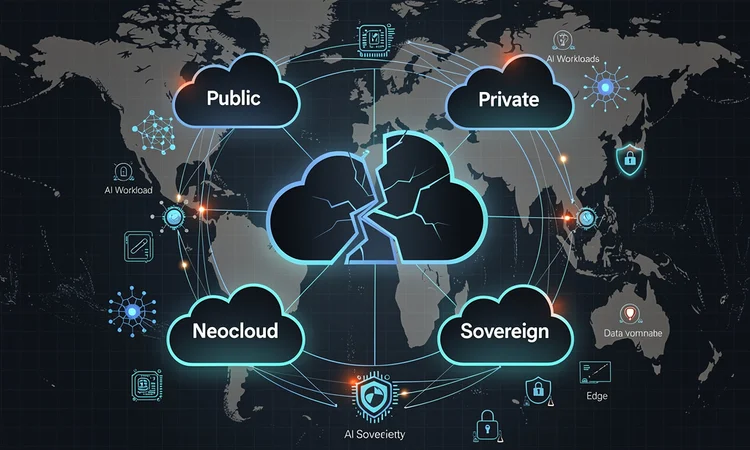
According to Fierce Network , the cloud is no longer a monolithic entity but rather spans public, private, neocloud, sovereign, and edge iterations. This fragmentation represents both a challenge and an opportunity for enterprises seeking to optimize performance, compliance, and cost across increasingly complex infrastructure environments.
The shift toward distributed cloud networking reflects fundamental changes in how data is generated, processed, and consumed. With the proliferation of Internet of Things devices, 5G networks, and AI applications requiring low-latency processing, the centralized cloud model—where data travels to distant data centers for processing—is showing its age. Organizations are discovering that processing data closer to its source often delivers superior performance while reducing bandwidth costs and addressing regulatory concerns about data residency.
The Architecture Behind Distributed Cloud Networks
Distributed cloud networking represents a fundamental reimagining of cloud architecture, distributing cloud services to different physical locations while maintaining centralized management and governance. Unlike traditional multi-cloud strategies, which simply involve using multiple cloud providers, distributed cloud networking creates a unified fabric across geographically dispersed infrastructure components.
This architecture enables organizations to run workloads on infrastructure closest to where data is generated or consumed, whether that’s a public cloud region, a private data center, a telecommunications edge facility, or even on-premises equipment. The key differentiator is the consistent operational model that allows IT teams to manage these distributed resources as a single, cohesive system rather than as separate silos requiring different tools and processes.
The technical implementation typically involves software-defined networking layers that abstract the underlying physical infrastructure, creating virtual networks that span multiple locations and environments. These networks employ advanced routing protocols, traffic management systems, and security frameworks designed to maintain performance and protection standards across the distributed topology. Network virtualization technologies enable dynamic path selection, ensuring that application traffic flows through optimal routes based on real-time conditions such as latency, bandwidth availability, and cost considerations.
AI Workloads Drive Adoption Acceleration
The explosive growth of artificial intelligence applications has become a primary catalyst for distributed cloud networking adoption. AI workloads present unique infrastructure challenges that centralized cloud architectures struggle to address efficiently. Training large language models requires massive computational resources typically concentrated in specialized data centers, while inference operations—where trained models generate predictions or responses—often benefit from edge deployment to minimize latency.
This bifurcation of AI workloads has created demand for networking architectures that can seamlessly coordinate between centralized training environments and distributed inference locations. Organizations deploying AI-powered applications for real-time decision-making, such as autonomous vehicle systems, industrial automation, or personalized customer experiences, cannot tolerate the latency introduced by routing every request to a distant cloud region.
The data gravity problem compounds these challenges. As AI models consume and generate enormous volumes of data, moving that information across networks becomes increasingly expensive and time-consuming. Distributed cloud networking addresses this by enabling compute resources to move closer to data sources, rather than forcing data to travel to centralized processing locations. This approach reduces network congestion, lowers bandwidth costs, and improves application responsiveness—critical factors for AI applications operating at scale.
Sovereignty and Compliance Reshape Cloud Geography
Data sovereignty regulations have emerged as another powerful force driving distributed cloud adoption. Governments worldwide are implementing laws requiring certain categories of data to remain within national borders, creating compliance challenges for organizations operating globally. The European Union’s General Data Protection Regulation, China’s Cybersecurity Law, and similar legislation in dozens of other jurisdictions have made it impossible for many enterprises to rely solely on centralized cloud regions.
Sovereign cloud offerings—cloud services operated within specific national boundaries and subject to local laws—have proliferated in response to these regulatory pressures. These specialized cloud environments ensure that data never leaves designated geographic areas, addressing compliance requirements while maintaining cloud operational benefits. Distributed cloud networking provides the connective tissue that allows organizations to operate sovereign cloud instances alongside other infrastructure components within a unified architecture.
The compliance dimension extends beyond national borders to industry-specific regulations governing healthcare, financial services, and other sectors with strict data handling requirements. Distributed cloud networking enables organizations to implement data residency policies at a granular level, ensuring that sensitive information remains in compliant locations while less-regulated data can be processed wherever it’s most efficient. This flexibility has become essential for multinational corporations navigating a patchwork of regulatory frameworks across their operating territories.
Neocloud Providers Challenge Incumbent Dominance
The distributed cloud era has created opportunities for a new generation of infrastructure providers that some analysts have termed “neocloud” vendors. These companies, which include specialized edge computing platforms, regional cloud providers, and telecommunications companies offering cloud services, are challenging the dominance of hyperscale public cloud giants by focusing on specific geographic markets, industry verticals, or use cases poorly served by centralized offerings.
Neocloud providers often emphasize local presence, regulatory expertise, and specialized capabilities that differentiate them from global hyperscalers. A regional cloud provider might offer superior latency for local users, deeper integration with national payment systems, or staff fluent in local languages and business practices. Telecommunications companies leverage their existing edge infrastructure to offer cloud services with direct network connectivity, reducing the number of hops between users and applications.
This fragmentation of the cloud market creates both opportunities and challenges for enterprises. On one hand, organizations gain access to specialized services and competitive pricing as providers compete for workloads. On the other hand, managing relationships with multiple infrastructure providers, each with different APIs, pricing models, and service level agreements, introduces operational complexity. Distributed cloud networking platforms that provide abstraction layers across multiple providers have become increasingly valuable for organizations seeking to leverage neocloud offerings without multiplying management overhead.
Edge Computing Integration Completes the Distributed Vision
Edge computing represents the logical endpoint of cloud distribution, pushing processing capabilities to the network periphery where data originates. While edge computing has been discussed for years, practical implementations have accelerated dramatically as 5G networks, improved edge hardware, and sophisticated orchestration software have matured. Distributed cloud networking provides the architectural framework that makes edge computing operationally viable at scale.
The edge encompasses diverse deployment scenarios, from telecommunications base stations and retail locations to manufacturing facilities and vehicles. Each edge location may host modest computing resources compared to centralized data centers, but collectively, these distributed nodes can process enormous workloads with minimal latency. Applications ranging from augmented reality and video analytics to predictive maintenance and real-time language translation benefit from edge processing that delivers responses in milliseconds rather than hundreds of milliseconds.
Integrating edge locations into distributed cloud networks requires solving complex orchestration challenges. Applications must be packaged for deployment across heterogeneous hardware, network connections must be resilient to accommodate unreliable edge connectivity, and management systems must handle thousands or millions of distributed nodes. Container technologies, service meshes, and edge-native application frameworks have emerged to address these requirements, enabling organizations to treat edge infrastructure as a natural extension of their cloud environments rather than as separate systems requiring specialized management.
Economic Implications and Total Cost Considerations
The economic case for distributed cloud networking varies significantly based on specific use cases and organizational circumstances. While edge processing can reduce bandwidth costs and improve application performance, it also introduces infrastructure complexity that may increase operational expenses. Organizations must carefully evaluate total cost of ownership across distributed architectures, considering not just infrastructure spending but also the personnel, tools, and processes required to manage distributed systems effectively.
For workloads with strict latency requirements or high data volumes, distributed architectures often deliver clear economic advantages. Processing video streams locally rather than transmitting raw footage to centralized cloud regions can reduce bandwidth costs by orders of magnitude. Similarly, caching frequently accessed content at edge locations minimizes expensive data transfer charges while improving user experience. However, workloads without these characteristics may be more economically operated in centralized cloud environments where economies of scale drive down per-unit costs.
The financial analysis must also account for opportunity costs and business value creation. Applications that were previously impractical due to latency constraints may become viable with distributed architectures, opening new revenue streams or competitive advantages. A retailer implementing real-time personalization at edge locations might see conversion rate improvements that dwarf infrastructure costs. Manufacturing companies using edge AI for predictive maintenance might avoid costly equipment failures. These business benefits often justify distributed cloud investments even when purely infrastructure-focused cost comparisons favor centralized alternatives.
Security Challenges in Distributed Environments
Distributing cloud infrastructure across multiple locations and providers introduces security challenges that require new approaches to threat detection, access control, and data protection. The expanded attack surface created by distributed architectures provides more potential entry points for malicious actors, while the complexity of managing security policies across heterogeneous environments increases the likelihood of misconfigurations that create vulnerabilities.
Zero-trust security models have gained prominence as organizations grapple with distributed cloud security. Rather than assuming that resources within a network perimeter are trustworthy, zero-trust architectures require continuous verification of user and device identities, strict access controls based on least-privilege principles, and encryption of data both in transit and at rest. These approaches are particularly well-suited to distributed environments where traditional perimeter-based security models break down.
The distributed nature of these networks also creates opportunities for enhanced security through geographic diversity and isolation. Organizations can implement data segregation strategies that limit the impact of potential breaches, ensuring that compromise of one location doesn’t provide access to resources elsewhere. Distributed architectures also enable resilience strategies that maintain operations even when specific locations experience security incidents, natural disasters, or other disruptions.
The Path Forward for Enterprise Adoption
As distributed cloud networking matures from emerging concept to operational reality, enterprises face strategic decisions about adoption timing and implementation approaches. Early movers may gain competitive advantages through superior application performance and access to new capabilities, but they also bear the risks and costs associated with immature technologies and limited vendor ecosystems. Organizations must assess their specific requirements, existing infrastructure investments, and risk tolerance when determining their distributed cloud strategies.
The technology industry is responding with tools and platforms designed to simplify distributed cloud adoption. Major cloud providers have introduced distributed cloud offerings that extend their services to customer data centers and edge locations while maintaining centralized management. Networking vendors have developed software-defined networking solutions optimized for distributed topologies. Open-source projects are creating standards and reference implementations that reduce vendor lock-in risks and enable interoperability across diverse infrastructure components.
The evolution toward distributed cloud networking appears irreversible, driven by fundamental shifts in data generation patterns, regulatory requirements, and application architectures. Organizations that develop strategies for managing distributed infrastructure effectively will be better positioned to leverage AI capabilities, meet compliance obligations, and deliver the low-latency experiences that users increasingly expect. The cloud’s fragmentation into distributed components represents not a step backward from cloud computing’s promise, but rather its maturation into a more flexible and capable form suited to the complex requirements of modern enterprise computing.






Leave a Reply
Your email address will not be published.