





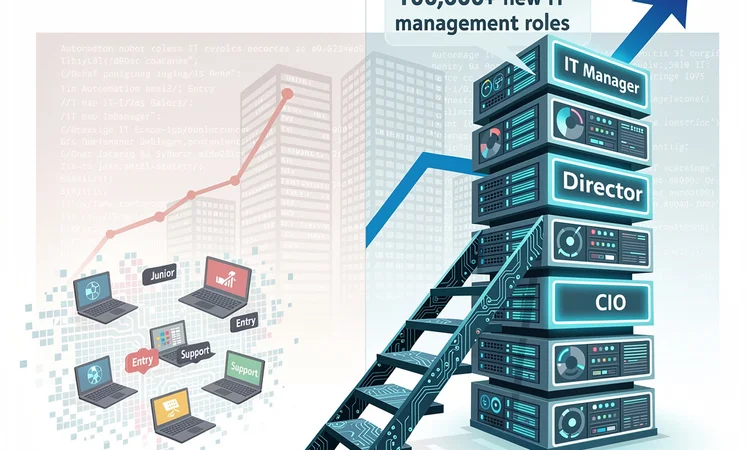
The information technology sector is experiencing an unprecedented bifurcation in employment opportunities, with entry-level positions evaporating while management roles multiply at remarkable rates. According to Spiceworks , the IT management sector is projected to add more than 100,000 new positions over the next decade, even as traditional entry-level roles continue their precipitous decline. This divergence represents a fundamental restructuring of how technology organizations staff their operations and develop talent.
The contrast could not be starker. While companies slash help desk positions, junior developer roles, and technical support jobs, they simultaneously expand their leadership ranks with IT directors, chief information officers, and specialized management positions. This phenomenon reflects broader trends in automation, artificial intelligence adoption, and the increasing strategic importance of technology leadership in corporate decision-making. For aspiring technology professionals, the message is clear: the traditional career ladder is being replaced by a model that demands immediate strategic thinking and business acumen.
Automation Eliminates the Bottom Rung
The decimation of entry-level IT positions stems primarily from advances in automation and artificial intelligence that have rendered many traditional first-job functions obsolete. Tasks that once required human intervention—password resets, basic troubleshooting, software installations, and routine system monitoring—are now handled by sophisticated chatbots, automated ticketing systems, and self-service portals. According to industry analysts, companies have discovered that investing in robust automation infrastructure costs significantly less than maintaining teams of junior technicians, even when accounting for initial implementation expenses.
The rise of low-code and no-code platforms has further compressed the entry-level market. Business users can now build basic applications, create automated workflows, and manage simple integrations without writing a single line of code. This democratization of technology, while empowering for end users, eliminates the need for junior developers who previously handled these straightforward tasks. Organizations report that citizen developers—non-technical employees who build solutions using intuitive platforms—can accomplish in hours what once required weeks of work from entry-level programmers.
The Strategic Elevation of IT Leadership
While automation claims entry-level jobs, it simultaneously elevates the importance of IT management. As technology becomes more central to business strategy, companies need leaders who can navigate complex digital transformations, manage vendor relationships, oversee cybersecurity initiatives, and align technology investments with business objectives. The Spiceworks analysis indicates that IT management roles now command premium compensation packages, with many positions offering salaries exceeding $150,000 annually, reflecting their strategic value to organizations.
The responsibilities of IT managers have expanded far beyond traditional infrastructure oversight. Today’s technology leaders must understand data governance, regulatory compliance, cloud architecture, artificial intelligence ethics, and business process optimization. They serve as translators between technical teams and executive leadership, articulating how technology investments drive revenue growth, reduce operational costs, and create competitive advantages. This evolution has transformed IT management from a technical specialty into a critical business function requiring a blend of technological expertise and executive-level strategic thinking.
The Skills Gap Widens Into a Chasm
The simultaneous contraction of entry-level positions and expansion of management roles creates a troubling paradox: how do professionals gain the experience necessary to qualify for leadership positions when traditional career progression paths no longer exist? This conundrum has sparked intense debate within the technology industry about talent development, career pathways, and organizational responsibility for cultivating future leaders.
Some organizations have responded by creating accelerated leadership development programs that compress years of traditional career progression into intensive 18-to-24-month rotations. These programs identify high-potential candidates—often those with advanced degrees or significant non-technical business experience—and rapidly expose them to various aspects of IT operations, strategic planning, and vendor management. However, critics argue that these fast-track programs produce leaders who lack the deep technical understanding that comes from years of hands-on work, potentially creating a generation of IT managers who cannot effectively evaluate technical solutions or understand the challenges their teams face.
The Gig Economy as Training Ground
As traditional entry-level positions disappear, many aspiring IT professionals are turning to freelance work, contract positions, and project-based engagements to build experience. Platforms connecting businesses with technical talent have proliferated, offering opportunities for individuals to develop skills, build portfolios, and establish professional networks outside traditional employment structures. This shift represents a fundamental change in how technology careers begin, with greater emphasis on entrepreneurial initiative and self-directed learning.
However, this gig-based approach to career development comes with significant drawbacks. Freelancers lack the structured mentorship, comprehensive benefits, and career advancement opportunities that traditional employment provides. They must navigate complex tax situations, manage irregular income streams, and continuously market their services while simultaneously developing technical skills. For many, the gig economy serves as an extended audition period, with the hope that demonstrated competence will eventually lead to permanent positions—increasingly at the management level rather than as individual contributors.
Educational Institutions Struggle to Adapt
Universities and technical colleges find themselves caught in this transition, uncertain how to prepare students for a job market where entry-level positions are scarce but management opportunities abound. Traditional computer science curricula emphasize programming fundamentals, algorithms, and system architecture—skills that remain important but may not directly lead to immediate employment. Forward-thinking institutions are incorporating business strategy, project management, organizational behavior, and leadership development into their technology programs, attempting to produce graduates ready for accelerated career trajectories.
Professional certification programs have emerged as alternatives to traditional degrees, offering focused training in specific technologies, methodologies, or management frameworks. Certifications in cloud platforms, cybersecurity, project management, and IT service management provide credentials that employers increasingly value, sometimes more than academic degrees. However, the proliferation of certifications has created confusion about which credentials truly matter, with some industry observers warning that certification inflation may eventually diminish their value as hiring signals.
The Outsourcing Factor
Global labor arbitrage continues to pressure entry-level IT employment in developed economies. Tasks that cannot be fully automated are frequently outsourced to lower-cost regions, where talented professionals perform the same work for a fraction of domestic salaries. This trend particularly affects entry-level positions, which tend to involve routine tasks that can be easily standardized and performed remotely. Management positions, by contrast, typically require proximity to business operations, deep understanding of organizational culture, and relationships with executive leadership—factors that make them less suitable for offshore outsourcing.
Some companies have adopted hybrid models, maintaining management and strategic roles domestically while outsourcing routine operations and development work to global delivery centers. This approach maximizes cost efficiency while preserving local leadership to guide technology strategy and maintain alignment with business objectives. However, it further reduces opportunities for domestic workers to enter the technology field through traditional pathways, concentrating employment opportunities at the management level.
Reimagining Career Development
The transformation of IT employment patterns demands new approaches to career development and talent cultivation. Some organizations are experimenting with apprenticeship models that combine formal education with paid work experience, allowing individuals to earn while they learn and providing employers with a pipeline of talent trained specifically for their environments. These programs often emphasize rapid progression to roles with strategic responsibility, recognizing that traditional multi-year advancement timelines no longer align with market realities.
Professional associations and industry groups are developing frameworks for alternative career pathways that acknowledge the changing employment environment. These initiatives focus on helping technology professionals build portfolios of skills, experiences, and accomplishments that demonstrate readiness for leadership roles, even without following traditional career progressions. Mentorship programs connecting experienced IT leaders with aspiring professionals provide guidance for navigating this uncertain terrain, though such programs cannot fully compensate for the loss of structured entry-level positions.
The Future of IT Work
Looking ahead, the divergence between entry-level decline and management growth appears likely to intensify. Continued advances in artificial intelligence, machine learning, and automation will claim additional routine tasks, further reducing demand for junior-level human workers. Simultaneously, the increasing complexity of technology ecosystems, growing importance of data-driven decision-making, and escalating cybersecurity threats will drive demand for sophisticated leadership capable of navigating these challenges.
This evolution raises fundamental questions about the sustainability of the technology sector’s talent pipeline. If entry-level positions continue disappearing, where will tomorrow’s IT leaders gain the foundational experience that informs effective management? How will the industry ensure diversity and inclusion when traditional pathways for entering the field no longer exist? What responsibility do employers have to develop talent, rather than simply hiring experienced leaders from competitors? These questions lack easy answers, but addressing them will prove critical to the long-term health of the technology sector and the broader economy it increasingly dominates.






Leave a Reply
Your email address will not be published.