



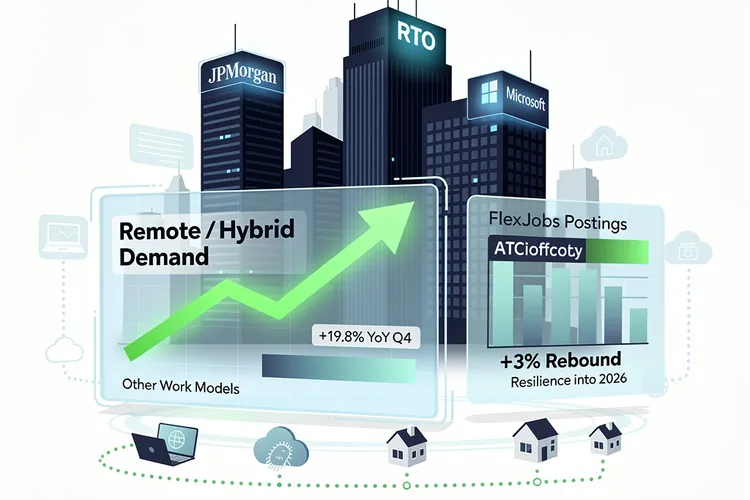




At Dell Technologies, the memo was clear: choose a side. Employees could be designated “hybrid,” requiring them to be in an office at least 39 days a quarter, or fully “remote.” The catch, as reported by Business Insider, was that choosing the remote option would make them ineligible for promotions or role changes. This move represents the sharp end of a corporate spear being thrust into the heart of the flexible work arrangements that millions of knowledge workers now consider standard.
Across the corporate world, a high-stakes standoff is escalating. Executives, citing the need for collaboration, innovation, and a return to a familiar corporate culture, are issuing increasingly rigid return-to-office (RTO) mandates. Yet they are colliding with a workforce fundamentally reshaped by the pandemic—one that values autonomy, distrusts top-down directives, and is more than willing to walk away. The resulting friction is not just a logistical challenge; it’s a catalyst for what some experts are calling “culture rot,” a slow decay of trust and engagement that could have lasting consequences.
A Widening Chasm Between the Suite and the Screen
The push for a full-scale office return is largely an executive-led phenomenon, often revealing a significant disconnect with the rank-and-file. Many leaders, who often enjoy private offices, shorter commutes, and a different in-office social dynamic, believe proximity is the primary driver of performance. A survey from the Future Forum consortium found that executives are nearly three times more likely than non-executive employees to want to work from the office full-time. This disparity in experience and desire is fueling policies that feel tone-deaf to the very people they are meant to engage.
This executive-centric view often overlooks why employees cherish flexibility. It’s not just about avoiding traffic; it’s about managing childcare, caring for aging parents, and achieving a more integrated life. Forcing a return without acknowledging these new realities is perceived as a breach of trust. As one analysis in a CIO article puts it, such mandates are a “massive step backward,” treating employees as assets to be monitored rather than professionals to be trusted. The message received is not one of collaboration, but of control.
The High Cost of Coercion: A Looming Talent Exodus
The most immediate and measurable risk of a poorly executed RTO mandate is the loss of top talent. The labor market, while cooler than its post-pandemic peak, still gives skilled professionals options. Data consistently shows a significant portion of the workforce is prepared to vote with its feet. A recent report from Gartner revealed that if mandated to return to the office five days a week, 19% of knowledge workers say they would likely quit their jobs. For companies, this represents a catastrophic brain drain and a major blow to institutional knowledge.
The threat is not hypothetical. At Amazon, thousands of corporate employees signed a petition and staged a walkout to protest CEO Andy Jassy’s mandate requiring three days a week in the office. While the company has held firm, the public display of discontent underscores the deep-seated resistance. Mandates effectively draw a line in the sand, forcing high-performers who have built productive lives around flexibility to choose between their job and their quality of life—and many are choosing the latter.
The Unraveling of Trust and the Onset of ‘Culture Rot’
Ironically, the most common justification for RTO—to rebuild company culture—may be the very thing mandates destroy. A healthy culture is built on a foundation of psychological safety, mutual respect, and shared purpose. Coercive RTO policies can replace this with a culture of compliance and resentment. When employees are forced back into cubicles against their will, they don’t necessarily become more engaged or collaborative; they often become disengaged, performing their duties to the letter of the law and little else.
This is the essence of “culture rot.” It’s a subtle but corrosive process where trust erodes, and discretionary effort vanishes. Instead of spontaneous collaboration at the water cooler, you get “quiet quitting” at the desk. Employees who feel their needs have been disregarded are less likely to go the extra mile, mentor junior colleagues, or contribute to the creative-problem solving that executives claim to be seeking. The office may be full, but the spirit of the organization is hollowed out.
The Productivity Paradox and the Myth of the Empty Office
The argument that in-person work is inherently more productive is also facing intense scrutiny. While some tasks benefit from face-to-face interaction, a large body of research suggests that hybrid and remote arrangements can be equally, if not more, productive. The WFH Research project, co-founded by Stanford economist Nick Bloom, has published numerous studies indicating that hybrid work models reduce quit rates and can maintain or even boost productivity. A landmark study published by the National Bureau of Economic Research found that a hybrid schedule increased employee retention without a discernible negative impact on performance.
Mandates ignore this evidence, often conflating physical presence with performance. This leads to what critics call “productivity theater,” where employees focus on being seen at their desks rather than on producing high-quality work. The time once spent on focused, deep work at home can be consumed by commutes, office distractions, and performative meetings. The result is a workforce that is physically present but mentally and productively diminished.
The Intentional Alternative: Earning the Commute
Forward-thinking companies are taking a different approach. Instead of issuing mandates, they are focusing on “earning the commute.” This strategy involves making the office a compelling destination for specific, high-value activities rather than a daily requirement. It requires intentionality and a shift from managing by presence to managing by outcomes. Leaders are redesigning office spaces for collaboration, scheduling purposeful in-person days for team-building and strategic planning, and investing heavily in the technology and training required to make a hybrid model seamless.
This approach empowers teams to decide for themselves how and where they work best, fostering the autonomy that modern workers crave. According to a McKinsey report , when employees feel they have more control over their work lives, they report higher levels of engagement and well-being. By trusting their workforce, these companies are building a more resilient and dynamic culture than one propped up by attendance tracking.
A New Corporate Divide in the Making
The corporate world is bifurcating. On one side are the organizations clinging to legacy models of work, enforcing rigid RTO policies and risking a slow bleed of talent and morale. On the other are those embracing a more flexible, trust-based future, using it as a competitive advantage to attract and retain the best people. The long-term consequences of this divergence are likely to be profound.
Companies that fail to adapt may find themselves in a vicious cycle: their strict policies drive away innovative, self-motivated employees, leaving behind a workforce more tolerant of command-and-control management. Over time, this could calcify their ability to compete in a rapidly changing economy. The great office standoff is more than a debate over real estate; it’s a defining moment that will separate the companies of the future from the relics of the past.






Leave a Reply
Your email address will not be published.