








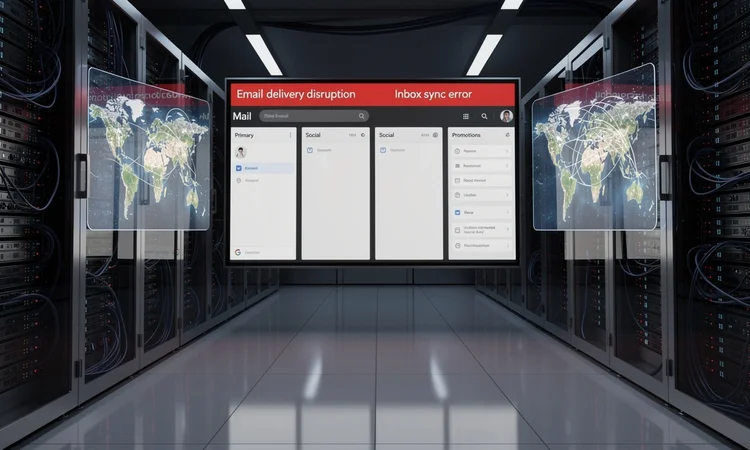
A peculiar and unsettling silence fell over one of the internet’s busiest hubs this week. For millions of Gmail users across the globe, the constant stream of incoming messages abruptly vanished from view. New emails were arriving—notifications buzzed on smartphones, and a quick search would reveal the missing correspondence—but the primary inbox, the digital command center for countless individuals and businesses, remained stubbornly, unnervingly empty. The incident, a server-side stumble by Google, served as a stark reminder of the delicate infrastructure underpinning modern communication and the profound disruption that can occur when even a single component falters.
The problem began surfacing on Tuesday, May 21st, with a wave of user reports flooding social media platforms like X. Users from both personal Gmail accounts and paid Google Workspace enterprise tiers described the same bizarre phenomenon: their primary inbox tab was not updating with new mail. According to a detailed report from Android Police , the core email delivery system was functioning perfectly. Messages were being received and stored, but a critical failure in the display or filtering logic prevented them from appearing in the most crucial-to-view location. The immediate workaround involved users navigating to their “All Mail” folder, a less-organized repository that confirmed their messages weren’t lost, merely hidden.
A Silent Disruption Hits the Digital Workplace
Google officially acknowledged the growing problem on its Google Workspace Status Dashboard at 9:29 AM US/Pacific time on May 21, stating, “We’re investigating reports of an issue with Gmail. We will provide more information shortly.” This initial, terse confirmation validated the concerns of users who had spent the morning questioning their own devices and network connections. For enterprise clients reliant on Google Workspace, the glitch was more than an inconvenience; it was a direct hit to productivity. While emails were not permanently lost—a critical distinction from more catastrophic data-loss events—the disruption to established workflows was immediate and significant, forcing employees to manually hunt for critical communications that should have been front and center.
The incident underscores the immense complexity of operating a service at Gmail’s scale, where sophisticated algorithms constantly sort incoming mail into categories like Primary, Social, and Promotions. The failure appears to have been centered within this intricate sorting and indexing layer. The fact that the “All Mail” view remained accurate suggests the problem was not with the fundamental mail storage system but with the service responsible for presenting a curated, filtered view to the user. This type of bug can be particularly insidious, as it doesn’t trigger the same alarms as a complete service outage, yet its impact on the user experience is nearly as severe.
Behind the Curtain: Unpacking a Server-Side Fumble
As the hours passed, Google’s engineers worked to isolate the server-side bug. By 11:15 AM, the company updated its status page, noting that a fix had been identified and was being rolled out. “The problem with Gmail should be resolved for the vast majority of affected users,” the update read, signaling that the end of the disruption was in sight. The swift identification of a solution points to the robustness of Google’s internal monitoring and deployment systems, which are designed to handle such crises. However, the initial occurrence of the bug highlights the inherent risks in continuously updating and modifying a live, global service. A single flawed code push or configuration change in a backend service can have cascading effects that impact millions of end-users almost instantaneously.
The public-facing nature of the problem was amplified on social media, where the lack of immediate, detailed communication from Google led to widespread speculation. Reports from outlets like BleepingComputer highlighted how users were “flooding social media and forum sites” with complaints, creating a groundswell of concern that put pressure on the tech giant to respond. This dynamic is typical of modern service disruptions, where the user base often becomes the de facto monitoring system, identifying issues sometimes even before a company’s internal alerts are triggered. For Google, managing the public perception of reliability is as important as implementing the technical fix itself.
Restoring Trust in the Cloud’s Most Essential Tool
By early afternoon, Google marked the incident as fully resolved, closing a chapter on a glitch that, while brief, sent ripples through the digital economy. The key takeaway for enterprise customers was the confirmation that no data was lost. In the world of cloud services, data integrity is paramount, and Google was quick to emphasize that all emails sent and received during the incident were safely accounted for. This assurance is vital for maintaining the trust of businesses that have outsourced their most critical communication infrastructure to Google’s cloud. The incident becomes a case study not in failure, but in resilience and the speed of recovery, which are key selling points for enterprise-grade cloud platforms.
This event also serves as a potent illustration of the trade-offs between innovation and stability. As services like Gmail incorporate more artificial intelligence and machine learning for features like automated sorting, spam filtering, and smart replies, the surface area for potential software bugs expands. A bug in a display algorithm is less severe than a core security vulnerability, but its impact on user trust and daily operations can be just as profound. The challenge for Google and its competitors is to continue pushing the boundaries of technology while maintaining the near-perfect reliability that billions of users have come to expect as a utility, as fundamental as electricity or running water.
The Lingering Echoes of a Glitch
Ultimately, the great vanishing act in Gmail was a temporary ghost in the machine. Google’s rapid response ensured the problem did not escalate into a prolonged outage, and the transparency of its Workspace Status Dashboard provided a clear, if not overly detailed, timeline for concerned users and system administrators. The incident will now be subjected to an exhaustive internal post-mortem at Google, where engineers will trace the root cause to ensure that a similar failure does not happen again. These internal reviews are a cornerstone of the Site Reliability Engineering (SRE) culture that Google pioneered and are essential for learning from operational failures.
For the rest of the industry, the event is a valuable, real-world stress test. It demonstrates that even the most technologically advanced companies are not immune to software errors that can have a global impact. It reinforces the importance of contingency planning for businesses—knowing how to function when a primary tool is temporarily impaired—and highlights the critical role of clear, timely communication during a service disruption. While the inboxes of the world are once again flowing with a steady stream of messages, the brief, silent pause was a powerful reminder of the complex and fragile systems upon which our digital lives are built.






Leave a Reply
Your email address will not be published.