



The Memory Squeeze: Inside the Strategic Gamble That Doubled RAM Prices and Fueled the AI Boom
NEW YORK – For anyone building a high-end computer or managing a corporate data center, a painful new reality has set in over the last six months: the era of cheap memory is decisively over. The price for dynamic random-access memory, or DRAM—the silicon lifeblood of modern computing—has skyrocketed. At the heart of this surge is Samsung Electronics, the world’s largest memory chip manufacturer, which has seen its contract prices for essential DRAM modules double since the third quarter of 2023. This aggressive pricing reversal marks a dramatic end to a painful industry downturn and signals a new, high-stakes chapter for the technology sector, where the voracious appetite of artificial intelligence is reshaping supply chains from the ground up.
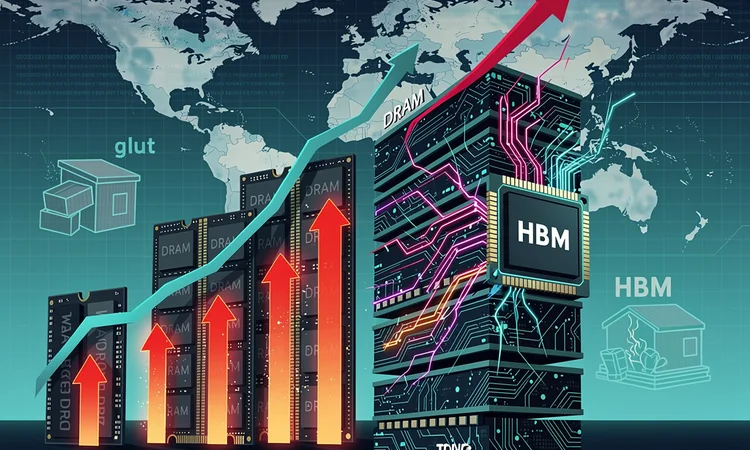
This whiplash in the market is no accident. It is the direct result of a coordinated and disciplined pullback by the three titans that control the vast majority of the global memory market: Samsung, SK Hynix, and Micron Technology. After enduring a brutal post-pandemic slump where a glut of inventory led to staggering financial losses, these producers implemented deep production cuts to staunch the bleeding. The strategy has been remarkably effective, perhaps too much so for consumers and enterprise clients, with market intelligence firm TrendForce forecasting that DRAM prices are set to climb an additional 13-18% in the second quarter of 2024 alone, according to analysis by TechRadar .
From Unprecedented Glut to Painful Correction
To understand the current price shock, one must look back to the market’s precipitous fall in 2022 and 2023. The pandemic-fueled demand for PCs, servers, and other electronics evaporated, leaving chipmakers with mountains of unsold inventory. Prices cratered, and balance sheets turned red. Samsung’s semiconductor division, typically a reliable profit engine, posted four consecutive quarters of losses, a nearly unprecedented downturn for the South Korean giant. This forced a strategic pivot from its long-held practice of maintaining production to preserve market share, compelling it to join its rivals in significantly curtailing output.
The disciplined cuts served as a powerful market lever, draining excess inventory and creating the conditions for a price recovery. Samsung’s most recent financial disclosures confirm the strategy’s success, with its Device Solutions (DS) Division, which oversees its chip business, swinging back to a profit of KRW 1.91 trillion in the first quarter of 2024 . The move demonstrates the immense pricing power wielded by the small club of memory oligarchs, who can collectively turn the spigot on or off to dictate market conditions, leaving customers with little choice but to absorb the higher costs.
The AI Engine Ignites a New Kind of Demand
Just as the industry-wide production cuts began to stabilize the market for traditional memory, a new, far more powerful demand catalyst emerged: the generative AI revolution. The complex algorithms behind platforms like ChatGPT and Midjourney require colossal amounts of processing power, overwhelmingly supplied by GPUs from Nvidia Corp. These processors, in turn, require a specialized, ultra-fast type of memory known as High Bandwidth Memory (HBM) to function, creating a sudden and insatiable demand for this premium product.
HBM is fundamentally different from the standard DDR5 RAM found in consumer PCs and most servers. It involves stacking DRAM dies vertically to create a much wider data pipeline, allowing for exponentially faster data transfer between the memory and the GPU. This architectural complexity makes HBM more difficult and expensive to produce, and it consumes more of the limited wafer capacity at advanced fabrication plants. As chipmakers pivot their production lines to chase the lucrative HBM market, they are inherently reducing their capacity to produce the more conventional DRAM that powers the rest of the digital world, further tightening supply and driving up prices across the board.
Chasing the High Bandwidth Memory Gold Rush
The race to dominate the HBM market has been a defining feature of the semiconductor industry over the past year. SK Hynix, an early and aggressive investor in HBM technology, secured a commanding lead, becoming the primary supplier for Nvidia’s coveted H100 and upcoming B200 AI accelerators. The company’s foresight paid off handsomely, with reports indicating that SK Hynix has already sold out of its HBM supply for both 2024 and most of 2025 , a testament to the staggering demand.
This has left Samsung and Micron scrambling to catch up. Samsung is aggressively marketing its own HBM3E products, dubbed “Shinebolt,” and has signaled its intent to triple its HBM supply capacity in 2024. Meanwhile, U.S.-based Micron has also entered the fray, beginning volume production of its HBM3E memory, which it proudly announced would be a component in Nvidia’s next-generation H200 Tensor Core GPUs. The intense competition for HBM supremacy is not just a battle for market share; it is a strategic diversion of resources that directly impacts the availability and cost of all other memory products.
System-Wide Impact From PCs to Enterprise Servers
The consequences of this market shift are now rippling through every corner of the technology ecosystem. For consumers, the rising cost of DRAM means more expensive laptops and pre-built desktops, and higher prices for those looking to upgrade their own systems. The days of affordable 32GB RAM kits are quickly fading as the supply of standard DDR5 modules tightens. This trend is compounded by a similar price recovery in the NAND flash market, which affects the cost of solid-state drives (SSDs), creating a double-whammy for PC builders.
In the enterprise space, the impact is even more acute. Cloud providers and large corporations that rely on vast server farms are facing significantly higher capital expenditures to build out and refresh their infrastructure. A Q2 2024 forecast from TrendForce highlights that server DRAM prices are expected to lead the surge with a potential 20% quarterly increase, driven by both the recovery in general server demand and the capacity squeeze from the HBM boom. This inevitably translates into higher costs for cloud computing services, a foundational expense for millions of businesses worldwide.
A Precarious Balance for the Road Ahead
Looking forward, the memory industry’s leaders are walking a tightrope. They must carefully manage production to meet the explosive, high-margin demand from the AI sector without overshooting and creating another inventory glut that could send prices tumbling once more. The memory market is notoriously cyclical, and the current boom, while powerful, is not guaranteed to last forever. Chipmakers are investing billions in new fabrication facilities, but these take years to come online and risk creating overcapacity down the road.
For now, the momentum remains firmly on the side of the producers. Micron’s recent earnings offered a bullish outlook, with CEO Sanjay Mehrotra stating that AI is driving a “multi-year growth phase for the industry,” as reported by CNBC after the company posted revenue that beat Wall Street expectations. The signal is clear: with AI serving as a structural driver of demand, memory is no longer just a commodity component. It is a strategic asset at the center of the next technological revolution, and its price will increasingly reflect that critical importance.






Leave a Reply
Your email address will not be published.