









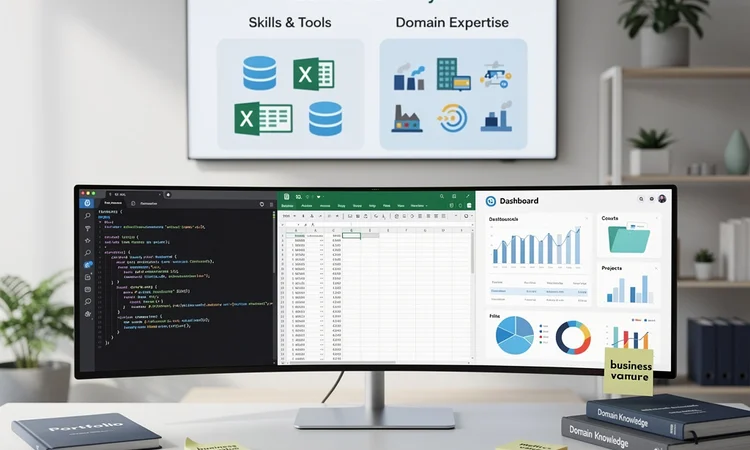
The path to becoming a data analyst has undergone a dramatic transformation, with industry veterans now recommending a radically different approach than what dominated the field just two years ago. As organizations grapple with an explosion of data sources and increasingly sophisticated business intelligence requirements, the skills required to break into this lucrative profession have shifted from theoretical knowledge to practical, hands-on competencies that deliver immediate business value.
According to insights shared by Medium’s Data Driven Investor , aspiring data analysts in 2026 should expect to spend approximately 40% of their time pulling and cleaning data using SQL and Excel, with another 30% dedicated to creating and updating dashboards. This reality-based breakdown stands in stark contrast to the algorithm-heavy curriculum that dominated data science education in previous years, reflecting a market correction toward practical business needs rather than theoretical aspirations.
The modern data analyst role has evolved into a position that bridges the gap between raw information and actionable business intelligence. Unlike the data scientist positions that captured headlines during the previous decade’s artificial intelligence boom, today’s data analyst positions emphasize communication, business acumen, and the ability to translate complex datasets into narratives that drive executive decision-making. This shift has created new opportunities for career changers and recent graduates who might lack advanced mathematics backgrounds but possess strong analytical thinking and storytelling capabilities.
The Foundation: SQL and Excel Mastery Remains Non-Negotiable
Despite the proliferation of sophisticated business intelligence tools and low-code platforms, SQL remains the cornerstone skill for any aspiring data analyst. Industry practitioners recommend dedicating the first three months of study exclusively to mastering SQL fundamentals, including complex joins, window functions, and query optimization. The reasoning is straightforward: nearly every organization stores its critical business data in relational databases, and the ability to extract, transform, and manipulate this data independently remains the most valuable skill a junior analyst can offer.
Excel, often dismissed by technology purists as outdated, continues to dominate the final stages of data analysis and presentation. The modern data analyst must master advanced Excel functions including pivot tables, VLOOKUP and XLOOKUP functions, conditional formatting, and basic VBA scripting. More importantly, analysts must understand how to present data in Excel formats that non-technical stakeholders can easily understand and manipulate themselves, creating a self-service analytics culture that reduces bottlenecks in decision-making processes.
Visualization Tools: The Dashboard Revolution Continues
The second major competency area involves business intelligence and visualization platforms, with Tableau, Power BI, and Looker dominating corporate environments. Modern data analysts spend roughly 30% of their working hours building, maintaining, and updating dashboards that provide real-time insights into business performance. This represents a significant time investment that requires not just technical proficiency but also a deep understanding of visual design principles, user experience considerations, and the psychology of data presentation.
The most successful analysts approach dashboard creation as a product development exercise, conducting user research to understand stakeholder needs, iterating based on feedback, and continuously optimizing for clarity and actionability. This product-minded approach differentiates competent analysts from exceptional ones, as it demonstrates an understanding that technical skills serve business objectives rather than existing as ends in themselves. Organizations increasingly value analysts who can anticipate questions before they’re asked and design information architectures that scale across departments.
Python and R: Strategic Skills Rather Than Prerequisites
While programming languages like Python and R dominated data analyst job descriptions in previous years, the 2026 market shows a more nuanced perspective. For entry-level positions, these skills often serve as differentiators rather than requirements, with employers prioritizing demonstrated ability to deliver insights using standard tools over theoretical programming knowledge. However, analysts aiming for senior positions or specialized roles in tech companies should still invest time in learning Python, particularly libraries like Pandas, NumPy, and Matplotlib for data manipulation and visualization.
The strategic approach involves learning programming languages after establishing proficiency in SQL and visualization tools, allowing analysts to automate repetitive tasks and handle datasets that exceed Excel’s limitations. This sequencing reflects the reality that most junior analysts will spend their first year working with structured data in established databases rather than conducting advanced statistical analyses or building machine learning models. The programming skills become increasingly valuable as analysts progress in their careers and take on more complex analytical challenges.
Industry Knowledge Trumps Technical Credentials
Perhaps the most significant shift in the data analyst career path involves the growing emphasis on domain expertise and business knowledge. Organizations increasingly prefer candidates who understand their specific industry—whether healthcare, finance, retail, or technology—over those with purely technical backgrounds. This trend reflects a maturation of the data analytics field, where the ability to ask the right questions and contextualize findings within industry dynamics often matters more than statistical sophistication.
Aspiring analysts should consider specializing in a particular industry vertical, building knowledge of key performance indicators, regulatory requirements, and business models specific to that sector. This specialization strategy allows candidates to compete effectively against more technically skilled applicants by offering insights that generic analysts cannot provide. The combination of solid technical foundations with deep industry knowledge creates a powerful value proposition that commands premium compensation and faster career advancement.
The Project Portfolio: Demonstrating Real-World Impact
The traditional resume and cover letter approach has proven increasingly ineffective for data analyst positions, with hiring managers instead seeking concrete evidence of analytical capabilities through project portfolios. Successful candidates in 2026 typically showcase three to five substantial projects that demonstrate end-to-end analytical workflows, from data extraction and cleaning through analysis and presentation of actionable insights. These portfolios should emphasize business impact rather than technical complexity, showing how analytical work drove specific decisions or outcomes.
The most compelling portfolio projects tackle real business problems using publicly available datasets, such as analyzing retail sales patterns, optimizing marketing spend allocation, or identifying operational inefficiencies. Candidates should document their analytical process thoroughly, explaining their reasoning at each step and acknowledging limitations in their analyses. This transparency demonstrates intellectual honesty and critical thinking—qualities that hiring managers value highly but struggle to assess through traditional interview processes.
Networking and Community Engagement Accelerate Career Entry
The data analytics community has developed robust online and offline networks that provide invaluable resources for career changers and recent graduates. Platforms like LinkedIn, GitHub, and specialized Slack communities offer opportunities to connect with practicing analysts, receive feedback on projects, and learn about job opportunities before they’re publicly posted. Active participation in these communities—through sharing insights, answering questions, and contributing to open-source projects—builds reputation and visibility that can dramatically shorten job search timelines.
Many successful analysts credit their career breakthroughs to relationships developed through community engagement rather than formal application processes. This reality underscores the importance of treating career development as a long-term relationship-building exercise rather than a transactional job search. Aspiring analysts should invest several hours weekly in community participation, viewing it as an essential component of their education rather than an optional networking activity.
The Continuous Learning Imperative
The data analytics field continues evolving rapidly, with new tools, techniques, and best practices emerging constantly. Successful analysts embrace continuous learning as a permanent feature of their careers rather than a temporary phase during initial skill development. This might involve dedicating time weekly to exploring new features in existing tools, experimenting with emerging platforms, or deepening expertise in statistical methods and business strategy.
The most effective learning approach combines structured courses with self-directed exploration and real-world application. While online learning platforms offer valuable foundational knowledge, the deepest learning occurs when analysts tackle genuine business problems that lack clear solutions. This problem-based learning develops the adaptability and resourcefulness that distinguish exceptional analysts from merely competent ones, creating career resilience in a field where specific tools and techniques may become obsolete but analytical thinking remains perpetually valuable.
Compensation Expectations and Career Trajectory
Entry-level data analyst positions in 2026 typically offer salaries ranging from $60,000 to $85,000 in major metropolitan areas, with significant variation based on industry, company size, and candidate qualifications. Analysts with specialized industry knowledge or technical skills often command premiums at the higher end of this range, while those entering from unrelated fields might start toward the lower end. However, the career progression can be rapid for high performers, with senior analyst positions reaching $120,000 to $150,000 within five years.
The career trajectory for data analysts has also diversified, with multiple paths available beyond the traditional progression to data scientist roles. Many analysts move into business intelligence management, product analytics, or strategic planning positions that leverage their analytical skills while emphasizing business leadership. Others specialize deeply in particular analytical domains like marketing analytics, financial planning and analysis, or operations research. This diversity of career paths makes data analytics an attractive field for professionals seeking both intellectual challenge and career flexibility, with the foundational skills remaining valuable across multiple potential specializations.






Leave a Reply
Your email address will not be published.