






In a move that blends economic strategy with national security imperatives, the U.S. government under President Donald Trump has implemented a novel policy allowing American chipmakers Nvidia and AMD to resume sales of advanced artificial intelligence processors to China, but with a significant caveat: a 25% surcharge on those transactions that flows directly to federal coffers. This arrangement, detailed in recent announcements, marks a departure from previous outright bans and reflects a pragmatic shift aimed at balancing trade interests with geopolitical tensions. Industry observers note that this could generate billions in revenue while ensuring U.S. firms maintain a foothold in one of the world’s largest markets.
The policy centers on specific chips like Nvidia’s H200 and AMD’s MI325X, which are no longer at the cutting edge but still valuable for AI applications. According to reports, the surcharge acts as a tariff on exports, effectively turning these sales into a revenue stream for the U.S. Treasury. This comes after years of escalating restrictions that had severely limited such exports, prompting concerns from tech executives about lost market share to Chinese competitors.
President Trump’s administration has framed this as a win-win, allowing American innovation to penetrate global markets while funding domestic advancements. Critics, however, argue it risks accelerating China’s technological self-sufficiency, potentially undermining long-term U.S. dominance in AI.
Evolution of Export Controls
The roots of this policy trace back to the escalating U.S.-China tech rivalry that intensified during the first Trump administration and continued under subsequent leadership. Initial restrictions, imposed in the early 2020s, targeted high-performance computing chips to prevent their use in military applications or supercomputing that could bolster Beijing’s capabilities. Nvidia, for instance, saw billions in potential orders evaporate overnight due to these curbs, as highlighted in a Bloomberg report detailing the economic fallout.
By 2025, the landscape had shifted with China’s rapid development of domestic alternatives, prompting U.S. firms to lobby for relaxed rules. The breakthrough came in late 2025 when Trump, upon returning to office, pledged to revisit the bans. A Reuters exclusive from December 2025 revealed the launch of a review that paved the way for limited exports, conditional on financial concessions to the U.S. government.
This culminated in the January 2026 directive, where the Department of Commerce codified the 25% fee. As per a CNBC article , the H200’s outdated status relative to newer models like Blackwell and Rubin made it a candidate for this controlled release, minimizing national security risks while maximizing economic benefits.
Financial Implications for Chip Giants
For Nvidia and AMD, this policy represents a lifeline to reclaim lost revenues. Prior restrictions had slashed Nvidia’s China market share from 95% to near zero, as Nvidia CEO Jensen Huang lamented in public statements. The new arrangement could unlock sales worth tens of billions, with the U.S. taking a quarter off the top—potentially funneling $5 billion or more annually into federal programs, based on analyst estimates.
AMD, similarly impacted, has expressed cautious optimism. CEO Lisa Su noted in earnings calls that export curbs had dented AI chip revenues, but the MI325X’s approval under this scheme could accelerate recovery. However, the surcharge isn’t without pain; it effectively raises costs for Chinese buyers, who may opt for cheaper local options from firms like Huawei or SMIC.
Posts on X from industry watchers reflect mixed sentiments, with some praising the revenue model as innovative, while others decry it as a short-term fix that ignores broader competitive threats. One prominent thread highlighted how this “tax” circumvents constitutional bans on export duties by structuring it as a licensing fee.
Geopolitical Ramifications
On the international stage, this policy has sparked debate about its strategic coherence. A Council on Foreign Relations analysis argues that allowing even second-tier chips could inadvertently aid China’s military modernization, echoing concerns from lawmakers who criticized Trump’s greenlight as eroding America’s AI advantage.
Former officials, quoted in Reuters, have voiced fears that the move “electrifies Beijing’s military,” potentially enabling advancements in surveillance, autonomous weapons, or cyber capabilities. Yet, proponents counter that outright bans have only spurred China’s indigenous innovation, as evidenced by the rapid rise of homegrown GPUs that now rival U.S. products in certain benchmarks.
China’s response has been muted but telling. Sources indicate that customs agents have been instructed to scrutinize H200 imports, and tech firms have been advised against unnecessary purchases, suggesting Beijing may counter with its own restrictions or subsidies to bolster domestic suppliers.
Industry Reactions and Market Dynamics
Tech executives have navigated this carefully. Nvidia’s stock dipped initially on news of the surcharge but rebounded as investors weighed the benefits of renewed access. AMD shares followed a similar pattern, buoyed by projections of increased demand for next-gen accelerators like the MI350 series, which remain off-limits.
Broader market analysis from the Financial Times suggests this could set a precedent for other sectors, where the U.S. leverages export controls as revenue tools. An New York Times piece from 2025 detailed an earlier iteration of this idea, where a 15% cut was floated, evolving into the current 25% rate amid negotiations.
Sentiment on X amplifies these views, with users debating the policy’s enforceability. Some posts question whether Chinese firms will comply or seek workarounds, like rerouting through third countries, highlighting potential loopholes in the agreement.
Legal and Constitutional Questions
Legally, the surcharge treads a fine line. The U.S. Constitution prohibits export taxes, but the administration has positioned this as a voluntary payment for export licenses, akin to royalties. Economists like Douglas Irwin have pointed out this distinction on social platforms, sparking discussions about its durability under judicial scrutiny.
Court challenges could emerge from affected parties, though the national security framing may shield it. A Reuters report captures bipartisan pushback, with senators arguing it prioritizes profits over security.
Internationally, allies like Taiwan, a key manufacturing hub for these chips, stand to benefit from increased production. TSMC’s role in fabricating H200 units underscores the global supply chain’s interdependence, complicating any full decoupling.
Economic Projections and Future Outlook
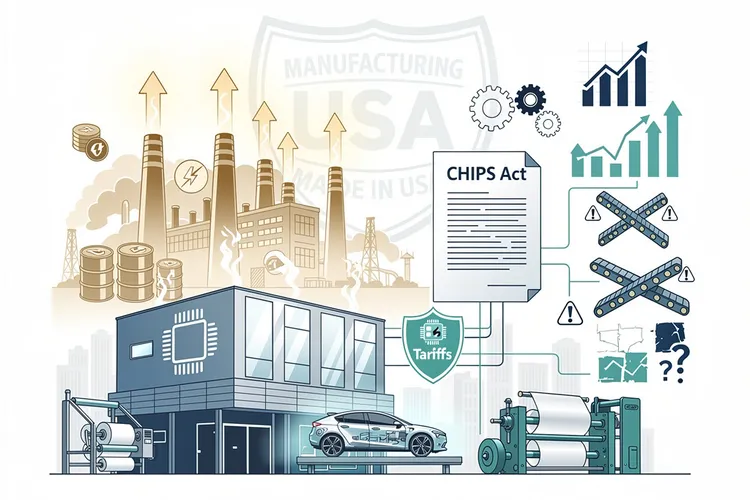
Projections indicate this policy could add significant funds to U.S. tech R&D initiatives, potentially offsetting cuts in other areas. Analysts estimate that if China accounts for 20-30% of global AI chip demand, the 25% cut could yield $10-15 billion over the next few years, funneled toward semiconductor subsidies under acts like the CHIPS Act.
However, risks abound. If Chinese demand wanes due to the added cost—as hinted in a Times of India article —U.S. firms might see diminished returns. Moreover, advancements in China’s chip industry could render these exports obsolete sooner than anticipated.
Industry insiders speculate that this might evolve into tiered systems, where even more advanced chips get partial approvals with higher fees, further monetizing U.S. technological leads.
Broader Implications for Global Trade
This policy exemplifies a new era of “economic statecraft,” where trade tools double as security measures. It contrasts with Europe’s more collaborative approach to tech regulation and could strain transatlantic relations if perceived as protectionist.
For consumers and enterprises worldwide, higher costs for AI hardware might slow adoption in emerging markets, widening the digital divide. In the U.S., the influx of funds could accelerate domestic fabrication, reducing reliance on Asian supply chains.
As debates rage, the policy’s success hinges on enforcement and adaptability. With Trump’s administration pushing for aggressive trade tactics, this AI chip surcharge may just be the opening salvo in a prolonged economic contest with China.
Stakeholder Perspectives and Long-Term Strategies
Voices from academia and think tanks offer nuanced takes. The Associated Press reported on the initial 15% deal in 2025, which morphed into the current framework, emphasizing how negotiations with chipmakers shaped the outcome. Stakeholders like investors are monitoring stock volatility, with X posts reflecting optimism tempered by geopolitical uncertainty.
Long-term, companies like Nvidia and AMD are diversifying, investing in non-China markets and alternative technologies. This policy, while providing short-term relief, underscores the need for sustained innovation to stay ahead.
Ultimately, as the U.S. navigates this high-stakes game, the 25% gambit could redefine how nations monetize intellectual property in an era of technological nationalism, setting templates for future conflicts over critical resources.






Leave a Reply
Your email address will not be published.