






As 2025 draws to a close, the once-unassailable position of the United States in global trade is showing unmistakable signs of erosion. For decades, America’s economic might has dictated the terms of international commerce, with its vast market, innovative industries, and the dollar’s unrivaled status as the world’s reserve currency forming an impregnable bulwark. But recent shifts, accelerated by aggressive tariff policies under the second Trump administration, are prompting nations worldwide to seek alternatives, reshaping supply chains and alliances in ways that diminish U.S. influence.
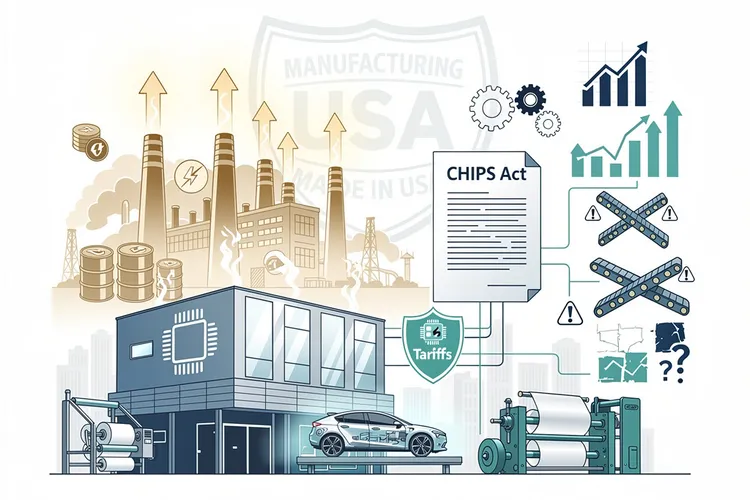
The catalyst for much of this transformation stems from President Donald Trump’s renewed focus on protectionism. Upon returning to office in January 2025, Trump swiftly implemented sweeping tariffs on imports from China, Europe, and other trading partners, aiming to bolster domestic manufacturing and reduce trade deficits. These measures, while politically popular at home, have triggered a cascade of responses abroad. Countries are not merely absorbing the costs; they are innovating around them, forging new trade pacts and diversifying away from U.S.-centric routes.
This reconfiguration is evident in data from international organizations. The World Trade Organization (WTO) revised its 2025 global merchandise trade growth forecast downward to -0.2% from an earlier projection of 3.0%, citing heightened U.S. tariffs and their spillover effects, as noted in posts found on X. Such forecasts underscore a broader slowdown, with emerging economies particularly vulnerable yet adaptive.
Tariffs as a Double-Edged Sword
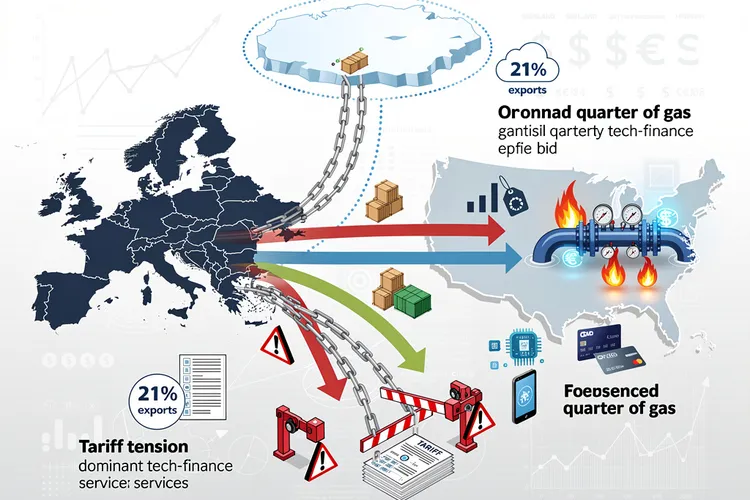
The immediate impact of these tariffs has been a surge in costs for U.S. consumers and businesses, but the longer-term consequences are proving more profound for America’s global standing. According to a recent analysis by Wired , savvy nations are discovering methods to mitigate tariff harms, such as rerouting goods through intermediary countries or investing in local production to bypass U.S. barriers altogether. This not only boosts their own economies but also makes goods cheaper for end markets, effectively undercutting American competitiveness.
For instance, Mexico and Vietnam have emerged as key beneficiaries, attracting investments from companies eager to avoid U.S. duties on Chinese-made products. This “nearshoring” trend, amplified in 2025, has seen U.S. firms like Apple and Tesla expand operations in these regions, inadvertently strengthening alternative hubs. Meanwhile, the European Union has accelerated trade deals with Asia and Africa, reducing reliance on the American market.
Economic reports from consulting giants paint a similar picture. McKinsey’s global economic outlook for 2026 highlights how policy uncertainties, including U.S. tariffs, are prompting a reconfiguration of value chains, with emerging countries facing both challenges and opportunities. The report notes that while global growth may stutter, reforms in nations like India and Brazil could propel them forward.
De-Dollarization Gains Momentum
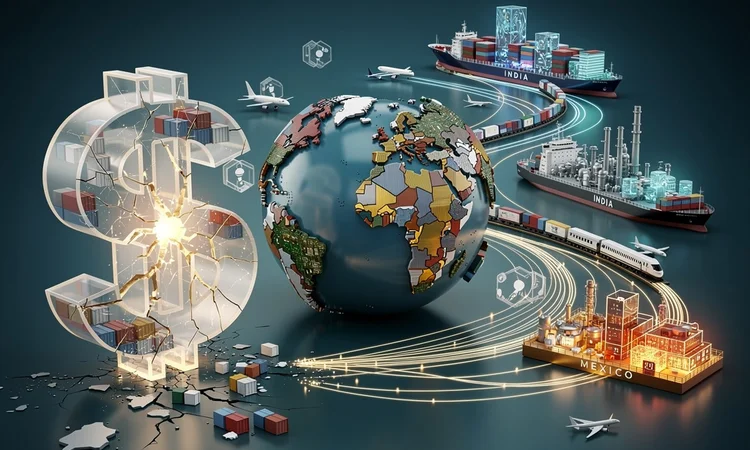
A parallel development eroding U.S. dominance is the accelerating push toward de-dollarization. The dollar’s role in international transactions has long underpinned American economic power, facilitating sanctions and trade leverage. However, as J.P. Morgan Research details, countries are increasingly settling trades in local currencies or alternatives like the euro and yuan, driven by fears of U.S. financial weaponization.
This shift is particularly pronounced in BRICS nations, where initiatives to create a common currency or blockchain-based settlement systems have gained traction in 2025. Russia and China, for example, have expanded yuan-denominated oil trades, bypassing the dollar entirely. Such moves, while not yet displacing the greenback wholesale, chip away at its hegemony, as evidenced by a 2% decline in the dollar’s share of global reserves this year, according to International Monetary Fund data referenced in recent analyses.
The implications extend to critical sectors. In technology, where the U.S. has historically led, export controls and tariffs have prompted allies like South Korea and Taiwan to seek diversified partnerships. The New York Times illustrated this in a series of charts, showing how Trump’s policies have influenced inflation and stock prices, while global trade endures through adaptation rather than collapse.
Reconfiguration of Supply Chains
The reorganization of global value chains is another hallmark of this era. BNP Paribas Economic Research warns that U.S.-China decoupling will slow global growth but also reorganize chains, with multiple effects on emerging markets. Countries like Indonesia and Turkey are capitalizing by positioning themselves as neutral manufacturing bases, attracting FDI that once flowed predominantly to China or the U.S.
This fragmentation contrasts with the integrated systems of the late 20th century, where U.S. standards dominated. Now, regional blocs are forming: the Comprehensive and Progressive Agreement for Trans-Pacific Partnership (CPTPP) without U.S. involvement, and Africa’s Continental Free Trade Area, both thriving amid American isolationism. Posts on X from analysts like Balaji highlight how U.S. exports are limited to the dollar and tech, both eroding under current pressures.
Furthermore, the United Nations Conference on Trade and Development (UNCTAD) in its September 2025 Global Trade Update emphasizes trade policy uncertainty as a source of instability, with sudden tariff shifts fueling volatility. Yet, this very uncertainty is spurring innovation, as nations invest in resilience through diversified sourcing and digital trade platforms.
Emerging Markets’ Ascendance
Emerging economies are not passive victims; many are thriving in this new environment. Deloitte Insights’ 2026 global economic outlook points to strong growth in select emerging markets, buoyed by reforms, even as advanced economies slow. India, for one, has seen its export share rise by 15% in 2025, leveraging trade deals with the EU and ASEAN to offset U.S. tariffs.
In Latin America, Brazil’s commodity exports have found new buyers in Asia, reducing dependence on North American markets. This shift is echoed in sentiment on X, where users like Sushant Sareen discuss how the U.S. is dismantling its own global order, potentially allowing China to surpass it economically and militarily by decade’s end.
The International Monetary Fund (IMF) offers a cautiously optimistic view in its October 2025 outlook , suggesting that reducing uncertainties and investing in innovation could yield durable gains. However, for the U.S., this means confronting vulnerabilities like high debt levels and overreliance on imports.
Policy Responses and Future Trajectories
U.S. policymakers are grappling with these realities. The administration’s tariff wall, as detailed in U.S. News & World Report , has overturned decades of open trade policy, with charts showing impacts on growth and inflation. Robust consumer spending and rising exports fueled third-quarter growth, per Reuters , but at the cost of international goodwill.
Critics argue this approach accelerates decline. Business Standard describes 2025 as a test of endurance for global trade, with the U.S. redefining the playing field. Yet, endurance favors the adaptable, and many nations are proving more nimble.
Looking ahead, experts from Brookings Institution reflect on 2025 accomplishments and 2026 prospects, emphasizing multilateral reforms to stabilize trade. For the U.S., reclaiming influence may require diplomatic overtures rather than barriers.
Geopolitical Ramifications
The decline in U.S. trade dominance carries geopolitical weight. As posts on X from users like Gary Stone suggest, America’s 40-year market reign is waning, with opportunities shifting elsewhere. China’s surplus continues to grow, widening global imbalances, as visualized in data analyses shared on the platform.
This fragmentation risks escalating tensions, yet it also fosters a multipolar order where no single power dominates. The U.S. economy, graded by experts in CBS News , remains resilient but faces headwinds from policy shifts.
Industry insiders must navigate this evolving terrain by diversifying portfolios and embracing regional alliances. The fortress of U.S. trade hegemony, once solid, now fractures under self-inflicted pressures and global ingenuity.
Strategic Adaptations for Businesses
For corporations, adaptation is key. Multinationals are recalibrating strategies, investing in automation and local sourcing to hedge against tariffs. The rise of digital trade, facilitated by AI and blockchain, offers new avenues, bypassing traditional chokepoints.
Emerging sentiment on X, including from Drunk Dividends, warns of unsustainable U.S. debt and loss of financial dominance, urging a reevaluation of global strategies. Similarly, analyses like those from World Data Analysis highlight widening trade imbalances, with China’s surplus persisting.
Ultimately, 2025 marks a pivotal year where U.S. trade policies, intended to fortify, have instead hastened a broader realignment, compelling all players to rethink their positions in an increasingly interconnected yet divided world economy.






Leave a Reply
Your email address will not be published.