





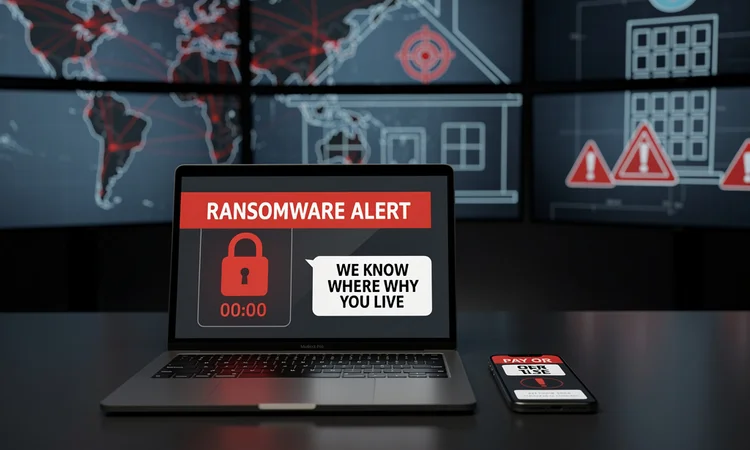
The ransomware threat has crossed a troubling threshold. What began as a purely digital crime has evolved into something far more sinister, with cybercriminal groups now employing physical intimidation, threats of violence, and harassment tactics that extend beyond corporate networks into the personal lives of security executives and their families. This dangerous escalation is forcing Chief Information Security Officers to fundamentally rethink their defensive strategies and personal security measures.
According to Dark Reading , ransomware groups have begun targeting CISOs and other executives with increasingly aggressive tactics that include doxxing personal information, threatening family members, and even showing up at executives’ homes. These developments represent a calculated shift in criminal methodology, designed to maximize psychological pressure and bypass traditional cybersecurity defenses by attacking the human element directly.
The transformation reflects the maturation of ransomware operations into sophisticated criminal enterprises that understand the limitations of purely technical attacks. When encryption and data theft fail to produce desired ransom payments, these groups are now willing to cross ethical and legal boundaries that even hardened cybersecurity professionals found unthinkable just a few years ago. The implications for corporate security strategies are profound and far-reaching.
The Anatomy of Modern Ransomware Violence
The violent turn in ransomware tactics manifests in several distinct ways. Doxxing has become a standard component of many attacks, with threat actors publishing home addresses, phone numbers, photographs of executives’ homes, and personal financial information. Some groups have gone further, making direct phone calls to executives’ family members, sending threatening messages to personal devices, and in extreme cases, conducting physical surveillance of targets’ residences and daily routines.
Security researchers have documented cases where ransomware operators have contacted executives’ neighbors, sent threatening packages to home addresses, and even filed false police reports designed to trigger armed law enforcement responses at executives’ homes—a tactic known as “swatting.” These escalations serve multiple purposes: they demonstrate the attackers’ reach beyond digital systems, create immense psychological pressure, and signal to other potential victims that resistance will be met with increasingly personal consequences.
Understanding the Criminal Calculus Behind Escalation
The shift toward violent tactics is not random but represents a calculated response to improved corporate defenses and decreased ransom payment rates. As organizations have strengthened their backup systems, incident response capabilities, and resistance to paying ransoms, criminal groups have sought new pressure points. Personal threats against decision-makers and their families represent an attempt to circumvent institutional resilience by targeting individual vulnerability.
This evolution also reflects the changing economics of cybercrime. With law enforcement pressure increasing and cryptocurrency tracking improving, ransomware operators are seeking to maximize returns from each attack. By adding layers of intimidation, they hope to accelerate payment timelines and increase the likelihood that victims will pay rather than endure prolonged negotiations or public exposure. The personal safety of executives and their families becomes leverage in what has transformed from a technical problem into a hostage situation.
Immediate Response Protocols for Security Leaders
CISOs facing this new threat environment must implement multi-layered response strategies that address both digital and physical security dimensions. The first priority involves establishing clear protocols for handling threats against personnel. This includes immediate coordination with law enforcement, documentation of all threatening communications, and activation of personal security measures for affected individuals. Organizations should have pre-established relationships with both cybercrime units and local law enforcement to ensure rapid response capabilities.
Personal security assessments for executives in high-risk roles have become essential. These evaluations should examine home security systems, digital footprints, publicly available personal information, and daily routines that might create vulnerability. Many organizations are now providing security services that include residential security upgrades, personal security training, and in some cases, professional security personnel for executives facing active threats. The cost of these measures, while significant, pales in comparison to the potential consequences of inadequate protection.
Institutional Policies and Support Frameworks
Beyond immediate protective measures, organizations must develop comprehensive policies that acknowledge the personal risks faced by security personnel. This includes explicit provisions in employment agreements addressing company support for employees targeted due to their professional roles. Insurance policies should be reviewed and potentially expanded to cover personal security costs, legal expenses related to harassment, and psychological counseling for affected employees and their families.
Communication protocols require careful consideration. Organizations need clear guidelines about when and how to involve law enforcement, how to communicate with affected employees and their families, and what information should be shared with boards of directors and other stakeholders. The goal is to ensure that when threats materialize, response is swift, coordinated, and comprehensive rather than improvised under pressure.
Preventive Measures and Digital Hygiene
Prevention remains preferable to response. CISOs and other high-risk executives should conduct regular audits of their digital footprints, removing or securing personal information available through public databases, social media platforms, and other online sources. This process, often called “digital sanitization,” involves systematically reducing the information available to potential attackers. Professional services specializing in personal information removal can assist with this process, though it requires ongoing maintenance as new information continually appears online.
Organizations should implement policies limiting the public visibility of executive information in corporate communications, press releases, and conference materials. While complete anonymity is neither possible nor desirable for senior leaders, thoughtful management of what personal details are publicly associated with security roles can reduce attack surfaces. This includes considerations about social media presence, speaking engagements, and media interactions where personal details might be inadvertently disclosed.
Building Resilience Through Preparation and Training
Psychological preparedness is an often-overlooked component of modern cybersecurity leadership. Security executives and their families should receive training on recognizing and responding to harassment, understanding the tactics commonly employed by threat actors, and maintaining situational awareness. This training should be practical and specific, covering everything from identifying surveillance to responding to threatening communications without escalating situations.
Organizations should also establish peer support networks where security leaders can share experiences and strategies for managing these threats. The psychological toll of personal targeting can be severe, and having access to others who understand these unique pressures provides valuable support. Some industry groups have begun creating confidential forums specifically for discussing these issues, recognizing that the traditional isolation of security roles becomes particularly problematic when executives face personal threats.
Legal and Regulatory Considerations
The legal framework surrounding violent ransomware tactics remains evolving and varies significantly by jurisdiction. Organizations should work with legal counsel to understand reporting requirements, potential civil remedies against attackers, and the intersection between cybercrime laws and physical harassment statutes. In some jurisdictions, the physical threats accompanying ransomware attacks may trigger different legal responses and law enforcement priorities than purely digital crimes.
Documentation becomes critical from both security and legal perspectives. Every threatening communication, suspicious incident, or concerning contact should be carefully preserved and cataloged. This documentation serves multiple purposes: it provides evidence for law enforcement investigations, supports potential civil actions, and helps organizations understand patterns in attacker behavior that might inform defensive strategies.
Industry Collaboration and Information Sharing
The personal nature of violent ransomware tactics has historically discouraged victims from discussing their experiences, but this silence ultimately benefits attackers. Industry groups, information sharing organizations, and professional associations must create safe channels for security leaders to share threat intelligence about groups employing violent tactics, specific methodologies being used, and effective response strategies. This information sharing should balance the need for actionable intelligence with appropriate sensitivity to the personal nature of these threats.
Some organizations have begun participating in coordinated efforts to track and disrupt ransomware groups employing violent tactics, working with law enforcement and intelligence agencies to build cases against these criminal enterprises. While individual organizations may have limited ability to pursue attackers across international boundaries, collective action and information sharing can support broader enforcement efforts and potentially deter some groups from employing the most extreme tactics.
The Path Forward for Security Leadership
The evolution of ransomware into a threat that encompasses both digital and physical dimensions represents a fundamental challenge to how organizations conceptualize cybersecurity. CISOs can no longer focus exclusively on technical defenses but must develop expertise in personal security, threat assessment, and crisis management that extends beyond traditional IT security domains. This expansion of responsibilities requires corresponding increases in resources, executive support, and organizational acknowledgment of the personal risks accepted by security leaders.
As ransomware groups continue to innovate and escalate their tactics, the security profession must respond with equal sophistication and determination. This means not only implementing protective measures but also advocating for stronger legal frameworks, supporting law enforcement efforts, and refusing to normalize violence as an acceptable component of cybercrime. The stakes extend beyond any individual organization or executive to encompass fundamental questions about whether criminal enterprises can be allowed to operate with impunity in the physical world while hiding behind digital anonymity. The answer to that question will shape not only cybersecurity but the broader relationship between technology, crime, and society for years to come.






Leave a Reply
Your email address will not be published.