








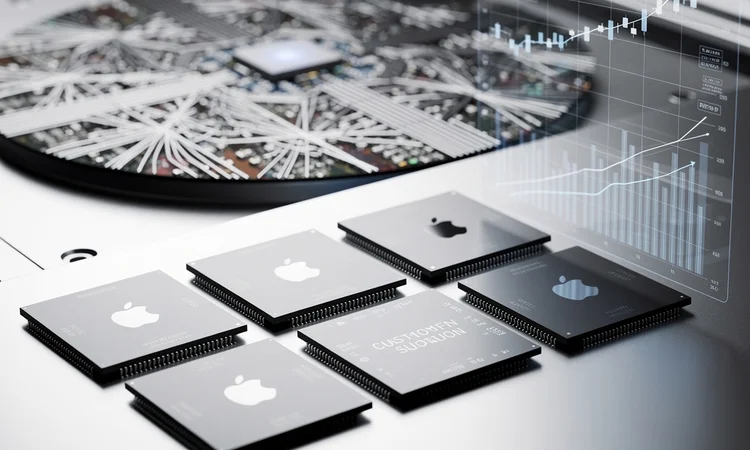
For more than a decade, Apple Inc. has maintained an unwavering commitment to custom silicon design, transforming the technology industry through processors that have redefined performance expectations across smartphones, tablets, and computers. Now, according to industry reports, the Cupertino giant may be preparing to fundamentally alter this long-standing strategy in ways that could reshape not only Apple’s product roadmap but the broader semiconductor ecosystem.
The potential shift comes at a critical juncture for the technology sector, as the economics of advanced chip manufacturing grow increasingly complex and capital-intensive. Apple’s reported consideration of alternative approaches to its chip strategy reflects broader industry pressures that are forcing even the most successful companies to reconsider assumptions that have guided their operations for years. The implications extend far beyond Apple itself, touching suppliers, competitors, and the millions of developers who have built their businesses around the company’s platforms.
The Foundation of Apple’s Silicon Revolution
Apple’s journey into custom silicon began in earnest with the 2010 introduction of the A4 processor, which powered the original iPad and iPhone 4. That chip, while relatively modest by today’s standards, represented Apple’s first major step toward vertical integration in semiconductor design. The strategy allowed Apple to optimize hardware and software in ways that competitors relying on off-the-shelf components could not match, creating performance advantages that became a hallmark of the company’s products.
The success of this approach became undeniable with subsequent generations. The A-series chips that followed delivered year-over-year performance improvements that consistently outpaced industry trends, enabling features and capabilities that differentiated Apple’s devices in an increasingly competitive market. By 2020, when Apple announced its transition away from Intel processors to its own M-series chips for Mac computers, the company had established itself as one of the world’s premier chip designers, rivaling traditional semiconductor powerhouses in both performance and efficiency.
Manufacturing Partnerships and Their Constraints
Despite Apple’s prowess in chip design, the company has always relied on manufacturing partners to actually produce its silicon. Taiwan Semiconductor Manufacturing Company has served as Apple’s primary foundry partner, fabricating the vast majority of Apple’s custom processors using increasingly advanced process nodes. This relationship has been mutually beneficial, with Apple serving as an anchor customer for TSMC’s most cutting-edge manufacturing technologies while TSMC provides the production capacity and expertise that Apple lacks in-house.
However, this dependency creates vulnerabilities that have become more pronounced as geopolitical tensions rise and the complexity of advanced semiconductor manufacturing increases. The concentration of critical chip production in Taiwan has sparked concerns among policymakers and business leaders alike, particularly as the United States and China navigate an increasingly fraught technological competition. Apple’s reliance on a single region for such a critical component of its supply chain represents a strategic risk that has likely factored into internal discussions about alternative approaches.
Economic Pressures Reshaping the Industry
The economics of semiconductor development have shifted dramatically in recent years, with the costs of designing and manufacturing chips at the most advanced nodes reaching unprecedented levels. According to MacRumors , Apple is evaluating whether the continued pursuit of custom silicon across all product lines remains economically justified given these rising costs. The development of a single advanced processor can now require investments exceeding hundreds of millions of dollars, with no guarantee of proportional returns in terms of product differentiation or customer value.
This financial calculus becomes particularly challenging for product categories where Apple’s market position is less dominant or where the performance requirements do not demand cutting-edge silicon. The company’s rumored reconsideration of its chip strategy may reflect a more nuanced view of where custom processors deliver meaningful competitive advantages versus where standardized or semi-custom solutions might suffice. Such a shift would represent a pragmatic acknowledgment that even Apple’s substantial resources have limits when confronted with the escalating costs of semiconductor development.
Potential Strategic Alternatives Under Consideration
Industry observers have speculated about several possible directions Apple might pursue if it does indeed modify its chip strategy. One option involves selective use of custom silicon, reserving fully bespoke processors for flagship products while adopting modified versions of existing designs or even third-party chips for lower-volume or less performance-critical devices. This tiered approach would allow Apple to maintain its technological edge where it matters most while reducing development costs across its broader product portfolio.
Another possibility involves deeper collaboration with semiconductor partners on semi-custom designs that share development costs across multiple customers while still incorporating Apple-specific features and optimizations. Such an approach could provide some of the benefits of custom silicon while spreading the substantial non-recurring engineering costs across a larger production base. However, this would require Apple to accept some loss of differentiation and potentially share technological innovations with competitors, a significant departure from the company’s historically secretive approach to product development.
Implications for Apple’s Product Ecosystem
Any modification to Apple’s chip strategy would have cascading effects throughout its product ecosystem. The tight integration between custom silicon and software has enabled features like advanced machine learning capabilities, superior power efficiency, and seamless operation across devices. Developers have invested heavily in optimizing applications for Apple’s specific processor architectures, particularly following the Mac’s transition to Apple Silicon. A shift toward more standardized chip designs could complicate these relationships and potentially diminish some of the performance advantages that have attracted both consumers and developers to Apple’s platforms.
The impact on product differentiation represents perhaps the most significant concern. Apple has successfully used its custom processors as a key marketing point, emphasizing performance leadership and unique capabilities that competitors cannot easily replicate. Moving away from fully custom designs, even selectively, could erode this positioning and make it more difficult for Apple to justify premium pricing in certain product categories. The company would need to identify alternative sources of differentiation to maintain its market position and brand value.
Competitive Dynamics and Industry Response
Apple’s potential strategic shift comes as competitors pursue their own custom silicon initiatives, inspired in part by Apple’s success. Companies including Microsoft, Amazon, and Google have all invested in developing custom processors for specific applications, seeking the performance and efficiency advantages that Apple has demonstrated. If Apple were to pull back from custom chip development in certain areas, it could create opportunities for these competitors to close the performance gap or even establish their own advantages in specific product categories.
The broader semiconductor industry would also feel the effects of any major change in Apple’s approach. The company represents one of the largest customers for advanced chip design tools and manufacturing capacity, and its strategic decisions influence investment priorities throughout the supply chain. A shift away from aggressive pursuit of the most advanced process nodes for all products could affect the economics of semiconductor manufacturing and potentially slow the pace of industry innovation in certain areas.
Manufacturing Diversification and Supply Chain Resilience
Beyond the economics of chip design, Apple’s strategic reconsideration may also reflect efforts to diversify its manufacturing base and reduce concentration risk. The company has reportedly been working with TSMC to establish chip production facilities outside Taiwan, including in the United States and potentially other locations. However, these efforts face significant challenges, including higher costs, workforce availability, and the time required to replicate the sophisticated manufacturing ecosystems that exist in Asia.
A modified chip strategy that incorporates more standardized designs or components from multiple suppliers could provide additional flexibility in sourcing and reduce vulnerability to disruptions in any single location or relationship. This approach would align with broader supply chain resilience efforts that have gained urgency following pandemic-related disruptions and growing geopolitical uncertainties. However, it would require careful management to avoid compromising the quality and performance standards that customers have come to expect from Apple products.
The Path Forward for Custom Silicon
Despite the reported reconsideration of its chip strategy, Apple remains deeply committed to semiconductor design as a core competency. The company continues to invest heavily in processor development and has expanded its silicon engineering teams substantially in recent years. Any strategic adjustment is more likely to represent a refinement of approach rather than an abandonment of custom silicon altogether. The question is not whether Apple will continue designing chips, but rather where and how it deploys this capability most effectively.
The technology industry has historically evolved through cycles of vertical integration and horizontal specialization, with companies adjusting their strategies as market conditions and technological possibilities change. Apple’s potential modification of its chip strategy, if it occurs, would represent another chapter in this ongoing evolution. The company’s challenge lies in preserving the advantages that custom silicon has provided while adapting to new economic realities and strategic imperatives. How Apple navigates this transition will likely influence not only its own future but also the direction of the broader technology industry for years to come.






Leave a Reply
Your email address will not be published.